
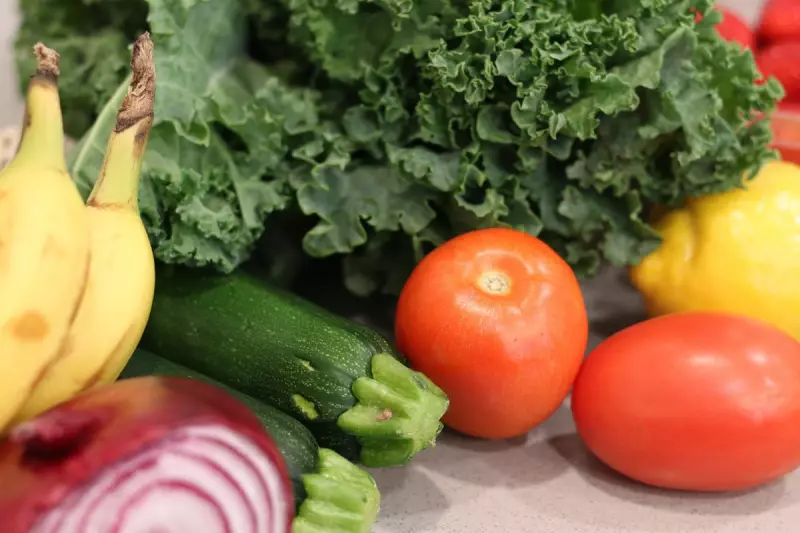
Smart Refrigerator Habits Can Slash Food Waste and Bills
After the effort of selecting fresh produce at the market, UK households are faced with another critical task: storing it correctly to maximise freshness, cut down on waste, and avoid foodborne illnesses. While methods like canning and freezing are effective, the humble refrigerator is our most common tool. However, experts warn that many of us simply 'set and forget' our appliances, missing out on key benefits.
Emily Hilliard, press secretary for the U.S. Department of Health and Human Services, emphasised that refrigeration is only the first step. "Consumers must stay alert and take necessary precautions," she said, noting that chilled items can still develop mould and dangerous pathogens like listeria, Salmonella, and E. coli.
Mastering Your Fridge's Environment
Proper food storage begins before you even unpack your shopping bags. Experts advise purchasing items well before their 'use by' dates and refrigerating them within two hours of being at room temperature. The Department of Energy recommends keeping your refrigerator between 35-38°F (1.7-3.3°C) for optimal performance. Regularly cleaning spills and discarding spoiled food is also crucial to maintain a safe environment.
While social media is awash with storage tips, from pre-washing fruit to using specific containers, there isn't a single right way for every food. Wyatt Brown, an emeritus professor at California Polytechnic State University, explains it comes down to understanding temperature and relative humidity for produce. After that, considerations like storage space and meal timing make the process more refined.
A Guide to Storing Different Food Groups
Most fruits and vegetables are still alive after harvest. Refrigeration, when done correctly, can significantly slow spoilage and preserve nutrients. Use your fridge's crisper drawers to separate fruits and vegetables and control humidity. Keep berries dry, refrigerate broccoli and carrots, and store leafy greens in bags to prevent wilting.
Be mindful of ethylene gas, which is emitted by spoiling produce like tomatoes and apples, as it can cause other items to ripen too quickly. Conversely, onions, garlic, and squash can be left on the counter. Professor Brown specifically advises against refrigerating potatoes, as it can cause sugars to develop, leading to dark patches when cooked.
For proteins, uncooked meat should never be left out for more than two hours. Avoid thawing on the counter and always marinate in the fridge. Store raw meat on the bottom shelf to prevent cross-contamination from drips. Eggs are best kept on the middle or back shelves, not in the warmer door, and should not be washed as it removes their protective bloom.
Dairy products like milk, yogurt, and cheese all belong in the fridge. Yogurt can live on the top shelves, but cheeses should be kept away from the door where air circulation can dry them out. For breads and grains, the FDA advises against refrigeration as it can cause staleness, though it can slow mould in humid climates. Freezing is an excellent option for long-term storage.
Finally, ready-to-eat meals and leftovers are perfect for the top shelves for easy access, while condiments can handle the warmer door temperatures. The USDA states that leftovers can be safely kept in the refrigerator for 3 to 4 days. For opened wine, refrigeration on its side helps slow oxidation.
Diane Beckles, a professor at the University of California, Davis, highlights that these steps are not just about safety but also about stretching household budgets, a particularly pressing concern with inflation and economic uncertainty. Her most crucial advice? "The most important thing is to eat more fruits and vegetables."