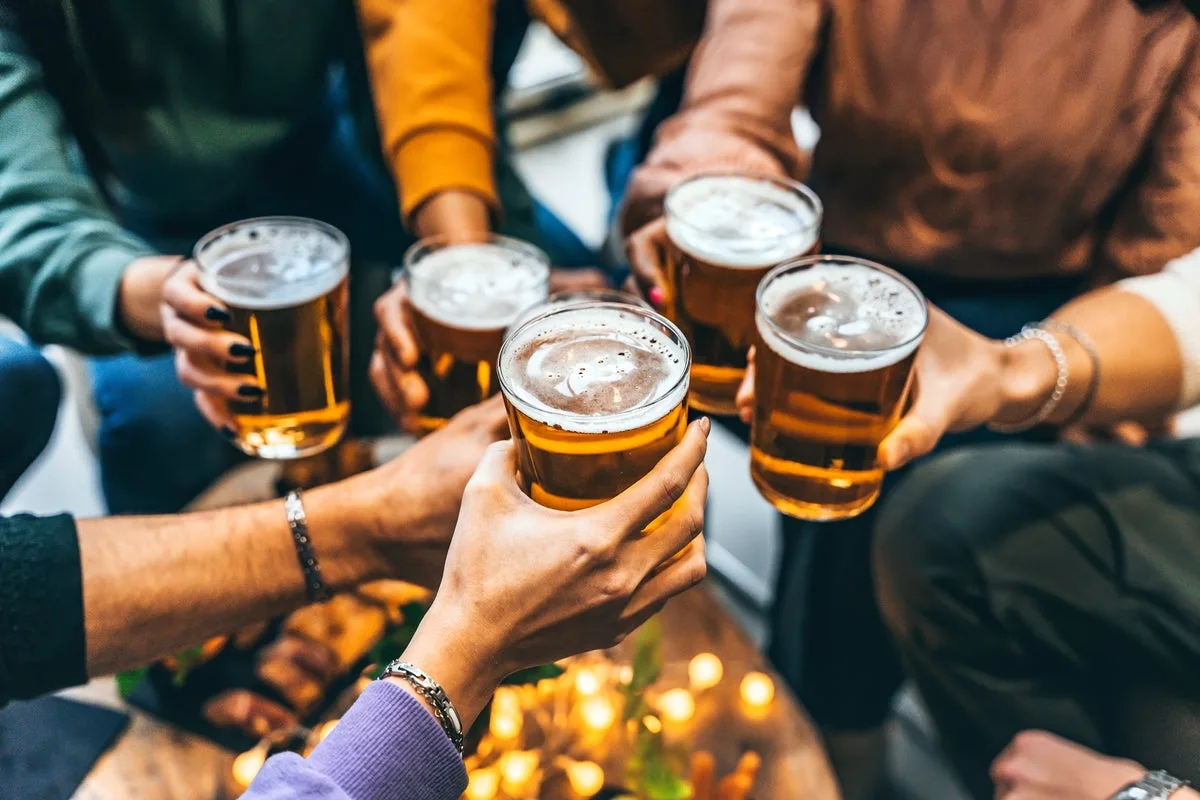
It is a common joke among pub-goers looking for an excuse to stay for another round, but new scientific evidence suggests beer might actually offer some genuine nutritional value as a source of vitamin B. A team of researchers from Germany, one of Europe's most enthusiastic beer-drinking nations, embarked on a study to identify what vitamins and minerals are present in the popular beverage.
Key Findings on Vitamin B6 in Beer
The researchers discovered that many of beer's fundamental ingredients, including barley, wheat, and brewer's yeast, contain Vitamin B6. This essential nutrient helps the body extract and store energy from food and enables red blood cells to transport oxygen efficiently. However, the results, published in the ACS Journal of Agricultural and Food Chemistry, do not necessarily advocate for increased alcohol consumption. This is because alcohol-free lagers were found to have similar levels of Vitamin B6 as their alcoholic counterparts.
The authors of the study stated: 'Vitamin B6 is an essential cofactor of numerous enzymes, and beer may contribute substantially to its dietary intake.'
Methodology and Beer Selection
To conduct their comprehensive analysis, the research team purchased 65 different types of beers from supermarkets across Germany. The selection included a wide variety of styles: lager, alcohol-free lager, unfiltered lager, dark lager, wheat beer, alcohol-free wheat beer, pilsner, bock beer, and rice beer.
New findings indicate that beer may provide some nutritional benefits, particularly as a source of vitamin B. The clear winner in terms of vitamin B6 content was bock beer, which the researchers measured at 808.2 micrograms per litre (μg/L). Bock beer is available in the UK, though it is traditionally a German style; Super Bock, a Portuguese-made version, is also commonly found in Britain.
Comparative Analysis of Beer Types
Vitamin B6 is typically consumed through foods such as pork, chicken, turkey, fish, nuts, beans, oats, bananas, and milk. The NHS recommends that men aged 19 to 64 consume approximately 1.4 milligrams (mg) of vitamin B6 daily, while women in the same age group should aim for 1.2mg. Since 1mg equals 1,000 micrograms, a litre of bock beer contains around 0.8mg of vitamin B6. This means that consuming two litres, or roughly three-and-a-half pints, would exceed the recommended daily intake.
In the study, dark lager ranked second to bock beer, followed by unfiltered lager, standard lager, and pilsner—all of which contained more than 500 μg/L of vitamin B6. Alcohol-free lager came next with 461.8 μg/L, a level comparable to wheat beer. Meanwhile, alcohol-free wheat beer contained 342.5 μg/L. Trailing significantly behind the others was rice beer, with only 185.3 μg/L of vitamin B6.
Detailed Breakdown of Vitamin B6 Content
How much vitamin B6 is in YOUR favourite beer?
- Bock beer: 808.2 μg/L
- Dark lager: 601.8 μg/L
- Unfiltered lager: 544.6 μg/L
- Lager: 515.0 μg/L
- Pilsner: 507.1 μg/L
- Alcohol-free lager: 461.8 μg/L
- Wheat beer: 424.6 μg/L
- Alcohol-free wheat beer: 342.5 μg/L
- Rice beer: 185.3 μg/L
The authors of the study emphasized that their findings 'prove evidently that beer brewed from barley has significantly higher overall B6 contents.' They also highlighted particular interest in the results for alcohol-free beer, noting: 'While the intake of alcohol-free beer is significantly lower, its consumption could contribute to the overall vitamin B6 uptake, as it is not subject to any limitation of alcohol intake.'
Rising Popularity of Low and No Alcohol Beers
A poll conducted last year revealed that the trend toward low and no alcohol beers is gaining momentum in Britain. This shift is largely driven by younger adults, who are more likely to embrace sobriety throughout the year. Almost four in ten UK drinkers (38 per cent) reported consuming low and no alcohol alternatives regularly or occasionally, up from 29 per cent in 2022.
The most popular reason for opting for a full-strength alternative was the ability to drive home from social events, cited by 28 per cent of respondents in a poll of 2,081 adults. Matt Lambert, chief executive of the Portman Group, commented: 'It's fantastic to see low and no alternatives continuing to soar in popularity, while helping to encourage more mindful and moderate consumption among UK alcohol drinkers.'
Lambert added: 'We welcome the drinks and hospitality industry continuing to work together to increase choice, availability and visibility of low and no alcohol alternatives, and we continue to urge the UK government to provide us with the outcome of the recent consultation on low alcohol descriptors which will further facilitate growth of the UK low and no alcohol market.'