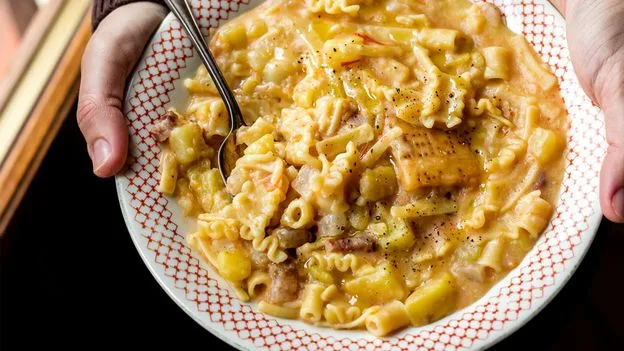
A humble Italian pasta dish combining potatoes, pasta and melted cheese is a perfect example of 'cucina povera' – a traditional style of cooking that embraces frugality and a no-waste philosophy. Literally meaning 'poor kitchen', cucina povera emerged from necessity among peasants and manual labourers, but its dishes are never poor in flavour.
Food historians trace cucina povera back to countryside traditions before Italy's unification in 1870. The cuisine makes use of inexpensive ingredients such as rabbit, offal, beans, legumes, and carbohydrates like pasta, potatoes and bread. Classics like panzanella, ribollita, cacio e pepe, and pasta e patate all originate from this tradition.
Tuscan food writer Giulia Scarpaleggia, author of the 2023 cookbook 'Cucina Povera: The Italian Way of Transforming Humble Ingredients into Unforgettable Meals', highlights pasta e patate as a standout dish. Her version draws from a Neapolitan recipe, described as 'azzeccata' – dense, creamy and well mixed thanks to melted provolone cheese.
The recipe starts with onion, celery and garlic softened in olive oil, then adds white potatoes, pancetta, water, tomatoes and a Parmigiano Reggiano rind. Once the potatoes are soft, pasta mista – a mixture of leftover pasta shapes – is added. The dish is bound together with stringy melted cheese, creating a comforting, carb-on-carb meal.
Scarpaleggia notes that her grandmother learned a version from a relative from Basilicata, but adapted it using Parmigiano Reggiano instead of caciocavallo cheese. 'The Parmigiano rind cooks with the pasta and potatoes, adding depth of flavour,' she explains. The dish exemplifies how cucina povera transforms humble ingredients into unforgettable meals.