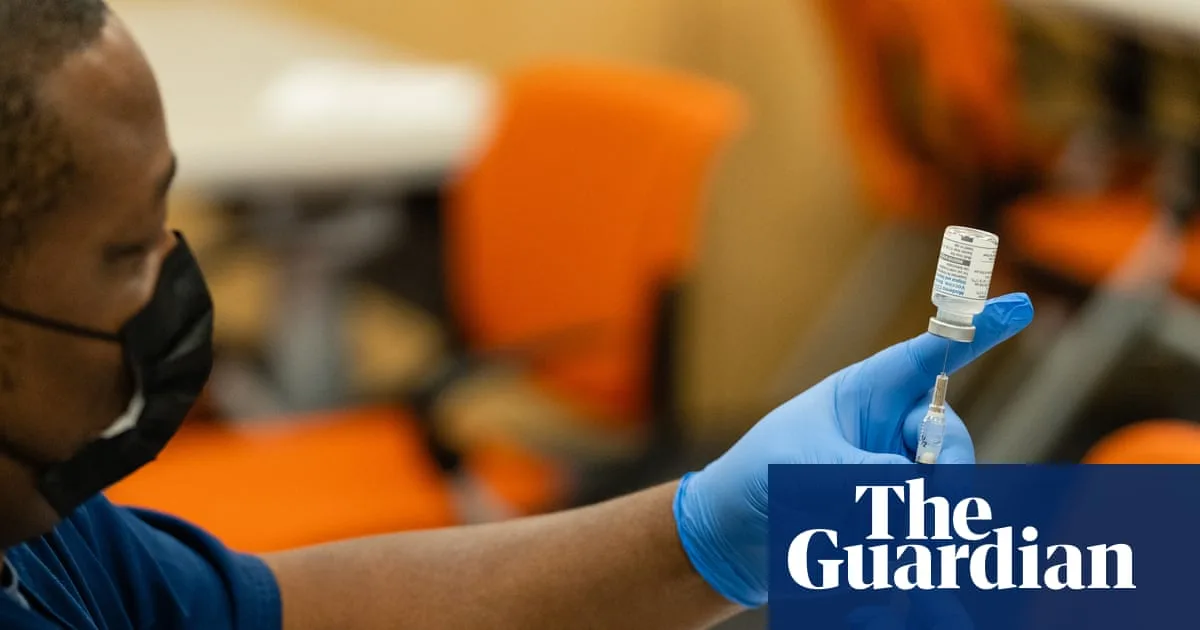
In a significant development for American public health, the Advisory Committee on Immunization Practices (ACIP) is undertaking a comprehensive review of all vaccine recommendations. This move represents a dramatic departure from the committee's longstanding role in shaping immunisation policy based on decades of scientific evidence.
A New Direction Under Kirk Milhoan
The review is being led by the committee's chair, Kirk Milhoan, a paediatric cardiologist who has publicly expressed scepticism towards vaccination requirements for school attendance. In recent interviews, Milhoan has advocated for vaccines to be administered solely on the advice of an individual's doctor, framing the debate as a conflict between personal autonomy and public health priorities.
"There's always going to be a tension between what is supposedly good for all and what is good for the individual," Milhoan stated on a recent podcast. He has also criticised the term "established science," suggesting that safety can only be observed rather than proven, a stance that contrasts with the extensive data supporting vaccine efficacy and safety.
Radical Changes to Childhood Immunisation
This reassessment signals an increasingly hostile approach from the Trump administration towards routine vaccines. The childhood vaccine schedule is undergoing radical changes under the oversight of Robert F Kennedy Jr, the Secretary of the US Department of Health and Human Services and a longtime vaccine critic. Several of his handpicked advisers on the committee have expressed heightened concerns about the rare risks of vaccine side-effects, often downplaying the well-documented benefits of protection against serious illness, hospitalisation, and death.
Milhoan confirmed to the New York Times that significant additional modifications to the childhood immunisation schedule may be implemented this year. While he indicated that recommendations might not necessarily shift to making all vaccines optional, the committee is actively "reevaluating all of the vaccine products including risks and benefits."
Expert Criticism and Public Health Concerns
Health experts have raised alarms about this new direction. Jason Schwartz, an associate professor of health policy at the Yale School of Public Health, argued that Milhoan's framing creates a false dichotomy. "It's often portrayed as this idea of the greater good, but it's an individual benefit that also provides a lot of good for our communities," Schwartz explained, emphasising that vaccines protect both the recipient and those around them.
The discussions have particularly focused on polio and measles vaccines. Milhoan suggested that the risk of diseases like polio has changed due to improvements in sanitation, a point often highlighted by Kennedy. However, experts counter that polio outbreaks have been suppressed in the US precisely because of successful vaccination campaigns. "Vaccine-preventable diseases are so much less common because we vaccinated in the first place," Schwartz noted, warning that declining vaccination rates could lead to a resurgence of cases.
Measles Outbreak and Dangerous Experiments
The US is currently experiencing a severe measles outbreak, with 416 cases confirmed already this year, following 2,255 cases last year—the worst outbreak in three decades. Milhoan appeared to view this rapid growth as an opportunity to study the effects on unvaccinated populations, asking, "What is the new incidence of hospitalisation? What's the incidence of death?"
Elizabeth Jacobs, professor emerita at the University of Arizona and a founding member of Defend Public Health, condemned this perspective. "He wants to experiment on the people of the United States by seeing what happens as vaccination coverage plummets and infectious diseases spread," she said, adding, "This is so dangerous as to approach criminality."
Mischaracterisations and State Autonomy
Milhoan has likened previous vaccination recommendations to "medical battery," claiming they gave families "no choice." However, all vaccination in the US is already optional, with no federal mandates for children. The ACIP's role is to provide evidence-based recommendations, which the Centers for Disease Control and Prevention (CDC) may or may not adopt. Milhoan appeared to mischaracterise this process on a podcast, stating, "We make a recommendation, CDC has to basically canonise it."
In reality, vaccination requirements are set by states and localities, not by the ACIP or CDC. Schwartz highlighted that these decisions involve "exhaustive processes" often requiring legislation. "The idea that there is some sort of rubber-stamp approach by states to simply transfer the CDC schedule to the mandate schedule just doesn't match what states actually do," he said. Notably, many states are now decoupling their recommendations from federal guidance, according to a report by the health policy non-profit KFF.
The Future of Vaccine Policy
With the next ACIP meeting scheduled for February, experts anticipate continued scepticism towards vaccines from the committee. "We should fully expect this committee to continue to sow doubt about the value of vaccines, to emphasise the alleged harms of vaccines and underplay their benefits, and advocate for a more narrow set of recommendations from the federal government," Schwartz predicted.
As a result, recommendations from medical organisations, state and local health officials, and new regional health alliances are likely to carry greater weight. "The rest of the public health community needs to recognise where they can step up to fill the void that ACIP traditionally filled," Schwartz concluded, underscoring the shifting landscape of immunisation policy in the United States.




