The United States stands on the brink of losing its hard-won measles elimination status, a designation it has held since 2000. International health authorities from the Pan American Health Organization (PAHO) are scheduled to convene in April to formally reassess the situation, with many experts fearing the worst.
A Year of Measles Resurgence
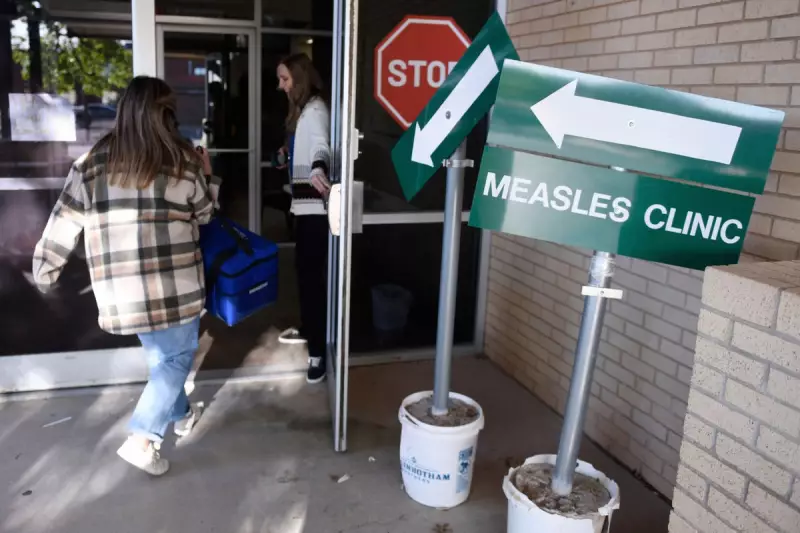
This critical review comes exactly one year after a major measles outbreak began in West Texas. The initial case, where a patient developed the characteristic rash on 20th January 2025, sparked a chain reaction that officials have struggled to contain. The Texas outbreak alone resulted in 762 confirmed illnesses, predominantly in rural Gaines County, and tragically claimed the lives of two children. State health data suggests the true scale was even larger, with 182 potential paediatric cases in Gaines County remaining unconfirmed in March 2025 alone—a possible undercount of 44%.
The Criteria for Elimination
The impending decision hinges on a specific, albeit largely symbolic, criterion: whether a single chain of measles transmission has spread uninterrupted within US borders for at least twelve consecutive months. Public health scientists are currently investigating potential links between the now-contained Texas outbreak and active clusters in Utah, Arizona, and South Carolina. As of now, the Department of Health and Human Services states it lacks evidence of a single, year-long transmission chain.

"It is really a question of semantics," remarked Dr. Jonathan Temte, a family physician who helped certify the US as measles-free in 2000. "The bottom line is the conditions are sufficient to allow this many cases to occur. And that gets back to de-emphasizing a safe and effective vaccine."
Systemic Vulnerabilities Exposed
The 2025 surge, with the Centers for Disease Control and Prevention confirming 2,144 cases across 44 states—the highest number since 1991—exposed deep-seated vulnerabilities. The problem has been brewing for years, fuelled by declining childhood vaccination rates. This decline is attributed to a combination of parental waivers, barriers to healthcare access, and the rampant spread of vaccine disinformation.
Compounding the issue, recent political appointees have publicly questioned the established safety of vaccines at an unprecedented level, while simultaneously defunding local initiatives aimed at boosting immunisation rates. "We have not issued a clear enough message," said Jennifer Nuzzo, director of Brown University's Pandemic Center, emphasising that vaccinating the unvaccinated remains the paramount priority.
The Challenge of Containment
Containing measles leaves little margin for error. The virus is exceptionally contagious, infecting approximately 90% of unvaccinated people exposed to it. Achieving community-level, or herd, immunity requires a 95% vaccination rate. Nationally, the CDC reports the current rate at 92.5%, but many local communities fall far short of this threshold, creating pockets of extreme vulnerability where the virus can take hold.
Tracking outbreaks has become increasingly difficult. Data gaps are common, exacerbated by public distrust in government and healthcare access barriers in affected communities. Contact tracing is a resource-intensive process; research indicates a single measles case can cost public health departments tens of thousands of dollars.
"The U.S. has changed its investment in public health, so we're less able to do the case tracking that we used to do," noted behavioural scientist Noel Brewer, who chairs the US committee preparing data for the international review.
A Continental Problem
The issue extends beyond US borders, representing a North American crisis. PAHO will also review Mexico's measles-free status concurrently. Mexico's largest outbreak, which has sickened 6,000 people and caused 21 deaths in Chihuahua state, originated from a case linked to travel from Texas.
Genetic sequencing has confirmed the same measles strain in outbreaks across Texas, New Mexico, Utah, Arizona, South Carolina, Canada, and Mexico. However, the virus's slow mutation rate makes it difficult to definitively link all cases. "Within an outbreak, everybody is going to look the same," explained Justin Lessler, a disease researcher at the University of North Carolina.

An Uncertain Future
The virus found fertile ground in 2025, infiltrating schools, daycare centres, churches, and healthcare facilities across numerous states. New Mexico reported 100 cases and one adult death, Kansas battled a seven-month outbreak affecting nearly 90 people, and states like Ohio, Montana, North Dakota, and Wisconsin all confirmed significant case numbers.
Currently, more than 800 people have fallen ill in ongoing outbreaks in Utah, Arizona, and South Carolina since late summer. Many experts believe the US is likely to lose its elimination status. "My best guess is we will lose elimination status," said Dr. Andrew Pavia, a Utah physician and CDC consultant. "The case for this not being continuous transmission is tenuous."
Sebastian Oliel, a PAHO spokesperson, indicated that when a case of unknown origin occurs in a country with ongoing local spread, the conservative approach is to consider it part of the existing national transmission chain.
Reflecting on the past year and the uncertain road ahead, Noel Brewer summarised the situation: "2025 was the year of measles. Will 2026 be the year of rising or falling measles cases? Does it get worse or does it get better? No one knows the answer."