US Anti-Vaccine Stance Puts Global Measles Elimination at Risk
Countries worldwide are losing or teetering on the edge of forfeiting their measles elimination status, a crisis exacerbated by anti-vaccine rhetoric emanating from the United States. Experts highlight that global measles vaccination rates are plummeting as Trump administration officials signal a deprioritization of the virus, potentially undermining international health efforts.
Measles Elimination Status Lost Across Europe
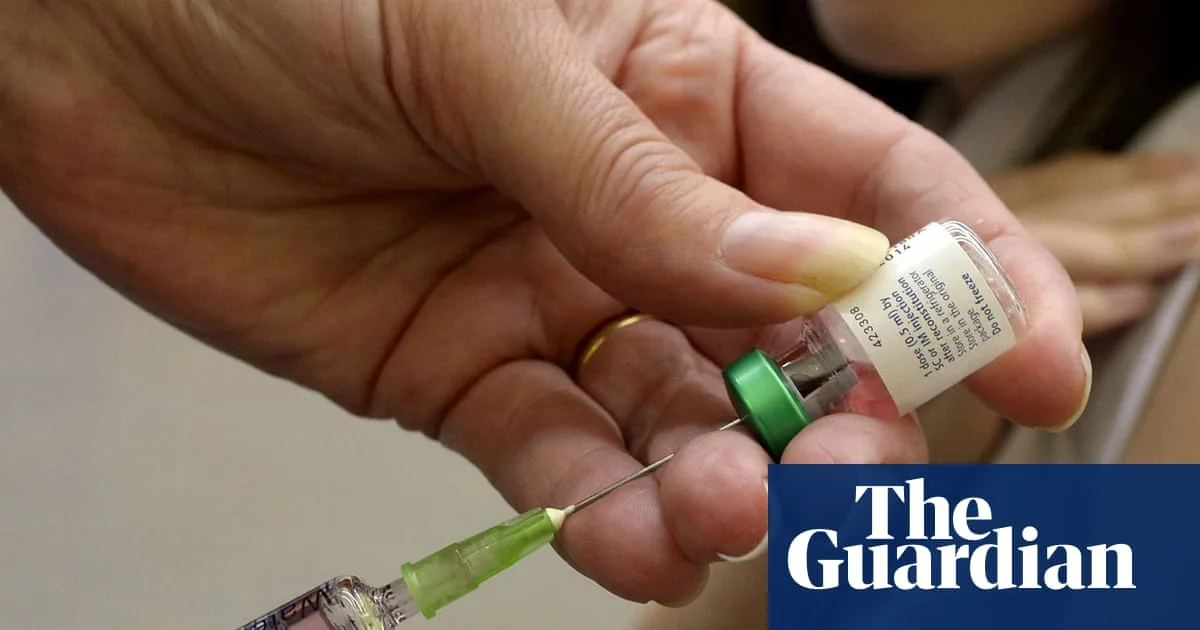
In late January, the World Health Organization announced that six European nations—the United Kingdom, Spain, Austria, Armenia, Azerbaijan, and Uzbekistan—have officially lost their measles elimination status. This designation indicates that the virus has circulated continuously in these countries for over twelve months. To contain measles effectively, health recommendations stipulate that at least 95% of children should be fully vaccinated. However, vaccination rates have been declining across Europe, with the UK experiencing a particularly dramatic drop. As of 2024, only 84% of five-year-olds in the UK have received both recommended doses of the measles, mumps, and rubella (MMR) vaccine.
Jennifer Nuzzo, director of the Pandemic Center at Brown University, identifies the UK as "ground zero" for vaccine hesitancy. This skepticism traces back to Andrew Wakefield, a former physician based in the UK, who falsely linked the MMR vaccine to autism in a 1998 Lancet study that has since been retracted. Wakefield subsequently lost his medical credentials. Notably, this marks the second time in less than a decade that the UK has lost its measles elimination status.
Anti-Vaccine Rhetoric Gains Global Traction
Despite the retraction of Wakefield's study over fifteen years ago, the debunked link between vaccines and autism is gaining renewed traction globally, fueled by figures like Robert F. Kennedy Jr., the US health secretary. Kennedy is known for his association with the anti-vaccine group Children's Health Defense, which continues to promote Wakefield's discredited claims. Nuzzo warns that "the rhetoric that happens in the United States spills over across borders to other countries," creating a global ecosystem where doubts about vaccine safety spread internationally.
Organizations such as Children's Health Defense and influencers who propagate anti-vaccine messages often present themselves as activists. However, Nuzzo points out that there is a profitable industry behind their work. A report from the Center for Countering Digital Hate reveals that the "Anti-Vaxx industry" generates at least $36 million annually. Before assuming his role as health secretary in 2024, Kennedy himself received millions of dollars in combined income from Children's Health Defense and various law firms targeting vaccine manufacturers.
US and Neighboring Countries Face Measles Threats
Under Kennedy's leadership, the United States is now on the brink of losing its measles elimination status. Measles often spreads through international transmission, and neighboring countries Canada and Mexico have also seen a rise in outbreaks. Canada lost its elimination status in November of last year, while Mexico's status is under threat. The Trump administration has further signaled its deprioritization of measles by withdrawing funding from the Global Measles and Rubella Laboratory Network (GMRLN), coordinated by the World Health Organization.
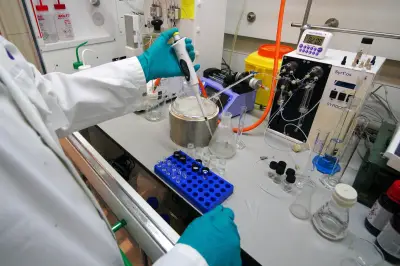
Dr. Alonzo Plough, chief science officer at the Robert Wood Johnson Foundation, explains that breakthrough measles cases typically originate from international travel and unvaccinated children. The GMRLN has historically helped detect outbreaks globally to contain travel-related transmission. The US Centers for Disease Control and Prevention (CDC) has funded GMRLN since its inception, but budget cuts under the Trump administration have jeopardized the network of nearly 800 international labs, risking a collapse in surveillance as measles cases surge. Plough emphasizes that "viruses don't know borders," underscoring the critical need for international coordination to prevent the spread of highly contagious viruses like measles.
Uncertain Future for Global Surveillance
The US Department of Health and Human Services has not addressed specific inquiries about Kennedy's vaccine stance or GMRLN's status, merely stating that it is "working with the White House in a deliberative, interagency process on the path forward for global health and foreign assistance that first and foremost protects Americans." It remains unclear whether GMRLN continues to operate at full capacity. A WHO spokesperson warned that without funding, "the high-quality laboratory surveillance provided by GMRLN will be severely compromised if not completely lost, putting Member States at very high risk of not detecting and timely containing outbreaks."
Nuzzo suggests that the US government's ongoing participation in the Pan American Health Organization, which coordinates GMRLN labs in the Americas, might indicate more substantial contributions to international surveillance than public rhetoric implies. However, even the failure to publicly declare measles a global health priority could have a "chilling effect" on how other countries address the virus's spread. Nuzzo expresses concern that the world has entered an era where fears about measles have relaxed, with some individuals opting to "get it naturally." She cautions that measles is a severe disease with long-term health effects, potentially weakening the immune system and increasing susceptibility to other infections.
In summary, Nuzzo worries that the United States' "biggest exports" are "lies" about measles vaccines, rendering the entire globe more vulnerable to outbreaks and undermining decades of public health progress.