UK Farmers' Mental Health Crisis Deepens with 47 Suicides in Just One Year
Campaigners are sounding the alarm as farmers' mental health in the United Kingdom has plummeted to its lowest level in four years. This troubling decline comes alongside a devastating statistic: 47 suicides occurred within the agricultural community during the past 12 months alone, marking a seven per cent increase from the previous year.
Research Reveals Widespread Decline Across Age Groups
The comprehensive research paints a particularly concerning picture for older farmers. Mental wellbeing among UK farmers over 40 years old has reached a four-year low, while those aged 61—historically considered the most resilient demographic within the sector—have experienced the sharpest decline of all.
Furthermore, the study involving 765 farmers across the nation revealed that their overall mental wellbeing significantly lags behind that of the general UK population. This disparity highlights the unique and mounting pressures facing those working in agriculture.

Charity Labels Situation 'Biggest Hidden Problem'
The Farm Safety Foundation, widely known as Yellow Wellies and a member of The Royal Foundation's National Suicide Prevention Network (NSPN), describes the sector as grappling with what it terms the industry's 'biggest hidden problem.'
In response, the charity has collaborated with fellow NSPN member Baton of Hope to launch a specially designed, farming-themed digital suicide awareness and prevention package. This initiative is bolstered by the NSPN's £1 million funding allocation aimed at driving innovation and delivery in suicide prevention efforts nationwide.
Annual Campaign Aims to Spark Life-Saving Conversations
Yellow Wellies has simultaneously launched its ninth annual Mind Your Head week, running from February 9 to February 13. The campaign's mission is clear: tackle suicide risk within UK agriculture head-on.
The initiative calls upon farmers, rural organisations, agricultural colleges, and Young Farmers Clubs to engage in life-saving conversations, acquire practical skills, and strengthen community connections to provide vital support.
During this crucial week, the charity will introduce a new 'Suicide Awareness & Prevention' eLearning module. This digital resource is designed to equip learners with the ability to recognise warning signs, utilise supportive and non-judgmental language, and create simple yet effective safety plans.
Personal Stories Highlight the Human Cost
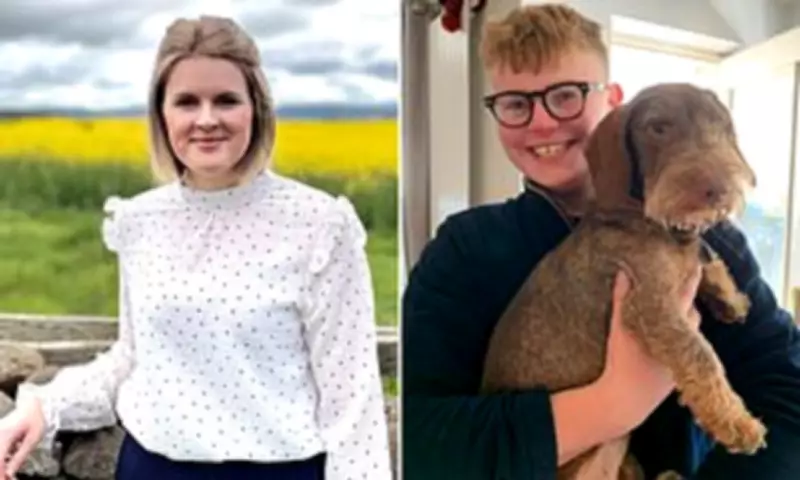
Caitlin Riddell, a 35-year-old from Berwickshire, finds the campaign 'massively important' following her own suicide attempt in 2019. Having worked in farming since her teenage years and now married to a farmer, Mrs Riddell possesses firsthand understanding of the industry's immense challenges.
'It's always been a very pressured industry,' she told the Daily Mail. 'It's a lifestyle choice because it's not a nine to five.' Reflecting on her time working on a dairy farm, she described very early starts and exceptionally late finishes as a normal, everyday occurrence.
'I got to a point in March 2019 where I just thought that I'm never going to get better,' she recalled. 'Farming is what I love doing. And if this is how I am feeling when I am doing the job that I love most in the world, nothing is ever going to get better for me.'
Now a mother-of-two with another child on the way, Mrs Riddell remains deeply worried about farming's future. 'It's just becoming an absolute battle you can't win,' she expressed. 'This is our life, but at the same time, I don't think it's a life that we would necessarily want for our children—not the way it is now, not the way farming is going.'
Policy Pressures Compound Emotional Strain
The emotional strain on farmers is further exacerbated by policy pressures. There have been numerous prolonged protests from farmers against Labour party policies affecting the industry, including proposed changes to inheritance tax.
Estimates suggested these tax alterations could raise up to £520 million annually, but farmers and campaigners argue they threaten the future of thousands of multi-generational family farms, adding another layer of uncertainty and stress.

A Mother's Tragic Loss Fuels Advocacy
Sue Farmer understands this pain all too well, having lost her son, Ted, to suicide in 2023. She now stresses the critical importance of having open conversations, checking in on one another, and knowing where to seek help.
Ted was described as a 'fun, loving boy who loved the outdoors' who spent considerable time with his godparents, who were farmers. In a heartbreaking final phone call the evening before his death, Ted reminded his mother how much he loved her and expressed that he was sorry.
'Whilst you can’t live with regrets, I do wish that I had asked why he’d said what he did,' Mrs Farmer shared. 'It may have led to a conversation that made him talk through whatever was going on in his mind that made him think that there was no other solution than ending his life.'
Ted had been a huge advocate for Yellow Wellies, and his family now hopes to contribute toward raising awareness about mental health in farming by sharing his story.
'Farming is more than a job,' Mrs Farmer explained. 'Its long hours, it can be isolating at times, there’s pressure, uncertainty, and the responsibility doesn’t switch off. There is still a huge stigma around mental health and having conversations—suicide is felt by far too many in and outside this community.'
Charity Manager Calls for Tailored Solutions
Stephanie Berkeley, Manager of the Farm Safety Foundation, acknowledged the progress made over the past nine years in raising awareness and improving education around mental health. However, she noted that when it comes to suicide prevention specifically, progress has been far more limited.
'While agriculture in the UK benefits from rural support groups and charities who deliver vital, high-quality support, a critical gap remains,' Berkeley stated. 'There is still very little suicide prevention training tailored specifically for those working in agriculture.'
She emphasised that farming brings a unique set of pressures—long hours, isolation, financial uncertainty, generational expectations, and physical risk. 'Conversations about suicide in rural communities require approaches that are real, relatable, and rooted in lived experience,' Berkeley added.
'Without training designed for the realities of agricultural life, we risk leaving those most vulnerable without the tools they need to recognise warning signs and intervene effectively.'
Berkeley concluded with a powerful message: 'Farming is tough. Long hours, hard graft, and a mindset that says "just get on with it." That grit is admirable—but it is also why some farmers leave it too late to ask for help. As we look ahead, we want to address the issue of suicide awareness and prevention directly. Too many farming families are quietly carrying the weight of crisis and loss. The message this year is simple: learn the steps, start conversations earlier, and look out for each other. When communities know what to say and what to do, lives can be saved.'