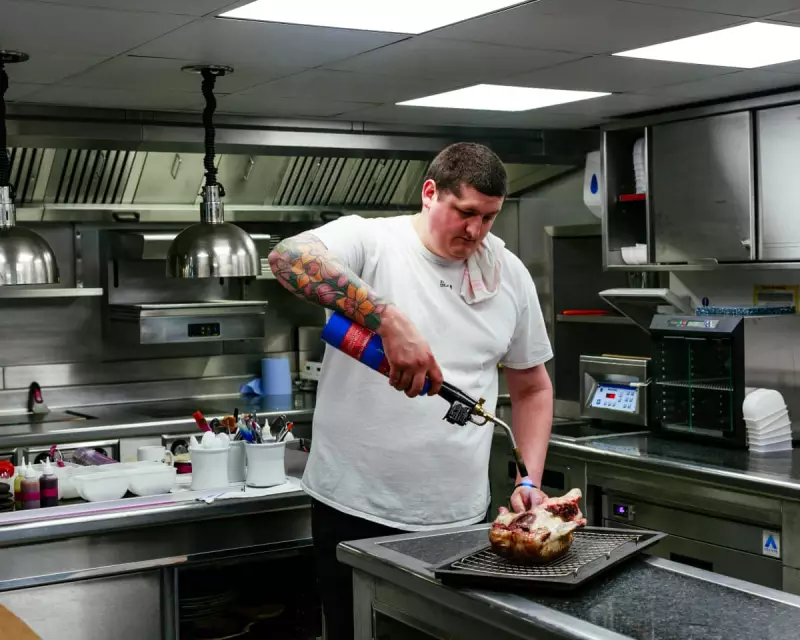
A prominent UK chef with two Michelin stars to his name has ignited a fierce national debate about food safety standards in elite restaurants after his establishment received the lowest possible hygiene rating.
A Clash of Culinary Cultures
Gareth Ward, the chef and owner of the celebrated restaurant Ynyshir in Powys, Wales, has stated he is "not embarrassed" after the venue was given a one-out-of-five food hygiene rating by Ceredigion County Council inspectors. The rating indicates the business is operating below the minimum legal standards expected.
The inspection report, published on the Food Standards Agency website, found that Ynyshir's management of food safety required "major improvement". The cleanliness and condition of its facilities and building also needed "improvement", while its hygienic food handling was deemed "generally satisfactory".

This stands in stark contrast to the restaurant's stellar culinary reputation. Ynyshir, located on the edge of Eryri (Snowdonia) National Park, holds two Michelin stars and was named the UK's best restaurant in both 2022 and 2023. It serves an ambitious 30-course tasting menu, priced from £468 per person, featuring raw and aged ingredients like sashimi, oysters, and duck liver.
Critics and Industry Clash Over Standards
The controversy intensified when food critic Giles Coren defended Ward on the BBC, suggesting that standard health and safety rules "don't really apply" to elite establishments like Ynyshir. Coren argued that inspectors used to checking provincial fridges would "lose his mind" in such a creative kitchen environment.
This view was swiftly condemned by the Chartered Institute of Environmental Health (CIEH). Una Kane, chair of the CIEH's food advisory panel, issued a statement saying it was "insulting" to imply restaurants cannot offer a unique experience while complying with hygiene law. "No food business should see itself as above the law," she stated, warning that Coren's comments risked making vital rules seem "optional, subjective or old-fashioned".
Ward himself attributed the poor score to inspectors' concerns over his use of raw and aged ingredients, a cornerstone of his culinary style. He has since made some changes, including installing an additional hand-washing station in the fish preparation area, and acknowledged the officers were "not 100% wrong". He also cited overwhelming paperwork as a contributing factor.
A Wider Issue for High-End Dining?
The incident has highlighted a perceived cultural clash between innovative chefs and regulatory frameworks. Other top chefs have shared similar experiences. James Lowe, former chef-owner of Michelin-starred Lyle's in London, revealed his restaurant once received a two-star hygiene rating after an inspector was alarmed by unpasteurised cheese and aged pork.
Tomono Davies, a London-based sushi expert, noted that preparing sashimi should not inherently affect a hygiene score, as many restaurants handle raw food. She suggested a cultural difference, explaining that in Japan, chef discipline and innate cleanliness often supersede rigid paperwork, whereas UK rules are heavily focused on liability and legal protection.
For now, Ynyshir is required by Welsh law to display its one-star hygiene certificate prominently. The business has requested a re-inspection, though no date has been set. The debate continues over whether the pursuit of gastronomic artistry and strict regulatory compliance can truly coexist, or if they are destined to remain in conflict.