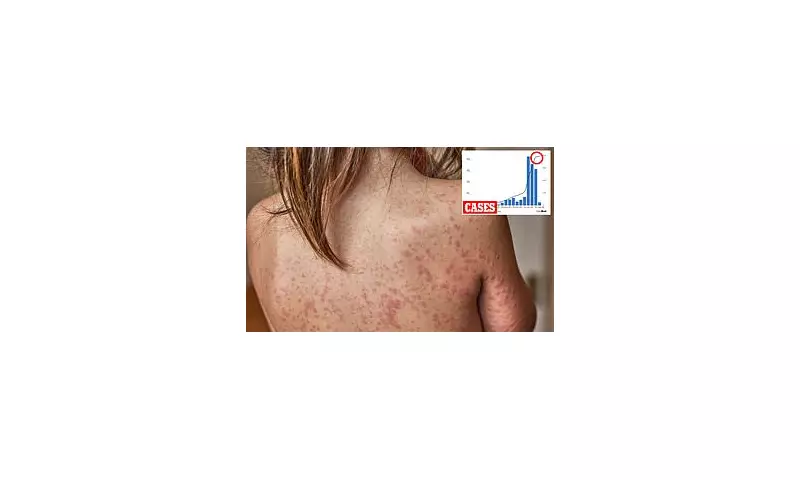
South Carolina Confirms Worst Measles Outbreak in America Since Disease Elimination
New public health data has revealed that South Carolina is currently experiencing the most significant measles outbreak in the United States since the disease was officially eliminated in the early 2000s. The South Carolina Department of Public Health announced on Tuesday that a staggering 789 cases of measles have been reported across the state since October 2025.
Outbreak Surpasses Previous National Highs
This concerning development has now surpassed the massive outbreak witnessed in Texas last year, which infected over 800 individuals. According to the latest DPH data, nearly 600 of these cases in South Carolina have been reported in 2026 alone, indicating a rapid acceleration of infections.
At least 18 people have required hospitalisation for complications, which can include pneumonia, brain swelling, and additional secondary infections. While no deaths have been reported in the state or nationwide so far in 2026, there were three fatalities recorded in 2025.

Quarantine Measures and Exposure Locations
The severity of the outbreak has forced an additional 557 people into quarantine due to potential exposure to the virus and lack of immunity through vaccination or prior infection. Multiple exposure sites have been identified by health officials, including:
- Clemson University, where an individual affiliated with the 30,000-student campus had a confirmed case earlier this month
- The South Carolina State Museum in Columbia
- A Walmart, Wash Depot laundromat, and Bintime discount store in Spartanburg
- Multiple schools across affected areas
Spartanburg County at the Epicentre
The outbreak has been largely centred on Spartanburg County, which sits on the border with North Carolina. Health officials have confirmed 756 cases in Spartanburg County alone since October 2025, representing the overwhelming majority of the state's total infections.
Vaccination Status Breakdown
Detailed analysis of the 789 measles cases reveals crucial patterns in vaccination status:
- 692 cases occurred in unvaccinated individuals
- 14 cases were in people with partial measles-mumps-rubella vaccination
- 20 cases were in fully vaccinated individuals, which remains rare given the two-dose MMR vaccine's 97 percent effectiveness
- 63 cases were in people with unknown vaccination statuses
Age Distribution of Cases
The South Carolina health department has provided a detailed breakdown of cases by age group:
- 345 cases in children ages five to 11
- 201 cases in children under four years old
- 149 cases in kids and teens ages 12 to 17
- 36 cases in adults 18 to 29
- 25 cases in people ages 30 to 49
- 5 cases in adults over 50
- 28 cases in people with unknown ages
Vaccination Rates Below Herd Immunity Threshold
The latest state data shows that 91 percent of kindergarteners have received both doses of the MMR vaccine. This falls below the 95 percent threshold set by the Centers for Disease Control and Prevention that is necessary to achieve herd immunity. In some South Carolina schools, vaccination rates are as low as 20 percent, while Spartanburg County maintains a 90 percent rate.
National Context and Disease Transmission
According to the CDC, 93 percent of measles cases in the United States generally occur in unvaccinated people or those with unknown vaccine status. Three percent have received one dose of the MMR vaccine, while four percent have received both doses.
So far in 2026, measles cases have also been reported in multiple states including Washington, Oregon, Idaho, Utah, California, Arizona, Minnesota, Ohio, Kentucky, Virginia, North Carolina, Georgia, and Florida. Cases in North Carolina, Washington, and California have been directly linked to the South Carolina outbreak.
Understanding Measles and Its Dangers
Measles is an infectious but preventable disease caused by a virus that leads to flu-like symptoms and a distinctive rash that starts on the face before spreading down the body. In severe cases, complications can include:

- Pneumonia
- Seizures
- Brain inflammation
- Permanent brain damage
- Death
The virus spreads through direct contact with infectious droplets or through airborne transmission when an infected person coughs or sneezes. Patients remain contagious from four days before the rash appears through four days after it emerges.
Historical Context and Vaccine Impact
The United States formally eliminated measles in 2000, meaning there had been no community spread for twelve months due to widespread MMR vaccine uptake. Before MMR vaccines became available in the 1960s, measles caused global epidemics with up to 2.6 million deaths annually.
By 2023, that number had fallen to approximately 107,000 deaths worldwide. The World Health Organization estimates that measles vaccination prevented 60 million deaths between 2000 and 2023, highlighting the crucial importance of maintaining high vaccination coverage to prevent future outbreaks of this dangerous but preventable disease.