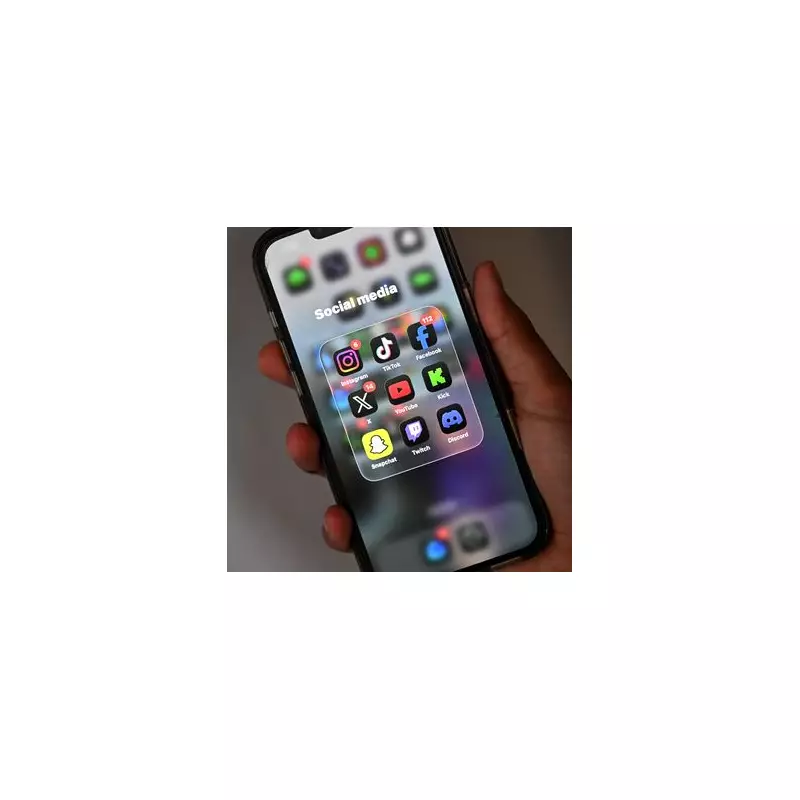
A prominent women's health expert has raised serious concerns that proposed government restrictions on social media access for teenagers could inadvertently deprive young people of vital health education.
Vital Information at Risk
Dame Professor Lesley Regan, a leading obstetrician and gynaecologist, has warned that banning under-16s from platforms like TikTok and Instagram could leave adolescents in the dark about crucial health matters, particularly menstrual education.
The government is currently consulting on introducing an Australian-style social media ban for under-16s in the UK as part of measures intended to protect young people's wellbeing. However, Dame Lesley argues this approach could have unintended negative consequences for health literacy.

"We Can't Live in a Society"
Speaking to the Women and Equalities Committee of MPs, Dame Lesley shared disturbing anecdotes about young girls' experiences with menstruation, highlighting the urgent need for better education.
"There's always a little girl that tells me the same story... about a 'best friend' who woke up and thought she had died and gone to hell when there was blood all over the bed," she revealed.
"I just think we can't live in a society where 10 and 11-year-olds have that sort of fear. If we ban social media for under-16s, we're going to have to find additional ways, or alternative ways of communicating what they need to know."
The Power of Social Media Learning
Dame Lesley, who serves as Professor of Obstetrics and Gynaecology at Imperial College London, emphasised that many young people find social media formats particularly effective for absorbing health information.
"When I see an infographic, I immediately remember it, as opposed to if I read a paragraph, I might not remember what the percentages are, but infographics are very, very powerful," she explained.
She added that short social media clips often present information in more accessible formats than traditional educational materials, making complex health topics easier for young audiences to understand and retain.
Implementation Challenges
The expert also questioned how effectively such a ban could be policed, suggesting that regardless of restrictions, there will always be a need for high-quality, evidence-based health information presented in straightforward language and available in multiple languages.
"I still think it's going to be quite difficult to police this ban. I think there will always be the need for really high-quality, evidence-based information that is straightforward, that is available in lots of different languages," Dame Lesley noted.
Broader Support for Restrictions
The proposed ban has received significant support from various quarters, including more than 60 Labour MPs and parents like Esther Ghey, whose daughter Brianna was murdered by teenagers who used social media to plan the attack.
Esther Ghey stated: "Some argue that vulnerable children need access to social media to find their community – as the parent of an extremely vulnerable and trans child, I strongly disagree. In Brianna's case, social media limited her ability to engage in real-world social interactions."
Comprehensive Approach Needed
The Department of Science, Innovation and Technology has confirmed the consultation will seek views from parents, young people and civil society to determine the effectiveness of a potential ban.
The government is also considering whether social media companies could implement more robust age verification systems and whether certain features that encourage compulsive use should be removed or limited.
Additionally, Ofsted is preparing to issue tougher guidance to schools about reducing phone use, including instructing staff not to use personal devices in front of pupils.
Inclusive Education Matters
Dame Lesley also highlighted the importance of inclusive health education, revealing that the charity she chairs, Wellbeing of Women, insists boys participate in menstrual education sessions when they visit schools.
"Sometimes in the past, what's happened is that the headmistress has said: 'Oh, we don't have boys inside'," she shared.

"The response from Wellbeing of Women is: 'Well, if you don't bring the boys along to the session at the end, then we ain't coming'. And it's always the young men that say, 'Wow, this is so useful, because I now know what I can do to support my sister or my mum or whatever'."
This approach underscores the broader need for comprehensive, accessible health education that reaches all young people through whatever channels prove most effective for their learning.