Healthcare Advocacy Group Demands RFK Jr's Immediate Resignation
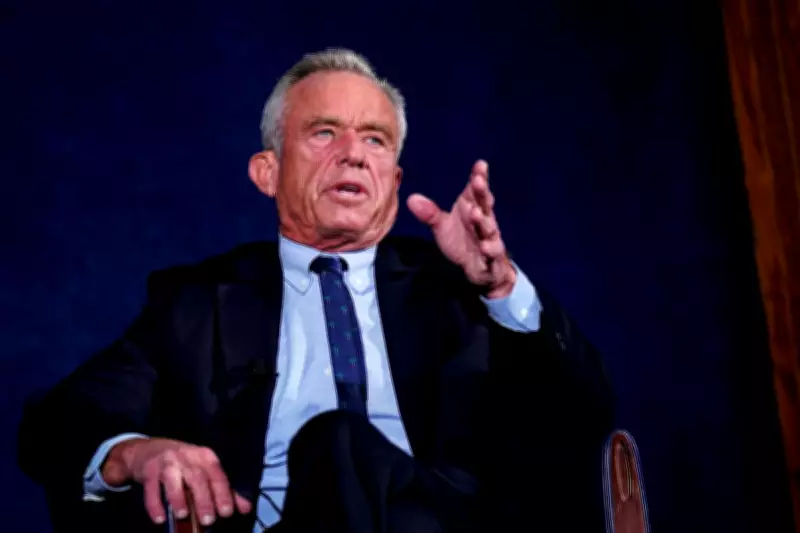
The prominent healthcare advocacy organization Protect Our Care has issued a stark demand for US Health and Human Services Secretary Robert F Kennedy Jr to step down from his position. This call follows Kennedy's controversial remarks during a podcast appearance where he appeared to downplay the seriousness of Covid-19 risks.
Controversial Cocaine Reference Sparks Outrage
During the 12 February episode of Theo Von's This Past Weekend podcast, Kennedy made a startling comparison while discussing his approach to pandemic precautions. "I'm not scared of a germ," Kennedy stated. "I used to snort cocaine off of toilet seats."
The health secretary, who has publicly acknowledged past struggles with drug addiction, made this comment in reference to his continued attendance at in-person recovery meetings during the height of the pandemic. "Like, if I don't, if I don't treat it, which means for me going to meetings every day, it's just bad for my life," Kennedy explained during the interview.

One-Word Response From Advocacy Leader
In response to these comments, Protect Our Care President Brad Woodhouse issued a concise, one-word statement directed at Kennedy: "Resign." The organization elaborated that Kennedy's reference to cocaine—a substance involved in nearly 30,000 overdose deaths in the United States as recently as 2023—"continues to lay bare why he is the most dangerous ... person ever to lead such an important federal agency."
This controversy represents yet another challenging moment during Kennedy's first year as health secretary in the Donald Trump administration. The former anti-vaccine activist's appointment to lead the nation's premier health agency has been contentious from the outset.
Broader Concerns About Kennedy's Leadership
Beyond the recent podcast remarks, Kennedy has faced significant criticism for his handling of multiple public health crises. His approach to measles outbreaks—which have resulted in several deaths from a disease declared eliminated in the United States in 2000—has drawn particular scrutiny.
Rather than emphasizing the proven safety and necessity of measles vaccination, Kennedy has characterized immunization as a personal choice rather than a universal public health need. He has instead promoted questionable alternative treatments that lack scientific validation.
The health secretary's proposed dietary guidelines have also raised concerns among medical professionals and environmental advocates. Critics argue that Kennedy's prioritization of meat and dairy products could contribute to health problems while simultaneously damaging the environment through deforestation for agricultural expansion.
Declining Public Trust and Political Criticism
Public confidence in both Kennedy and the American healthcare system has noticeably eroded during his tenure. A recent KFF poll revealed that "a majority of the public continue to disapprove of [Kennedy's] performance as [health] secretary and his handling of US vaccine policy."
Democratic Representative Diana DeGette of Colorado voiced strong criticism of Kennedy's leadership in a social media post, declaring: "public health can't survive another year of this."
Department Response Defends Kennedy's Record
When contacted for comment, HHS spokesperson Andrew Nixon defended Kennedy's leadership. "Under Secretary Kennedy's leadership, HHS is exercising its full authority to deliver results for the American people," Nixon stated.
"In 2025, the Department confronted long-standing public health challenges with transparency, courage, and gold-standard science ... HHS will carry this momentum into 2026 to strengthen accountability, put patients first, and protect public health," the spokesperson added.
The controversy surrounding Kennedy's comments comes at a critical juncture for American public health policy, with advocates and critics closely watching how the administration responds to mounting pressure for leadership changes at the highest levels of healthcare governance.