Breakthrough PRP Injection Treatment Gives Patients Their Voices Back
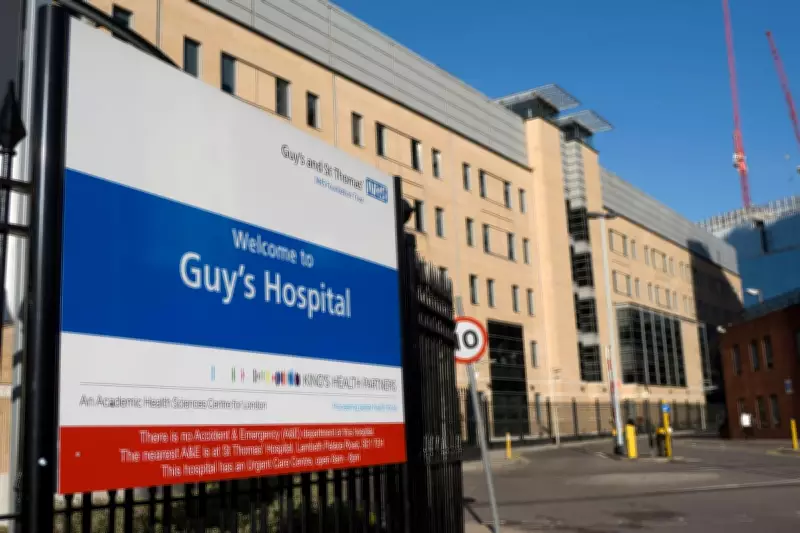
A revolutionary new treatment using platelet-rich plasma (PRP) injections is transforming the lives of patients with damaged vocal cords, enabling them to speak, sing, and communicate effectively for the first time in years. The innovative procedure, pioneered at Guy's Hospital in London, harnesses the patient's own blood to stimulate healing and rejuvenate scarred vocal tissues.
Father Regains Ability to Read Bedtime Stories After Lifelong Struggle
David Metherell, a 45-year-old critical care nurse, exemplifies the treatment's profound impact. He contracted a rare strain of human papillomavirus (HPV) at just nine months old, which severely damaged his vocal cords. By age six, he had undergone 21 operations, but these left his vocal cords permanently scarred, resulting in a croaky voice that would often suddenly cut out.
"I've never been able to sing, I've never been able to shout—I've just been limited in so many ways," Metherell told the BBC. However, after receiving three PRP injections, he described the treatment as "liberating," noting it has allowed him to speak confidently in busy social and work settings and, most poignantly, read bedtime stories to his son.

NHS Trial Shows Promising Results for Vocal Cord Rehabilitation
The trial treatment, conducted at the ear, nose, and throat (ENT) clinic at Guy's Hospital, involves injecting PRP—derived from the patient's blood—directly into the vocal cords. While PRP is already used in NHS clinics for knee and tendon injuries to promote healing, this marks its first application for vocal cord damage. Consultant Shiying Hey and her team have treated 10 patients so far, with all reporting significant voice improvement.
Hey explained that the treatment is cost-effective because it utilizes the patient's own blood, avoiding expensive synthetic materials. Previous studies support its efficacy; a 2025 study published in the Journal of Voice administered 109 PRP injections to 48 participants with damaged vocal cords between 2021 and 2023. One month after the final injection, over 70% of participants reported moderate or significant vocal improvement, with more than two-thirds showing observable enhancements in their vocal cords.
Complementary AI Technology Offers Alternative Speech Aid Solutions
Beyond PRP injections, other experimental technologies are emerging to assist those with speech difficulties. The University of Cambridge has developed Revoice, an AI-powered device that decodes speech signals and emotional cues without invasive brain implants. Worn as a soft choker around the neck, it picks up heart rate and throat muscle vibrations, converting them into words and sentences.
In a small trial with five patients suffering from dysarthria—a speech impairment often following a stroke—the device achieved high accuracy, with errors in only 4.2% of words and 2.9% of sentences. This contrasts with current, more time-consuming methods like letter-by-letter input, eye tracking, or brain implants, offering a less invasive alternative for communication.
The convergence of PRP treatments and AI innovations represents a significant leap forward in vocal health and speech rehabilitation, providing new hope for individuals affected by vocal cord damage and related conditions.