Political Pressure Claims Emerge in £1bn Hospital Safety Scandal
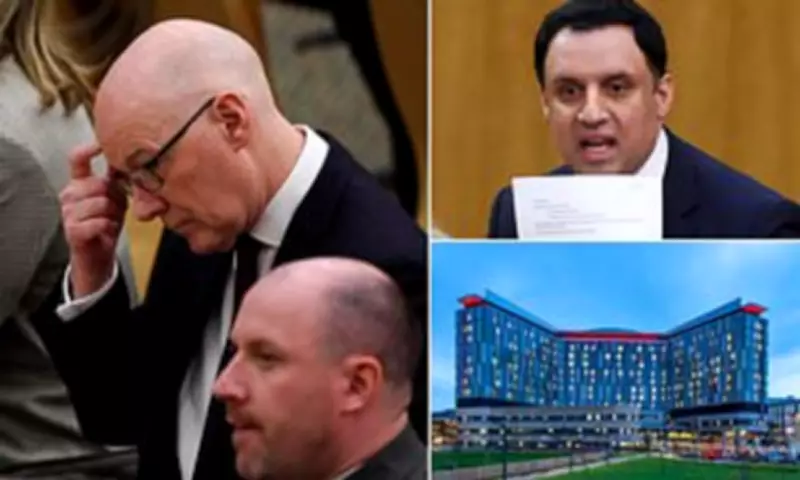
Senior NHS executives in Scotland allegedly faced significant political pressure to open the £1 billion Queen Elizabeth University Hospital in Glasgow ahead of the 2015 general election, despite serious concerns about patient safety. The explosive claims emerged during heated exchanges at First Minister's Questions, where Scottish Labour leader Anas Sarwar presented what he described as damning documentary evidence.
Families' Anguish and Official Denials
Kimberly Darroch, whose ten-year-old daughter Milly Main died at the hospital while receiving treatment for leukaemia, expressed profound distress at the revelations. "This confirms what we feared," she stated. "We thought that political pressure was applied to open the hospital before it was ready, and now we know the truth. The denials about this in recent days have added to our pain and anguish – we were lied to."
Another child died and at least eighty-four patients fell ill shortly after the hospital opened just ten days before the 2015 election. NHS Greater Glasgow and Clyde (NHSGGC) denied for years any connection between infections and the £1 billion facility, only admitting this month a probable link to a contaminated water system.

Parliamentary Confrontation and Documentary Evidence
During a dramatic First Minister's Questions session, Anas Sarwar confronted Deputy First Minister John Swinney with what he claimed was definitive proof of political interference. "I have here in my hand official Scottish Government meeting notes," Sarwar declared, brandishing documents from December 2019 and January 2020.
The documents reportedly state explicitly that "political pressure was also being felt" and that "no consideration was given to delaying the opening of the hospital." Sarwar accused SNP ministers of putting politics before patient safety, claiming the decision had resulted in "a decade of lies, deceit and cover-up."
Mr Swinney repeatedly denied any external pressure had been applied, quoting counsel to the Scottish Hospitals Inquiry who stated last Friday: "There is no evidence of external pressure on NHS Greater Glasgow and Clyde to open the hospital early or before it was ready to be opened."
Expert Analysis and Systemic Failures
The controversy centres on an expert verdict buried within an 847-page bundle of evidence submitted to the ongoing public inquiry. Retired chartered engineer Jim Leiper, who worked for thirty-eight years in the NHS, conducted a review in 2018 that identified multiple systemic failures:
- Political pressure influencing the opening timeline
- Key staff lacking necessary experience
- Maintenance budgets allocated at only half the required level
- Numerous building defects including blocked sewers, flooding, and flawed water filters
The expert meeting concluded that "the drive to minimise the cost per square metre should be secondary to achieving the safest, most resilient clinically appropriate facility."
Ongoing Investigations and Current Concerns
Police Scotland are currently examining the deaths of three adults and three children connected to the hospital, including that of Milly Main in August 2017. Other cases under investigation include:
- An unnamed ten-year-old boy who died in December 2018
- Gail Armstrong, seventy-three, who died in January 2019
- Scottish Government official Andrew Slorance who died in December 2020
- Tom Dynes, sixty-five, who died in May 2021
- An unnamed three-year-old who died in August 2017
Despite NHSGGC's recent admission regarding contaminated water systems, the board maintains it does not accept blame in individual cases while acknowledging being under pressure to open the hospital prematurely. Whistleblowers have raised ongoing concerns about current conditions at the facility, including malfunctioning dishwashers, inadequate running water, and leaking roofs.
Dr Sandesh Gulhane, Scottish Conservative health spokesman, warned that "serious issues" remain at the hospital a decade after its controversial opening. "Patient and staff safety must be paramount if we are to restore confidence," he emphasised.

The Scottish Hospitals Inquiry, chaired by Lord Brodie, continues to examine all aspects of the scandal, with counsel noting that whistleblower Dr Christine Peters "has not seen evidence of the necessary changes having taken place." As families continue their search for answers, the political fallout from these revelations shows no signs of diminishing.