Social Media Sparks Debate Over True Meaning of 'Baby on Board' Signs
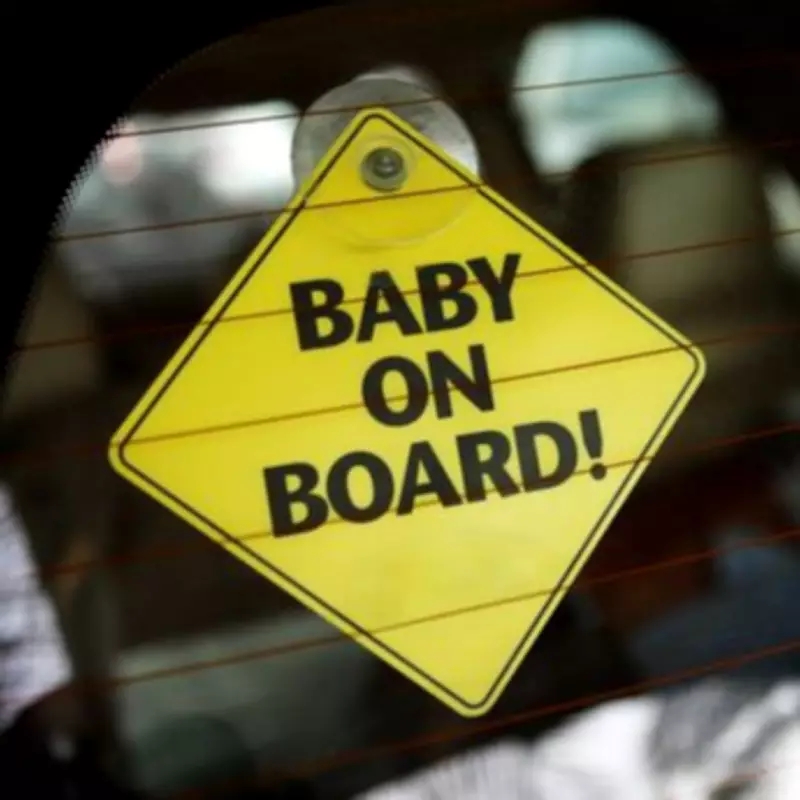
A recent social media post has ignited a heated debate about the real purpose of the ubiquitous 'Baby on Board' signs and stickers seen in car windows across the UK and globally. These familiar indicators, often spotted on vehicles nationwide, have long been subject to varied interpretations among drivers and parents alike.
Conflicting Theories Emerge in Online Discussion
On the platform X, formerly Twitter, user @BonkDaCarnivore shared a personal revelation, stating they initially viewed the stickers as pointless until their wife explained they were intended to alert fire departments to search for a baby in wreckage after an accident. This prompted a flood of responses with alternative views. One user commented that they do drive more cautiously when seeing the sticker, assuming the driver might be distracted by childcare duties.
However, emergency service professionals quickly weighed in to challenge this notion. A firefighter noted they never look for window signs or stickers at crash scenes, instead relying on more reliable clues like car seats, stuffed animals, or toys. Similarly, a paramedic's husband confirmed that emergency personnel do not actively search for these signs during accidents.

Paramedics and Safety Experts Clarify the Reality
Road Safety GB has stated that the stickers are designed to serve a dual purpose: alerting emergency services to the presence of a baby or small child in a collision and encouraging other drivers to exercise extra caution. Yet, paramedic Paul Maxwell told qz.com that he and his crew had never heard of the emergency alert theory, believing the signs are primarily to warn other motorists to drive carefully.
Nikki Jurcutz, a former paramedic and co-founder of Tiny Hearts Education, an Australian first aid training programme, emphasized on Instagram that the idea paramedics rely on these signs is a myth. She explained that during her time as a paramedic, she was trained to assess the entire situation comprehensively. Paramedics look for tangible evidence such as car seats and baby bags, thoroughly checking all parts of the vehicle and surrounding area, regardless of whether a 'Baby on Board' sign is present.
Historical Context and Safety Concerns
According to qz.com, the signs were first invented in 1984 by Massachusetts resident Michael Lerner after he drove his 18-month-old nephew home and experienced aggressive driving from others. He created the sign to convey the protective feelings of a parent with a child in the car. Originally, these signs were attached with suction cups so they could be removed when the baby was not on board, addressing early concerns about misleading emergency responders.
Some social media users expressed worries that permanent stickers could cause emergency services to waste precious minutes searching for non-existent babies, potentially to the detriment of other passengers. This highlights the importance of accurate information in vehicle safety practices.
In summary, while 'Baby on Board' signs may encourage cautious driving among some motorists, paramedics and safety experts confirm they do not serve as a critical tool for emergency response. The debate underscores the need for public awareness about proper safety measures and the realities of accident assessment by professionals.