Occupational Therapist's Comprehensive Guide to Wheelchair Selection
Choosing a wheelchair, whether for full-time mobility, occasional use, or as a new consideration, involves numerous critical factors that impact independence, health, and safety. Natasha Bruce-Jones, an Occupational Therapist at CareCo, emphasizes that this decision requires careful assessment of individual needs and circumstances.
Professional Assessment: Beyond Physical Requirements
"As an Occupational Therapist, I evaluate wheelchair requirements based on activities, environments, and functional abilities," explains Natasha Bruce-Jones. "This includes posture, skin integrity, transfers, ergonomics, strength, coordination, sight, and cognition. Crucially, I prioritize the person's identity—independence encompasses emotional and psychological well-being, not just physical capability."
She highlights the expanding variety of wheelchairs available on the market, which supports diverse needs. However, she strongly advises consulting a wheelchair specialist before making any private arrangements. "Choosing the wrong chair risks financial loss, exacerbating health issues, or causing injuries to users or carers," she warns.

Fundamental Considerations: Propulsion and Environment
Start by determining propulsion needs: attendant-pushed, self-propelled, powered by batteries, body weight, or combinations. Consider whether the chair is for short transits, accompanied mobility, or independent use.
Environment is equally vital—indoor, outdoor, or both. Wheelchairs offer customisable advantages over scooters, with adaptable wheels, tyres, cushions, and footrests. Their smaller footprint makes them ideal for tight spaces like homes.
Self-Propelled Chairs: Techniques and Safety
For self-propelled chairs, Natasha notes alternatives to push rims: "Some users remove footplates and pull themselves with their feet, useful for narrow doorways or tight turns." She recommends chairs with removable individual footplates over single tray designs to avoid knee flexion issues.
Upper body strength and range of motion are essential. Wheel positioning affects stability and shoulder extension—further back wheels increase stability but require greater reach. For efficient propulsion, reach behind for push rims, not tyres, or opt for chairs like the Ventor Sport with forward-set wheels.
Long-distance users should consider protective gear like CareCo Gel Padded Fingerless Wheelchair Gloves (£12.99) and attend wheelchair workshops to learn techniques such as hill negotiation, turning, and curb jumping. Beginners might start with self-propelled chairs with attendant handles, like the CareCo Ergo Pro, which allows travel while occupied for those with transfer difficulties.
Transit Chairs: Attendant Assistance and Power Options
For transit chairs with attendant help, ensure safe movement on ramps and curbs. "Go down surface changes in reverse to prevent falls," advises Natasha. Attendants should use tipper feet, as seen on the I-GO Airrex LT Transit Wheelchair, a lightweight model with adjustable width and padded seating.
Brakes and footplates are critical for safety and posture. Battery packs, like the I-Go PowerGlide Powerstroll, can assist with hills or added weight, enhancing mobility for both user and attendant.
Powered Chairs: Innovation and Safety Precautions
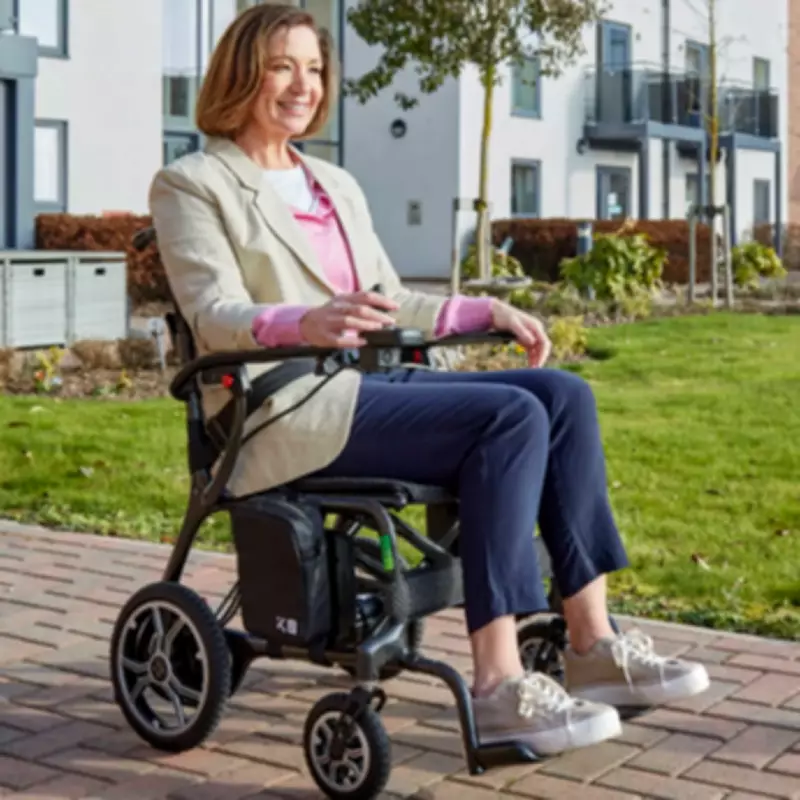
Powered chairs range from hands-free models using segway principles to collapsible options like the iCONNECT Zora Carbon Powerchair. Joystick controls offer simplicity, but users must prioritize safety. "Check vision regularly, as it's often overlooked when operating a powered vehicle," Natasha stresses.
Safety tips include turning off chairs when stationary, starting at slow speeds, removing indoor hazards like rugs and wires, and using tilt functions on ramps. Approach curbs squarely and hold joystick bases for control. Customised controls are available for grip or reach issues.

Customisation and Adaptations
"One size doesn't fit all," Natasha asserts. Post-surgery recovery, limited knee flexion, or oedema may require adaptations like leg raisers (e.g., Ergo Pro SP/Transit Elevating Leg Rest), stump boards for amputations, or walking stick holders. These can affect stability, so extended wheelbase chairs might be necessary. "Never underestimate a suitable cushion," she adds, noting their importance for comfort and health.
Financial Aspects: NHS and Voucher Schemes
While the NHS sometimes provides wheelchairs, Natasha recommends inquiring about voucher schemes for specific preferences. "This cash equivalent allows access to a wider selection of products," she explains. For short-term needs, hiring is an option, though specialist accessories may require separate purchase.
All mentioned products are available at CareCo.co.uk, offering practical solutions tailored to diverse mobility requirements.