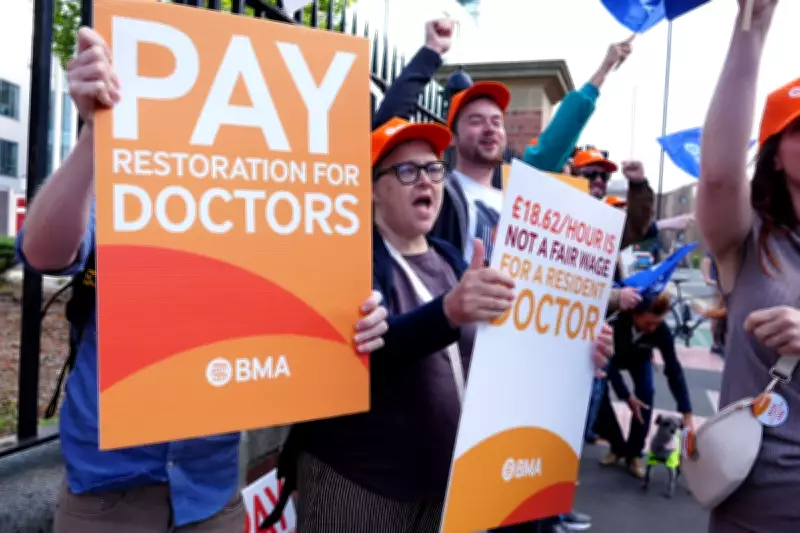
Resident doctors across England have delivered a resounding mandate to continue their industrial action campaign for an additional six months, intensifying the long-running dispute over pay structures and employment conditions within the National Health Service.
Overwhelming Support for Continued Action
The British Medical Association has confirmed that 93% of voting members supported extending the strike mandate, with a participation rate of 53% among eligible doctors. This decisive result provides the union with substantial leverage as negotiations with government officials continue.
Union Leadership Calls for Constructive Resolution
Dr Jack Fletcher, who chairs the BMA's resident doctors committee, emphasised that further strikes are not inevitable despite the renewed mandate. "None of this needs to mean more strikes," he stated, while acknowledging recent improvements in the government's negotiating tone compared to previous exchanges.

"A deal is there to be done: a new jobs package and an offer raising pay fairly over several years can be worked out through good will on both sides, in the interests of patients, staff and the whole NHS," Dr Fletcher asserted. He added that with the six-month mandate now confirmed, "the Government has nowhere to run and no means of running out the clock."
Government Response and Ongoing Negotiations
The Department of Health and Social Care highlighted the 28.9% pay increase implemented over the previous three years, alongside legislative efforts to prioritise UK medical graduates for specialty training positions. A departmental spokesperson confirmed that "intensive and constructive discussions" have been underway since January to resolve the conflict.
"We hope that these talks result in an agreement that works for everyone, so that there is not any more strike action by resident doctors in 2026," the spokesperson added, reflecting the government's desire to avoid further disruption to patient services.
Concerns from Healthcare Leaders
Matthew Taylor, serving as interim chief executive for both the NHS Confederation and NHS Providers, expressed profound disappointment at the vote's outcome. He warned that additional strikes would impose "yet more unplanned costs on NHS organisations," potentially forcing difficult decisions about service reductions and staffing levels.
"We cannot let these strikes roll through 2026, using up yet more scarce resources and impeding the progress the NHS needs to make in reducing waiting lists," Taylor emphasised. He joined hospital leaders in calling for mediated talks between the government and union representatives to establish a sustainable resolution.
Historical Context and Future Implications
This development extends a period of industrial unrest that has seen resident doctors stage fourteen separate strikes since 2023. The renewed mandate ensures that pressure will remain on both negotiating parties throughout the first half of 2026, with patient care continuity and NHS financial stability hanging in the balance.
The coming weeks will prove critical as healthcare leaders, government officials, and union representatives attempt to bridge remaining differences before the renewed strike authority translates into further service disruptions across England's hospital network.