
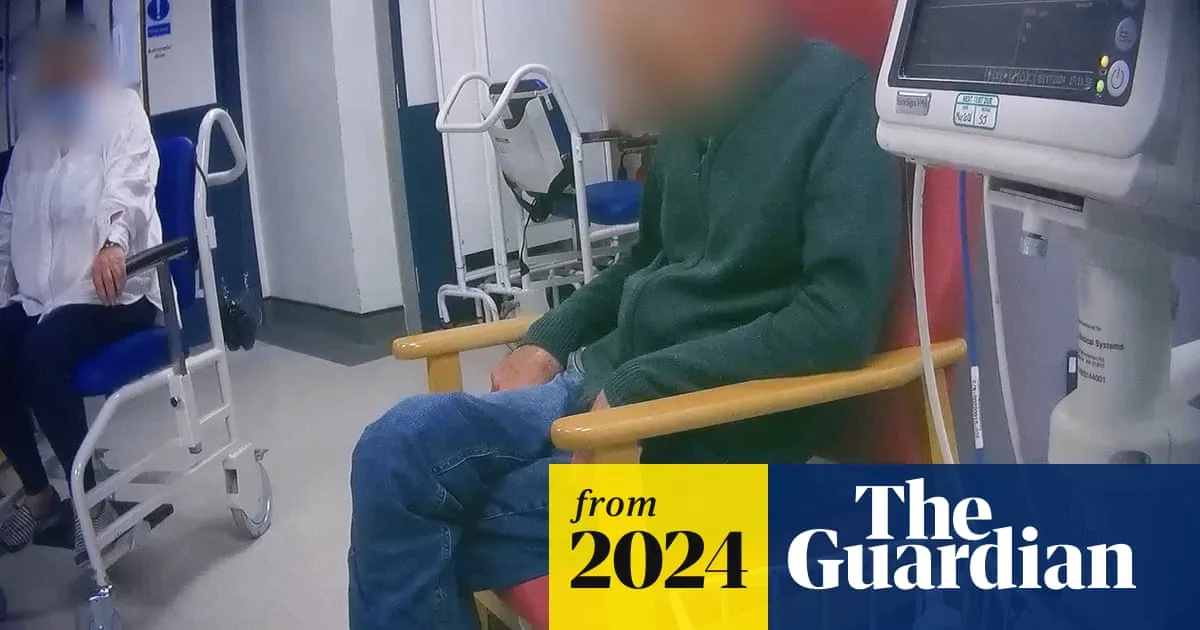
Almost 19,000 NHS patients were left waiting in A&E for three days over a 12-month period, an investigation has revealed. Between April 2023 and March 2024, nearly 400,000 people were left waiting more than 24 hours across A&E departments, a 5% rise on the previous year.
Channel 4’s Dispatches programme obtained the figures and also found that 54,000 people had to wait more than two days. An undercover reporter filmed himself working as a trainee healthcare assistant inside the emergency department of the Royal Shrewsbury hospital for two months, exposing what the programme described as the “suffering and indignity faced by patients on a daily basis”.
Dr Adrian Boyle, president of the Royal College of Emergency Medicine, said: “I don’t think this is unique to this hospital by any stretch of the imagination. The things we’ve seen here today are clearly not just confined to winter. It was a year-round crisis in emergency care. Spending two days in an emergency department is worse than spending two days in an airport lounge.”
Clips from the investigation showed an elderly man forced to urinate in a trolley on the corridor in full view of staff and other patients, while in another a woman was left crying in agony for hours. The footage also showed one patient waiting for 30 hours in a “fit to sit” area while a suspected stroke sufferer was there for 24 hours.
A spokesperson for the hospital trust said: “As with other hospitals, our trust is facing significant challenges with urgent and emergency care. We understand our challenges and are investing in our services and making steady improvements as a trust, as noted in our recent CQC report. However, there is still much more to do; we do not want to be in a position where we are caring for patients in corridors.” The trust added that it would “fully investigate all of the claims”.
The latest figures from the King’s Fund show that more than one in four people waited longer than the target of four hours in A&E, and patients are waiting 33 minutes on average for an ambulance in emergency cases, compared to the target of 18 minutes.




