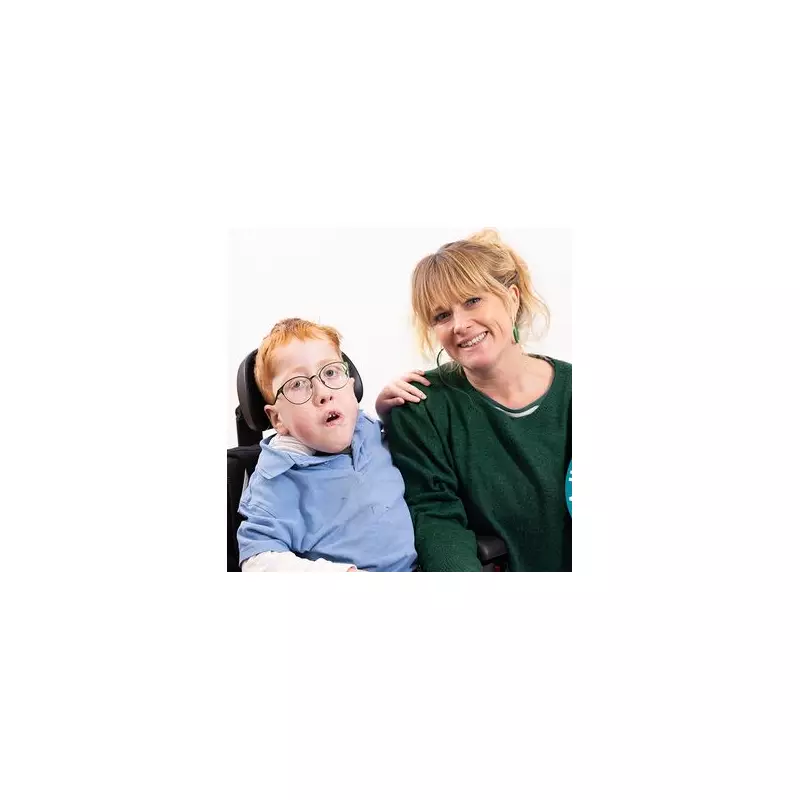
The mother of one of the world's first babies treated for a devastating muscle-wasting disease is spearheading a campaign to introduce a simple NHS test that could prevent countless infants from being paralysed.
A Mother's Fight for Early Detection
Portia Thorman, 46, from Ramsgate, was told her son Ezra would not live past the age of two when he was diagnosed with spinal muscular atrophy (SMA) type 1 as an infant. This severe genetic condition breaks down nerve cells in the brain and spinal cord in the first weeks of life, halting messages that control muscle movement and leading to profound physical limitations.
Against all odds, Ezra is now nine years old. However, his survival came after a late diagnosis that caused irreversible nerve damage. He cannot walk, is fed via a tube, requires a nightly nurse to monitor his breathing, and almost died ten times from simple colds in his first two years.

"We just need newborn screening now so that people can get treated before symptoms start," Portia told the Mirror. "It’s not a death sentence any more."
The UK's Screening Lag and a Celebrity Heartbreak
The Mirror has campaigned for two years to add SMA to the NHS newborn heel prick test. Currently, the UK test checks for only 10 conditions, while countries like Italy screen for 48 and the US and most of Europe already include SMA.
This failure to screen has tragic consequences. Former Little Mix star Jesy Nelson recently revealed her newborn twins were diagnosed late with SMA and will never walk. In a message to Jesy, Portia said: "I would say it feels like the end of the world when you first get the news... Your life will have plenty of hurdles but it will still have plenty of joy."
Pharmaceutical firm Novartis estimates 33 UK babies every year are left needlessly paralysed due to late diagnosis.
A Race Against Time for Treatment
Ezra's story highlights the critical importance of timing. Despite Portia's early concerns about his lack of movement, he passed routine checks while nerve damage progressed. He was finally diagnosed after a health professional spotted a tell-tale wobble in his tongue.
He then became one of the first children globally to receive a pioneering drug, Nusinersen (Spinraza), which increases a crucial missing protein. While this and other new NHS treatments can halt nerve damage, they are typically given after disability has set in.
The UK National Screening Committee, which first declined to add SMA in 2018, is now planning a pilot in parts of England, comparing screened and unscreened babies. A full national rollout is not expected before 2031. In contrast, NHS Scotland will add SMA screening this spring.
Portia, who gave up her teaching career to care for Ezra, condemns the delay: "The committee are insisting they want it to be a research project... This is ridiculous because the evidence internationally is already there. This is horrible and completely unethical."
She warns the slow approach means more children will be paralysed annually, creating a postcode lottery of care. "I can’t imagine having a baby diagnosed late and then finding out babies just over the border had been screened," she said.