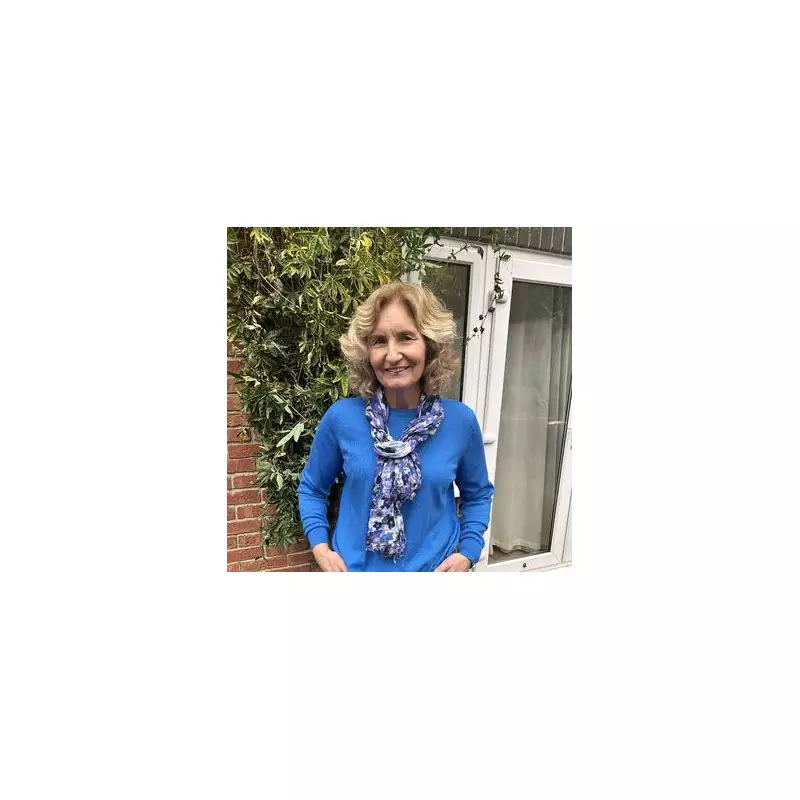
A mother who courageously fought and won a battle against breast cancer has described the devastating moment she was hit with a second life-altering diagnosis: multiple sclerosis (MS).
From Routine Check to Cancer Battle
Sally Burton, a 61-year-old former midwife from Hedge End, Southampton, first suspected something was wrong during a painful mammogram where she noticed nipple discharge. Despite an initial letter stating there was 'no sign of cancer', her medical instincts told her otherwise.
She contacted the breast care team at her hospital, leading to exploratory surgery and a subsequent diagnosis of breast cancer. "It's an indescribable feeling," Sally recalls. "Your mind goes everywhere at once: total disbelief, fear and sadness."

The mother-of-two underwent a mastectomy with reconstruction and, fortunately, avoided chemotherapy. Her recovery was aided by family support, but she faced severe anaemia requiring a blood transfusion and years on Tamoxifen, which triggered early menopause.
The Unseen Symptoms Leading to a Second Blow
While recovering from cancer, Sally was also managing a spinal bulge causing sciatica and back pain. Physiotherapy and a spinal injection brought little relief. More worrying symptoms emerged: tingling in her face and arms, balance issues, fatigue, and memory problems.
"I started walking into walls," she said. Initially attributing it to her ordeal, she was referred for an MRI of her spinal cord and brain. The scans revealed multiple lesions consistent with MS.
"It was devastating. I remember thinking, 'Someone has got it wrong'," Sally says. "Having two life-changing diagnoses in a short space of time seemed so unlikely. To survive cancer and then be told you have MS: it takes the wind out of your sails."
Rebuilding a Life with Purpose
The diagnosis forced Sally into early medical retirement from her beloved career in midwifery, a loss she deeply grieved. However, she refused to be defined by her condition.
She now volunteers at a wellbeing café, leads a walking group, and runs an antenatal teaching business. "A diagnosis like this isn't the end of you," she asserts. "You can still use your skills in different ways."
Music, particularly her rock choir, has become a lifeline. She recently helped organise a fundraising concert for the MS Trust, attracting over 300 people. "Seeing that support was incredibly emotional," she shares.
Sally emphasises that MS is like an iceberg—much is hidden beneath the surface. She credits the MS Trust for providing clear, evidence-based information and support. She remains hopeful, focusing on her mobility, treatment, and family.
"I feel grateful," Sally says. "I'm very aware some people face this in their 20s or 30s. Disease-modifying therapy can help. There is hope, and you can still live a full, meaningful life with MS. I have MS, but it doesn't have me."