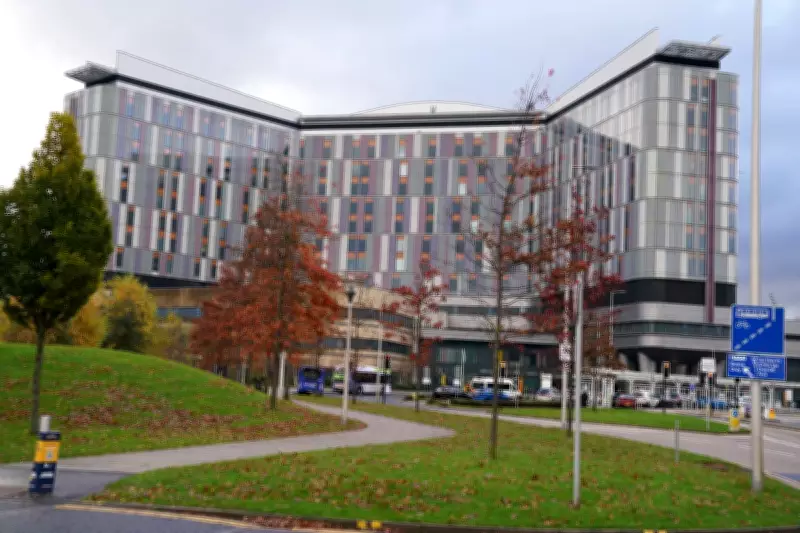
Members of the Scottish Parliament have taken a decisive stand, voting to compel the Scottish Government to release all communications connected to the troubled Queen Elizabeth University Hospital in Glasgow. The significant vote, which occurred on Wednesday in the Holyrood chamber, saw 64 MSPs support the motion against 56 opposing, with no abstentions recorded.
Labour-Led Motion Demands Full Disclosure
The motion was tabled by Scottish Labour leader Anas Sarwar, who has been a persistent voice calling for greater transparency regarding the hospital's commissioning, construction, and opening. The motion specifically calls for the immediate full disclosure and preservation of all communications related to the contaminated water supply, inadequate ventilation systems, and the premature opening of the facility.
Inquiry Context and Tragic Background
This parliamentary action unfolds against the backdrop of the Scottish Hospitals Inquiry, which recently heard closing submissions. The inquiry has been examining the design and construction of both the Queen Elizabeth University Hospital and the Royal Hospital for Children, which share the same campus in Glasgow. The investigation was launched following deaths linked to infections at the site, most notably including the tragic case of 10-year-old Milly Main in 2017.

Mr Sarwar has repeatedly urged inquiry chairman Lord Brodie to consider the actions of the Scottish Government throughout the hospital's development. The local health board has already admitted in its closing statement to the inquiry that there could be a connection between the building's environment and the infections that led to fatalities.
Political Figures Under Scrutiny
During the Holyrood debate, Mr Sarwar emphasised the need for current and former ministers involved with the hospital project to be questioned by the inquiry. "Nicola Sturgeon, John Swinney and Shona Robison have not given testimony at the inquiry and have not been cross-examined," he stated forcefully.
He warned that without such examination, "we will never have the full picture of what happened," and expressed concern that ministers might attempt to use the final inquiry report to suggest problems were confined to the health board alone, avoiding scrutiny of potential governmental responsibility.
Government's Legal Position
Scotland's Health Secretary Neil Gray responded to the calls during the debate, eventually assuring MSPs—after being asked three times—that the hospital is currently safe for patients and staff. While acknowledging the reasonable desire to examine every line of responsibility when "something goes badly wrong in a project of this scale and significance," Mr Gray stated he could not support the motion.
He argued that complying with the motion would be "incompatible with the legal framework that governs this inquiry." Mr Gray explained that all statutory public inquiries in Scotland operate under the Inquiries Act, which grants inquiry chairs—not ministers—the legal powers to compel witnesses, require document production, take evidence on oath, and determine relevant evidence.
"Those powers are not held by ministers, they are held by the independent inquiry chair," Mr Gray emphasised, adding that supporting the motion would constitute an attempt to influence the chair's actions contrary to legislation.
Document Release Commitments
Beyond the communications disclosure, Mr Sarwar's motion also calls for the release of documents held by the government regarding the hospital's opening. In response, the Health Secretary committed to providing any additional information requested by Lord Brodie, though he stopped short of confirming whether such information would be published regardless of a formal inquiry request.
The parliamentary vote represents a significant political development in the long-running controversy surrounding the Glasgow hospital complex, highlighting ongoing tensions between legislative demands for transparency and executive concerns about legal boundaries and inquiry independence.