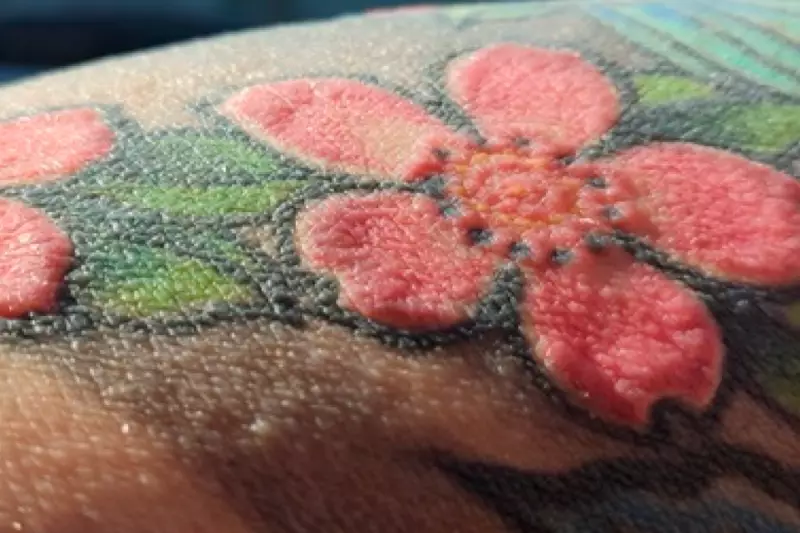
Medical experts are issuing a stark warning about the potential dangers of tattoo inks after a new study detailed the case of a man who suffered catastrophic health consequences, including total hair loss and the complete inability to sweat.
A Life-Altering Reaction
The case, published in the journal Clinics and Practice, involves a 36-year-old Polish man who got a red flower tattoo on his right forearm in 2020. Approximately four months later, he developed intense itching, severe skin peeling, and a bumpy rash at the tattoo site.
The reaction quickly escalated into a systemic crisis. The man's skin became inflamed over more than 90 per cent of his body. He experienced complete hair loss on his scalp and torso, a condition known as alopecia universalis. Most critically, he developed anhidrosis, meaning he stopped sweating entirely.

This loss of sweat function had a devastating impact on his daily life, rendering him unable to exercise safely, work in heat, or even tolerate warm rooms.
Diagnosis and a Difficult Treatment Path
Doctors diagnosed the man with erythroderma, alopecia, anhidrosis, and later, vitiligo (loss of skin pigment). Skin patch tests confirmed an aggravated immune response, almost certainly triggered by components within the red tattoo ink.
Initial treatment with steroidal drugs to suppress his immune system proved ineffective. Surgeons then removed the inflamed tattoo fragments, but this provided little clinical improvement and the vitiligo spread.
Only after the complete surgical removal of all red ink from the same batch that caused the sensitisation, combined with aggressive immunosuppressive and immunomodulatory drugs, did his hair begin to regrow and the vitiligo halt. Tragically, the anhidrosis remained permanent.
Calls for Stricter Ink Regulation
This extreme case highlights growing concerns about tattoo complications, which can range from mild irritation to severe, life-changing allergic reactions. Research indicates red ink is most commonly implicated, with reactions sometimes appearing months or years after the procedure.
The study underscores the urgent need for robust regulation of tattoo ink composition. The patient received his tattoo in 2020, two years before the EU enforced its 2022 regulations banning toxic compounds like mercury, cadmium, and arsenic commonly found in red inks prior to that date.
Dermatologists remain puzzled by the specific link between red ink hypersensitivity and the total loss of sweating. They theorise that some pigment components may act as antigens against sweat glands, provoking a widespread immune attack.
"This case highlights the challenges in managing systemic reactions to tattoo ink and the importance of thorough evaluation and treatment strategies," the researchers concluded, warning that tattoo-related immune activation can extend far beyond the skin.