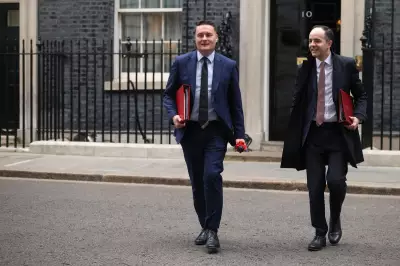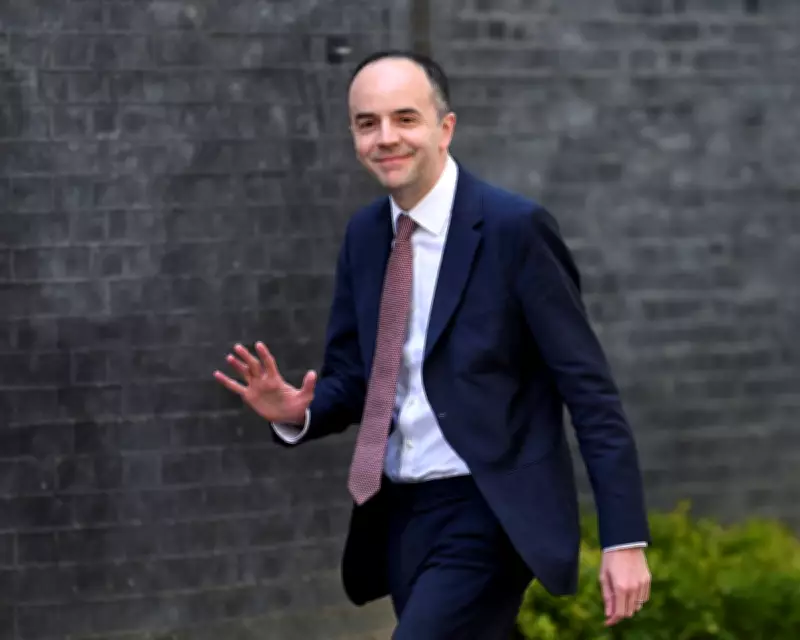
James Murray, the softly spoken former Treasury minister who has replaced Wes Streeting, has spent most of his parliamentary career toeing the party line, staying out of the headlines and quietly burnishing his credentials as a reliable cabinet colleague. At 42, the Labour and Co-operative MP for Ealing North now holds one of the biggest jobs in government. He is one of the least divisive figures in government, and arguably one of the least publicly tested.
A Low-Profile Rise
Murray has not run a major Whitehall department before and has never had a particularly visible public media profile, although since Labour came into power his media appearances have increased. He now appears to be the highest-ranking figure from Labour’s 2019 intake, having moved through the shadow whips’ office and Treasury team under Keir Starmer. This matters because Murray increasingly looks like a test case for the wider Starmer project: a generation of loyal, managerial Labour politicians elevated once Starmer became leader.
Background and Early Career
Born and raised in west London, where his mother was a Labour councillor, Murray studied PPE at Oxford before working for Emily Thornberry and then moving into local government in Islington. His first major political role came from Sadiq Khan, who appointed him deputy mayor for housing in 2016. He oversaw London’s affordable homes programme and developed a reputation as a surprisingly fierce negotiator behind closed doors.

When he entered parliament in 2019, he quietly embedded himself inside the Labour opposition operation, serving on the health and social care select committee before later heading into the shadow Treasury office. One Labour MP joked that Murray had become health secretary by “being one of the few people nobody hates”. His voting record reflects his loyalty: he has consistently backed ministers on controversial legislation, including welfare overhauls, winter fuel changes, and border security measures. He also voted in favour of the assisted dying bill, one of the most politically and morally divisive Commons votes of this parliament.
Starmer’s Trusted Lieutenant
Some MPs feel Murray’s rise says as much about what Starmer values as it does about Murray himself. Chancellor Rachel Reeves is understood to have repeatedly kept him inside her tent because of his loyalty, reputation for delivery, and desire to avoid political drama. This helped him avoid the churn that has hit other figures since the party entered government. He developed a reputation as a low-maintenance operator whom leadership rarely had to worry about. “He doesn’t create problems for leadership. That matters, especially now. But he’s a clever guy,” one MP said.
Challenges Ahead
However, his promotion comes at a troubling time. While Labour managed to retain control of his local council at the disastrous elections for the national party last week, they lost 13 seats, with some activists and councillors left in tears on election night. For many backbenchers, those results across England, Wales, and Scotland highlighted a wider problem facing Starmer and his ministers: whether managerial figures can reconnect with increasingly frustrated voters at a moment when the party is about to battle for its future vision. His reputation for caution and discipline will certainly face its biggest test yet inside the Department of Health and Social Care, where political management and message control rarely survive contact with the NHS.