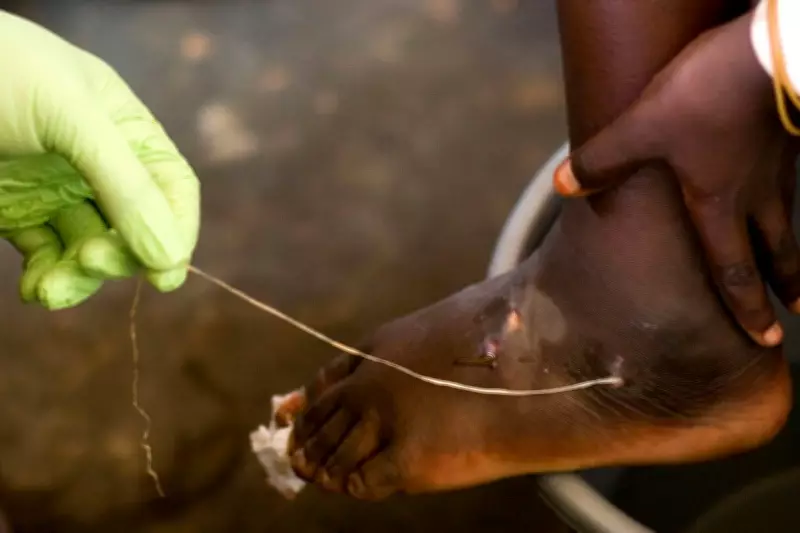
The global fight against Guinea worm disease has reached a pivotal milestone, with only ten human cases reported worldwide during 2025 according to The Carter Center. This historic low represents a dramatic reduction from the millions of infections that plagued developing nations just decades ago, bringing humanity closer to eradicating the painful parasitic condition.
A Legacy of Determination
The announcement comes just over a year after the passing of former U.S. President Jimmy Carter, who famously expressed his hope to outlive the Guinea worm parasite. When The Carter Center initiated its eradication programme in the mid-1980s, the disease affected millions across numerous developing countries, causing immense suffering in vulnerable communities.
"We constantly reflect on President Carter's enduring legacy and his unwavering commitment to reaching zero cases," explained Adam Weiss, director of the centre's Guinea worm eradication programme. "While these diseases might not dominate global headlines, they represent the most pressing concerns for those who endure them. We remain steadfast in our mission to alleviate as much pain and suffering as possible."

Geographic Distribution of Remaining Cases
The ten human infections reported in 2025 were confined to just three African nations: four cases in Chad, four in Ethiopia, and two in South Sudan. This marks a substantial 33% decline from the fifteen cases documented in 2024, demonstrating continued progress in containment efforts.
Several countries have maintained particularly encouraging records, with Angola, Cameroon, the Central African Republic, and Mali reporting zero human cases for the second consecutive year. This sustained success in multiple regions suggests that eradication strategies are proving effective across diverse implementation environments.
The Animal Infection Challenge
While human infections have plummeted to unprecedented lows, animal infections present a more complex challenge. Hundreds of animal cases persist, with numbers declining in some countries but showing slight increases overall. This animal reservoir complicates eradication timelines and requires innovative approaches to break the transmission cycle.
Chad, once considered the global epicentre for animal infections, reported 147 cases in 2025 - representing a significant 47% reduction. Other countries reported varying animal infection counts: Cameroon documented 445 cases, Angola reported 70, Mali recorded 17, South Sudan identified three, and Ethiopia confirmed just one animal infection.
Understanding Guinea Worm Transmission
The Guinea worm parasite follows a particularly distressing life cycle. Humans contract the infection by consuming water contaminated with microscopic larvae. Once inside the body, the parasite grows to approximately one metre in length - comparable to spaghetti in diameter - over the course of a year.
The mature worm eventually emerges through a painful blister on the skin, typically on the lower limbs. This excruciating process often drives sufferers to immerse themselves in water for relief, inadvertently allowing the worm to release new larvae into the water source and perpetuating the transmission cycle.
Animal infections follow similar patterns, with dogs and other mammals contracting the parasite through contaminated water sources. Humans can also become infected by consuming fish or amphibious creatures that have ingested larvae, creating additional transmission pathways that eradication programmes must address.
Decades of Coordinated Effort
The Carter Center's eradication programme has operated for decades in partnership with government health ministries, the World Health Organization, and numerous local organisations. Their comprehensive approach combines public education campaigns, volunteer training initiatives, and widespread distribution of water filtration systems in affected regions.
Former President Carter and his wife Rosalynn traveled extensively throughout affected countries alongside centre staff, working directly with national health ministries and local officials to build coordinated eradication efforts. This hands-on leadership helped establish the foundation for current progress.

Future Directions and Challenges
With no direct treatment available for Guinea worm infection beyond pain management, prevention remains the cornerstone of eradication efforts. The programme's next phase focuses on developing diagnostic tests, particularly for animals, that can identify infections long before symptoms appear.
"Early detection would enable behavioural interventions to minimise or eliminate opportunities for infected individuals or animals to contaminate water sources," Weiss explained. "This represents a crucial advancement in our ability to break transmission cycles completely."
Programme leaders acknowledge logistical challenges created by shifting international priorities, including the United States' withdrawal from the World Health Organization during the Trump administration and reduced funding for certain international aid initiatives. However, Weiss emphasised that these changes have not halted ground-level eradication work, though they have necessitated operational adjustments.
If successful, Guinea worm would join smallpox as only the second human disease to be completely eradicated worldwide - a monumental achievement in global public health that would honour President Carter's vision while relieving countless people from one of humanity's most painful parasitic afflictions.