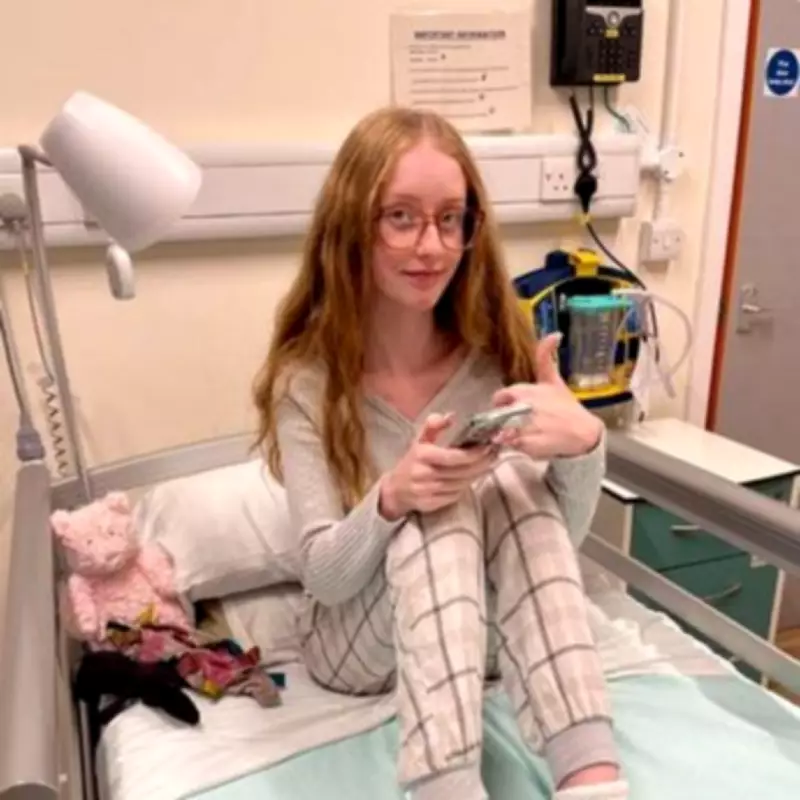
Growing Pains Dismissal Precedes Devastating Neurological Diagnosis for Teenager
A mother from South Yorkshire has revealed how her teenage daughter's debilitating symptoms were repeatedly dismissed as growing pains before doctors diagnosed a rare and incurable neurological condition. Fourteen-year-old Daisy Fisher from Barnsley endured months of unexplained suffering, including crippling fatigue, constant pain, and mobility issues, while her family desperately sought answers.
From Growing Pains to Life-Altering Diagnosis
Daisy's mother, Adele Fisher, 45, expressed profound frustration at the medical reassurances she received during her daughter's health decline. "Every time I tried to get her seen, her symptoms were always put down to her age or her hormones," Adele explained. "We'd be told it was growing pains." Despite Daisy having frequently been unwell throughout childhood, alarming new symptoms emerged including fainting episodes, loss of sensation in her toes, and debilitating exhaustion that prompted serious concern.
Adele recalled the distressing progression: "She started to lose quite a lot of weight and some of her mobility in her legs and feet. Then she started to feel like her feet were going numb and she couldn't feel her toes. I knew something wasn't right."

The Diagnostic Journey and Charcot-Marie-Tooth Revelation
After over a year of relentless pursuit for answers, Adele took Daisy to A&E, which initiated a referral to neurology specialists. What followed was an extensive battery of medical investigations including:
- Nerve conduction studies
- Multiple MRI scans
- Comprehensive X-rays
- Neurological examinations
- A detailed sleep study
The prolonged uncertainty placed enormous strain on the family, compelling Adele to leave her career in education to become Daisy's full-time carer. The eventual diagnosis came during what the family had anticipated would be a routine hospital visit.
Doctors revealed Daisy has Charcot-Marie-Tooth Type 4J (CMT4J), an aggressive neurological disorder that attacks the peripheral nerves. The condition causes:
- Progressive muscle weakness
- Chronic pain management challenges
- Significantly reduced mobility, particularly in hands and feet
Medical professionals anticipate that as the disease progresses, Daisy will lose the ability to walk independently and require assistance with daily activities.
Treatment Void and Transatlantic Hope
Adele received the devastating news that no treatment is currently available within the UK for this rare condition. However, her research uncovered a specialist programme in the United States investigating CMT4J through a promising gene therapy trial that experts believe could potentially slow or halt disease progression.
"I was in shock, but I was relieved to know what was happening," Adele admitted regarding the diagnosis. "Over the years I've felt like some sort of neurotic mum with the way people kept saying it was just growing pains. I knew deep down that there was something wrong."
Daisy has now been enrolled as a patient at a research centre in Iowa, where preparations are underway for an anticipated clinical trial. Although patient selection has yet to commence formally, the family maintains cautious optimism about the prospects.
Daily Struggles and Fundraising Efforts
Meanwhile, Daisy continues her daily battle against relentless symptoms. "The fatigue is the most debilitating thing for Daisy," her mother explained. "It doesn't matter if she sleeps for eight hours or 18 hours, she'll still be exhausted."
Remarkably, the teenager maintains a positive outlook despite her challenges. "She keeps her spirits as high as she can and she's not a moaner - she doesn't complain, which is amazing when you think that she's only 14," Adele shared. "Daisy has a really funny, lovely personality and we still get to see snippets of that."

The family has initiated a fundraising campaign to support crucial expenses including specialist travel insurance for potential US treatment and financial assistance while Adele serves as Daisy's full-time carer. Their story highlights both the challenges of rare disease diagnosis within the healthcare system and the determined pursuit of treatment options across international boundaries.