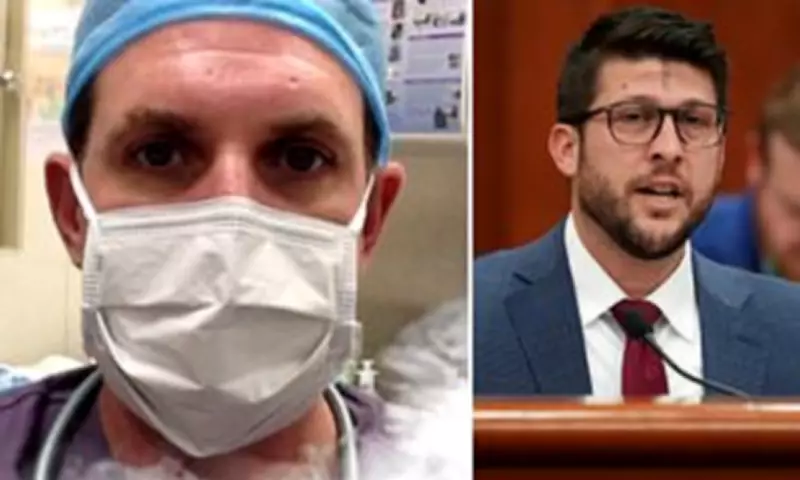
A Florida nurse who publicly declared he would refuse to administer anesthesia to supporters of the MAGA political movement has been stripped of his ability to work in the state's healthcare system. Erik Martindale faced intense professional backlash after posting on social media that he 'will not perform anesthesia for any surgeries or procedures for MAGA,' citing his personal rights and ethical oath.
Licence Relinquished Following Controversial Statements
Florida Attorney General James Uthmeier announced on Thursday that Martindale 'is no longer a registered nurse in Florida,' confirming that the healthcare professional had voluntarily relinquished his licence. The Florida Department of Health's official portal for registered nurses now shows Martindale's licence status as voluntarily relinquished, though the department notes this action 'does not constitute discipline' according to their website.
Martindale had initially defended his position in since-deleted social media posts, stating: 'It is my right, it is my ethical oath and I stand behind my education. I own all of my businesses and I can refuse anyone.' The nurse later claimed his account had been hacked and has apparently deleted his social media profiles, but the professional consequences proved irreversible.

Broader Crackdown on Political Partisanship in Healthcare
The case forms part of a wider pattern of disciplinary action against healthcare professionals whose public statements have crossed ethical boundaries. Attorney General Uthmeier emphasised that 'healthcare is not contingent on political beliefs, and we have zero tolerance for partisans who put politics above their ethical duty to treat patients with the respect and dignity they deserve.'
An unidentified high-ranking state official confirmed to news outlets that Martindale had broken the nursing compact agreement by relocating to Indiana without notifying the Florida Board of Nursing, compounding his professional difficulties. This violation of procedural requirements added to the mounting pressure that ultimately led to his licence relinquishment.
Parallel Case Involving Violent Birth Wishes
Martindale's case emerged alongside another high-profile nursing licence revocation involving Alexis 'Lexie' Lawler, a 55-year-old labour and delivery nurse. Lawler used TikTok earlier this month to express violent wishes toward White House Press Secretary Karoline Leavitt, who is pregnant, stating she hoped Leavitt would sustain a fourth-degree tear during childbirth.
Lawler's comments, which included explicit language wishing severe injury, resulted in immediate dismissal from Baptist Health Boca Raton Regional Hospital followed by formal licence revocation on Wednesday. A fourth-degree tear represents the most severe form of birthing injury, often requiring surgical intervention and causing long-term complications.
Zero Tolerance Policy for Ethical Violations
Attorney General Uthmeier reinforced the state's position at a Monday news conference, declaring: 'These people should not have a licence. If you're going to make threats by saying if someone's a Republican, they hope they get severely injured in childbirth, that's unacceptable.' The parallel cases demonstrate Florida's increasing willingness to take decisive action against healthcare professionals whose public statements violate fundamental ethical principles.
The disciplinary actions highlight growing tensions between healthcare professionals' personal political views and their ethical obligations to provide impartial care. While healthcare workers retain rights to personal opinion, public declarations that suggest discriminatory treatment based on political affiliation or express wishes for patient harm appear to cross clear professional boundaries according to Florida authorities.
Both cases have sparked broader conversations about social media use among medical professionals and the appropriate balance between free expression and professional responsibility. The Florida Department of Health has been approached for additional information regarding these disciplinary measures and their implications for nursing standards across the state.