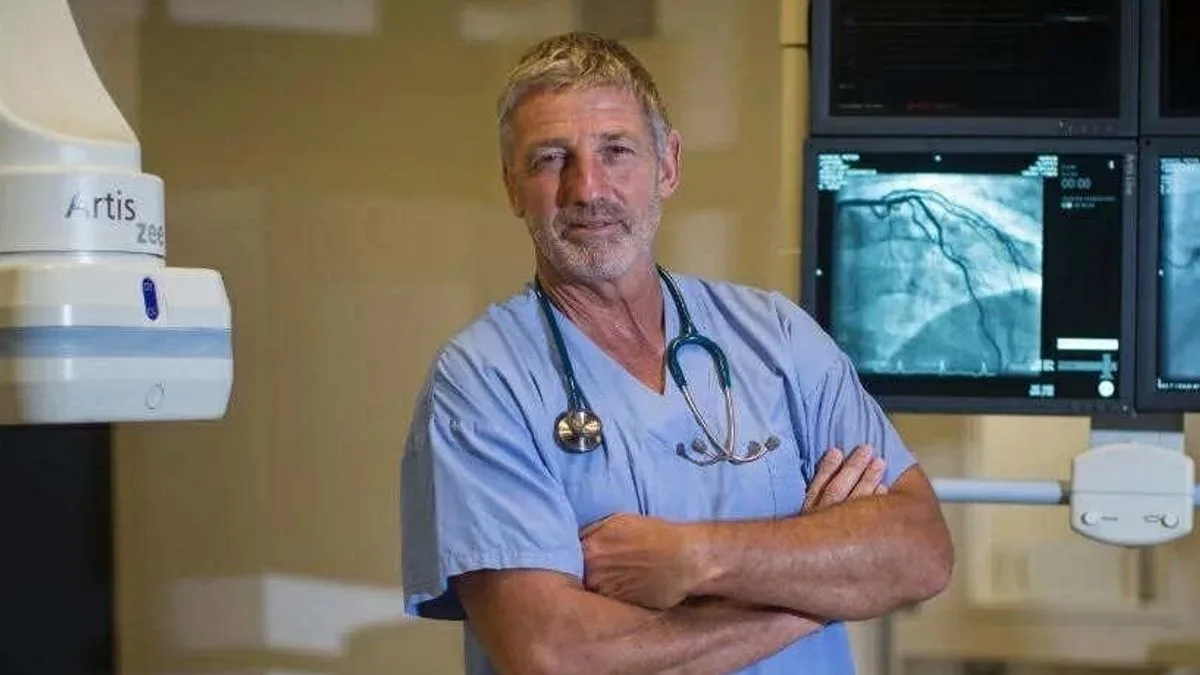
A retired cardiologist has voiced his support for the assisted dying bill after witnessing what he described as 'frightening, horrific' and 'grotesque' deaths. Dr Liam Hughes, who spent over 40 years in the NHS, said that while most people experience a peaceful death, some can be horrifying. He told The Mirror: 'I've had a lifelong involvement with end-of-life care of people in hospital. I've seen how I think to best allow people to have a peaceful death. I just want people to die surrounded by love, not fear.'
Dr Hughes recounted an instance where he administered a large dose of painkillers to a patient, knowing it might hasten his death. The patient, a father in his 40s with liver cancer, bowel obstruction and gangrene, had expressed that he had 'had enough'. Dr Hughes said: 'I gave him an increase in his syringe driver, my intention was to alleviate his suffering by exceeding his risk. I'd hoped that he would have some peace and five hours later I was relieved for him when he didn't wake up.'
The retired doctor explained that his actions fell under the 'doctrine of double effect', a principle used to justify giving drugs to relieve symptoms even if they may shorten life, as the aim is not to kill but to reduce pain. Labour MP Dr Peter Prinsley, a retired ENT surgeon, said this practice is not 'unusual', adding: 'Every doctor who's looked after terminally ill patients, certainly of my generation, will have been involved in exactly the process that Liam Hughes so graphically describes.'
Dr Hughes expressed concern that newer doctors may be reluctant to treat terminally ill patients with strong medications due to fears of being accused of being 'too aggressive'. He said: 'To make these life-reducing decisions you have to spend time with the patient but few patients these days who are dying in hospital get to see the same junior doctor on a daily basis.' He supports the Terminally Ill Adults (End of Life) Bill, which would allow assisted dying in England and Wales.