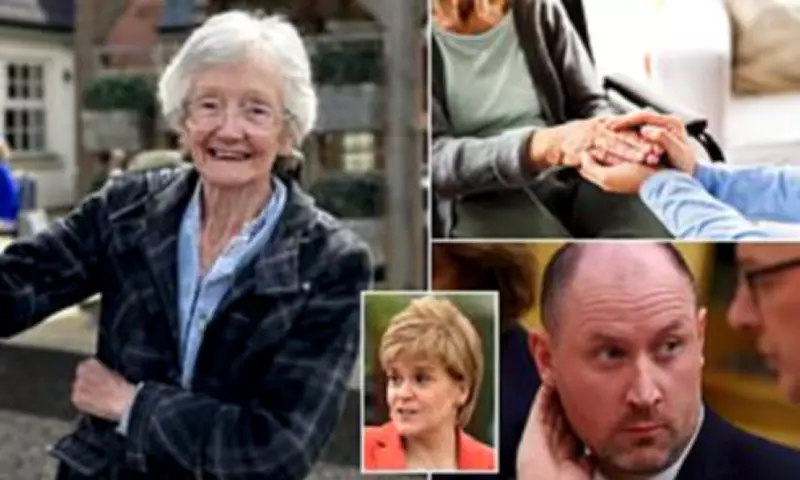
Few conditions carry the profound cruelty of dementia, yet my mother-in-law Joanne retained glimmers of her vibrant personality until her final days. Always possessing a mischievous spirit, she brought laughter to the brilliant staff at her care home, drawing upon her decades of experience as a nurse and midwife to offer them guidance and support. Several caregivers confided that they viewed her more as a colleague than a resident, a testament to her enduring character until her passing last Wednesday at age 84, three years after her Alzheimer's diagnosis.
The Insidious Erosion of Memory
The gradual erosion of memory represents an insidious process, with symptoms often emerging long before formal diagnosis. In Joanne's case, subtle signs were present for years, yet she skillfully masked the repetition and forgetfulness, downplaying the increasing frequency of getting lost during her cherished daily walks around her Perthshire town. She fiercely valued her independence, a quality that was inevitably lost upon admission to residential care. Remarkably, however, she clung to a determined cheerfulness throughout her journey.
A Family's Shared Struggle
Our family is far from alone in confronting this devastating disease. Scotland is home to approximately 90,000 individuals living with dementia, a figure projected to surge by over 50 percent by 2044. Across the United Kingdom, the total reaches one million people. In December, the Mail launched its Defeating Dementia campaign in partnership with the Alzheimer's Society, aiming to elevate awareness, promote early diagnosis, and bolster research and care standards.

This initiative followed startling statistics revealing dementia accounts for one in nine deaths nationwide, claiming 76,000 lives annually. Specifically in Scotland, 2024 saw 6,612 deaths attributable to Alzheimer's and other dementias, equating to roughly one in ten of all fatalities. The mortality rate per 100,000 people has nearly doubled over the past two decades, underscoring a growing crisis.
Systemic Failures and Political Neglect
Despite these alarming trends, there is a palpable sense that the nation remains under-prepared and ill-equipped for the impending surge in cases, which will place immense strain on the NHS and affected families. Early obstacles often include denial from the individual with dementia and relatives reluctant to acknowledge the situation. In our experience, retrospective reflection made looming problems evident, though general practitioners' cognitive tests frequently fail to detect the earliest stages.
It was not until Joanne could no longer live safely alone that she entered care, a process that mercifully unfolded quickly. An initial placement in a nearby home proved short-lived, as it lacked proper dementia-specific provisions. We were fortunate that she subsequently spent nearly three years in a facility where she received excellent care, though meaningful intervention only occurred near crisis point.
Funding Cuts and Broken Promises
Government commitment appears questionable amidst significant cuts to dementia care and support. Alzheimer Scotland reports being "overwhelmed by public support" for its Stop the Cuts campaign, which opposes nearly £154 million in reductions to older people's services and community care across Scotland. The charity highlights that while clear national care pathways exist for conditions like cancer, heart disease, and diabetes—ensuring timely diagnosis and consistent treatment—no such safeguards exist for dementia.
This oversight is remarkable given the condition's prevalence and devastating impact. Further eroding confidence, Health Secretary Neil Gray attempted to purchase Oasis concert tickets while supposedly chairing a conference session on tackling dementia, an action many families view as a disrespectful slur. The reality suggests Mr Gray and his government are ill-equipped for the monumental task of providing effective dementia treatment and care.

Approximately £30 million was squandered on botched plans for a "national care service," once hailed by Nicola Sturgeon as matching "the post-war National Health Service." Originally estimated between £644 million and £1.26 billion over five years, projected costs ballooned to £2 billion. This failure merely postponed essential social care reforms, delivering not a single extra hour of care while leaving taxpayers to foot the bill.
A Sector in Critical Condition
Alzheimer Scotland's chief executive Henry Simmons notes that long-term residential dementia care has developed largely through an open market approach, devoid of meaningful local plans or strategy. This has fostered a "financially driven sector that is in a critical state—and in some areas at risk of collapse." The charity advocates for a coherent plan to design future services, a logical step rarely backed by concrete government action given its history of waste and inefficiency.
Grounds for Cautious Optimism
Despite these challenges, medical science offers longer-term hope. Since dementia stems from various diseases, a single cure is unlikely, but up to 40 percent of people could reduce their risk through lifestyle changes like quitting smoking, managing blood pressure, and combating social isolation. Researchers anticipate "truly life-changing" treatments within five to ten years.
The COVID-19 pandemic demonstrated what can be achieved swiftly with sufficient political will and investment, as seen in vaccine development. A similar concerted approach is urgently needed for dementia, which has languished too low on priority lists for too long. Every effort must be made to curb this silent killer and provide respite for families enduring the heart-wrenching decline of their loved ones.