Veterinary Experts Expose Ten Extreme Dog Traits That Condemn Pets to Suffering
Animal welfare specialists have issued a stark warning to prospective dog owners, revealing ten extreme body traits that are causing tens of thousands of pets to endure a lifetime of preventable suffering. These so-called 'extreme conformations', ranging from flat faces to stubby legs, are often prized by breeders and perceived as 'cute' by the public, yet they inflict severe health consequences on the animals.
Veterinarians and pet experts are now calling for greater public awareness, urging people to recognise the signs of extreme conformation and avoid fuelling demand for these fashionable but fundamentally unhealthy pets. According to experts, social media trends and celebrity ownership of breeds like French Bulldogs and Dobermans have exacerbated the problem, driving popularity for dogs that are biologically compromised.
The Innate Health Assessment: A Checklist for Breeders and Buyers
To assist breeders and prospective owners in identifying problematic traits, scientists and members of the All Party Parliamentary Group for Animal Welfare (APGAW) have developed a comprehensive checklist known as the Innate Health Assessment (IHA). Dr Dan O'Neil, an animal health expert from The Royal Veterinary College who contributed to the IHA, emphasises that extreme conformation crosses a critical boundary, preventing dogs from living normal, fulfilling lives.

Dr Rowena Packer, a leading authority on extreme conformation at the Royal Veterinary College, told the Daily Mail: 'Dogs with extreme conformation are commonly denied the ability to live long, healthy and happy lives due to the inherent body shapes we are trapping them in, due to our aesthetic preferences as humans.' She highlights that these traits often carry extremely high risks of inherited disorders that impair basic biological functions like breathing, blinking, walking, and tail wagging.
The Ten Extreme Conformations to Avoid
1. Stubby Legs
One of the most prevalent forms of extreme conformation involves disproportionately short legs relative to the body. The IHA stipulates that a healthy dog's chest should be at least one-third of its full height from the ground. Breeds like Dachshunds, which recently became the UK's most popular breed according to Pets at Home data, often fall short of this standard, leading to excessive joint strain and mobility issues.
2. Flat Faces
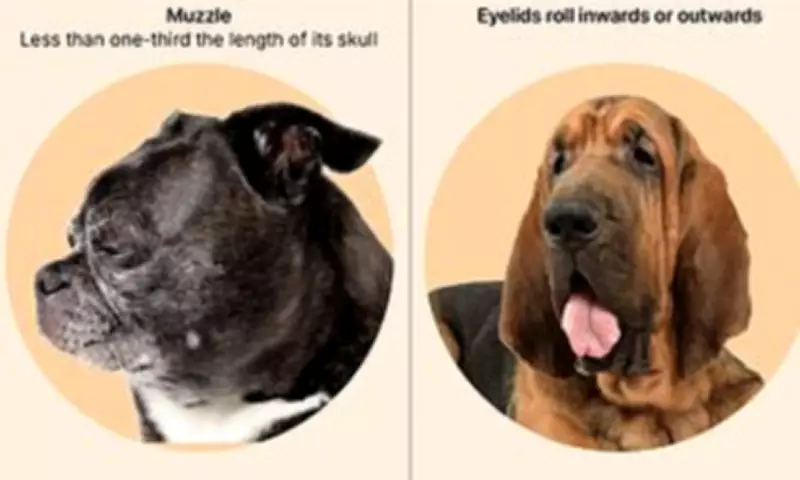
Bulldogs, Pugs, and Cavalier King Charles Spaniels are typical examples of brachycephalic breeds with flattened faces. A healthy dog's muzzle should measure at least one-third the length of its skull; shorter muzzles predispose dogs to Brachycephalic Obstructive Airway Syndrome (BOAS), severely compromising breathing, sleep, and temperature regulation.
3. Bulging Eyes
Breeds such as Pugs and Boston Terriers often exhibit protruding eyes that align with the 'baby schema' perceived as endearing. However, this trait indicates shallow eye sockets, increasing risks of dryness, damage, infection, and ulcers. In a healthy dog, the whites of the eyes should not be visible from a frontal view.
4. Drooping Eyelids
Dogs like Bloodhounds and Basset Hounds may have eyelids that roll inwards or outwards, impairing their ability to protect the eyes. This leads to conditions such as conjunctivitis, corneal inflammation, and infections, potentially resulting in scarring and partial blindness.
5. Skin Folds
Excess skin folds, common in Shar Peis and brachycephalic breeds, trap moisture, heat, and dirt, fostering bacterial growth and causing painful skin fold dermatitis. Healthy dogs should have smooth, fold-free skin over their bodies.
6. Merle Colouration
The marbled merle pattern, found in breeds like Australian Shepherds and French Bulldogs, is linked to a mutation in the PMEL gene that also causes blindness and deafness. This colouration, absent in wild canines, has been selectively bred despite its associated health risks.
7. Short Tails

A healthy dog's tail should be at least one-third the length from the tail base to the knee, enabling communication and balance. Breeds with short or absent tails, such as Welsh Corgis and Boston Terriers, face social disadvantages and are twice as likely to experience aggressive encounters due to impaired signalling.
8. Misaligned Jaw
In breeds like Boxers and Pekingese, misaligned jaws cause the upper or lower teeth to protrude abnormally. This leads to dental issues, gum disease, mouth sores, and excessive drooling, affecting eating and comfort.
9. Bowed or Curved Legs
Deliberately bred in English Bulldogs and Dachshunds, bowed legs cause severe mobility problems, joint injuries, and pain. Healthy dogs should have straight legs when viewed from the front or back, allowing normal movement and play.
10. Inflexible Spine
Dogs must be flexible enough to reach their rear areas for grooming and scratching. Inflexibility, common in Dachshunds, Basset Hounds, and even German Shepherds, increases susceptibility to spinal disease, slipped discs, and paralysis.
The Broader Implications and Public Responsibility
Marisa Heath, Director of APGAW, warns that the public is often misled into believing these extreme traits represent ideal breed standards, only to face high veterinary bills, insurance premiums, and emotional distress when their pets suffer. The demand for novel body shapes has intensified in recent years, driven by aesthetic preferences rather than animal welfare.
Hannah Molloy, a dog trainer and animal behaviourist, observes: 'They've been born into a body that has given them a social disability. I have seen thousands of dogs from a variety of breeds, and I've seen dogs bullied, denied and socially rejected because of the bodies they were born into, and that is not fair.'
Experts urge prospective owners to prioritise health over appearance, using tools like the IHA to make informed decisions and avoid perpetuating the cycle of suffering. By recognising and rejecting extreme conformations, the public can help ensure that dogs lead longer, healthier, and happier lives, free from the constraints of human-driven aesthetic ideals.