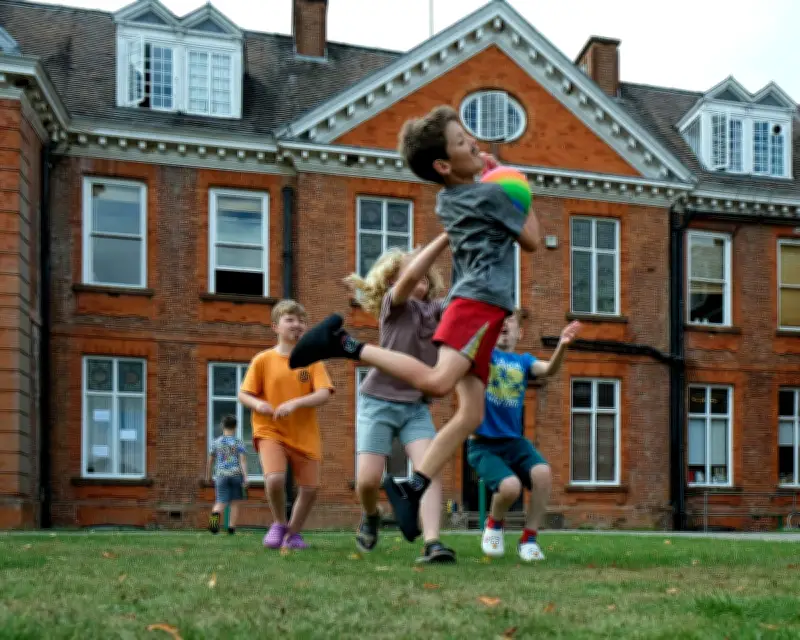
In a summer school at Moor Park school near Ludlow, Shropshire, children play in August 2025, a scene captured by photographer John Robertson. This image contrasts with the growing trend of children glued to their smartphones, a charged object in the story of modern childhood. But Lenore Skenazy, president of Let Grow and founder of the Free-Range Kids movement, argues that the real solution is opening the front door.
The smartphone is not the only culprit
Smartphones are a real problem, with children seeing sex and drug content every few minutes on Snapchat, according to ParentsTogether Action. However, Skenazy notes that children's independent play was disappearing long before the iPhone launched in the US on 29 June 2007. An Institute for Family Studies survey of 24,000 American parents found that most would not let their 14-year-olds leave the block. In the UK, a 2007 Daily Mail article chronicled how one family's roaming range shrank from six miles unsupervised at age eight to just 300 yards by the great-grandson's generation.
Fear is the original experience blocker
Jonathan Haidt, co-founder of Let Grow, calls the phone an "experience blocker," but Skenazy identifies fear as the original one. A 24/7 news cycle and economic worries have made parents afraid of abduction or academic failure, leading to constant supervision. A 2023 Journal of Pediatrics paper by Peter Gray shows that the decline in children's independence and free play parallels the rise in anxiety and depression, suggesting causation.
Opening the door transforms childhood
Doctors warn that UK children will be one of the unhealthiest generations, facing obesity and mental health disorders. Gray's paper cites a Zurich experiment: in one town, children as young as five played outside unsupervised, spending twice as much time outdoors, being more active, having more than twice as many friends, and developing better motor and social skills than those in a traffic-restricted town. Skenazy emphasizes that independence requires letting children go without constant adult presence.
Parents can rally for free play
Skenazy shares an email from a mother who invited neighbours to bring their kids and not hover. Ten families showed up, with children aged five to 13 playing with Frisbees, footballs, and jump ropes while adults had conversations. The group has met four Sundays. A Harris poll found that children overwhelmingly prefer unsupervised, unstructured real-world play over adult-organised activities or online time. Skenazy concludes that while smartphones remain a focus, changing childhood requires opening the door to independence.