A Mother's Unimaginable Loss: The Night That Changed Everything
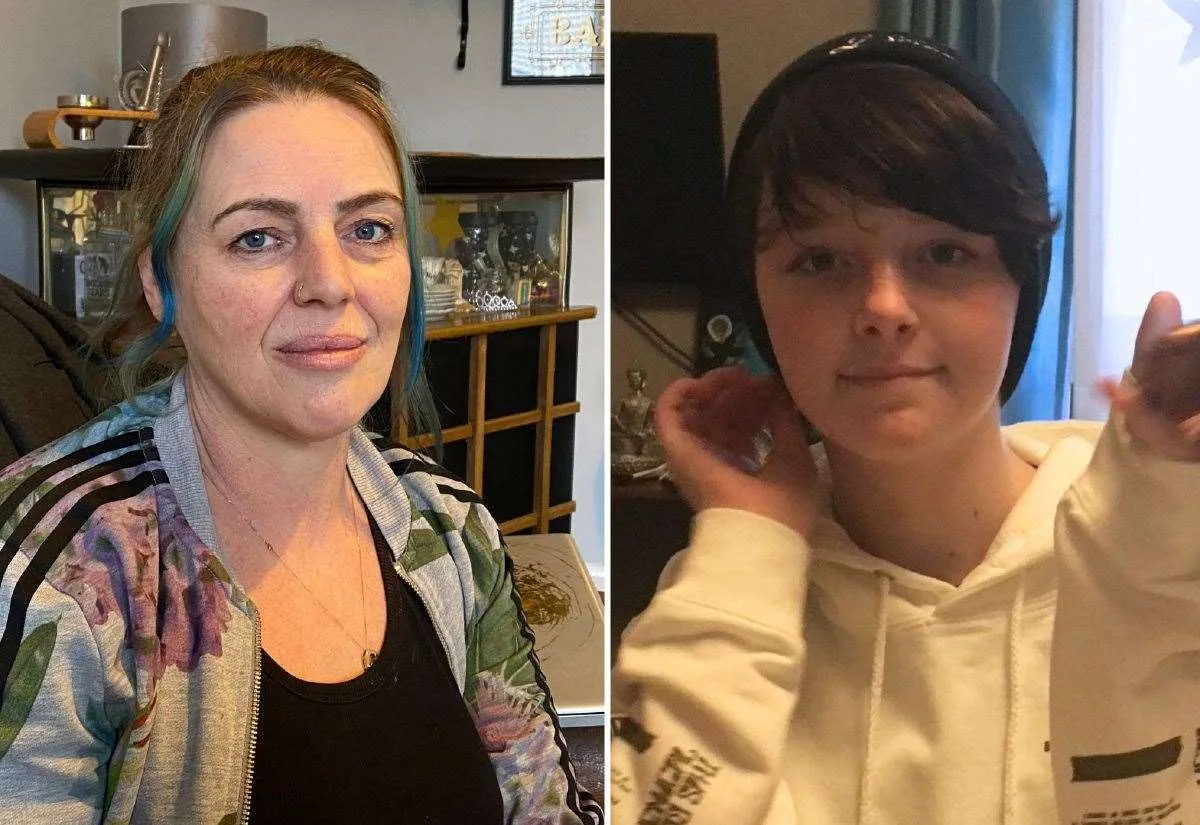
Carrie Callingham remembers her daughter Melodie Rose Pinckney as an artistic, intelligent, and intense child with a distinctive dark sense of humour. Like many teenagers, the 14-year-old enjoyed spending time with friends, experienced occasional mood swings, and sometimes bickered with her siblings. She had a passion for cosplaying and was a devoted fan of My Chemical Romance.
On January 3, 2020, the family shared a pizza dinner together, creating what seemed like an ordinary evening. The following morning, however, brought unimaginable tragedy when Melodie was discovered dead in her bedroom, having taken her own life. "She was a very clever girl," says Carrie, now 48. "She had the ability, she was going to do something great... but this all happened."
The Coroner's Verdict and Unanswered Questions
A coroner later ruled that Melodie had intended to die by suicide, a finding her mother continues to struggle with accepting. "It makes no difference, it doesn't make me feel better," Carrie admits. "But I've got to be honest, I don't think she meant to do it. There were no indications – we never thought she would do something like that. She was a happy child at home."
Carrie describes discovering her daughter's death as horribly traumatic, with her memory of that morning remaining blurry and fragmented. She recalls screaming and being unable to look at her daughter. In the aftermath, she has wrestled with numerous difficult questions: Why did Melodie take such drastic action? Why did her school fail to inform her parents about her self-harming behaviours?
The Evolution of Grief and Coping Mechanisms
Over the past six years, Carrie's grief has evolved significantly, fundamentally changing her as a person. She maintained a journal to document her feelings, preserve memories of Melodie, and search for elusive answers. The immediate period following the tragedy was characterized by profound shock and emotional numbness.
"It was just the saddest, saddest thing ever," Carrie reflects. "The next few weeks were just completely..." she gestures to indicate an explosion. "I was in and out of sleep, that's all I wanted to do. I just didn't want to be awake to feel it."
Following this initial phase, Carrie attempted to stay constantly busy as a distraction mechanism. She engaged in arts and crafts, created teddy bears from Melodie's clothing, built a shed, and devoted considerable time to gardening. During this period, she received strong support from her closest relationships, staying with her mother or at her best friend Frank Chivers' house, as her own home in Folkestone, Kent, proved too emotionally triggering.
Funeral Amidst Gathering Storm and Family Dynamics
Fortunately, Melodie's funeral occurred before the Covid-19 pandemic fully emerged. Carrie remembers the hall at Hawkinge Crematorium being packed with family members and Melodie's school friends, many dressed in cosplay attire. As social distancing measures were implemented in March 2020, bereavement support groups were cancelled, making it challenging for Carrie to connect with loved ones.
Paradoxically, Carrie found some strange comfort in the pandemic restrictions. "It was almost like the world acknowledged that she passed because we had a lockdown, and the whole world paused," she observes. "I was in such deep grief, I would have been isolating even without a global pandemic. Because of furlough, I had all that time off work, and I really needed it."
Melodie had two older siblings, Elliot and Francesca, and a younger sister named Cherry. Initially, Carrie felt her children were supporting her through the tragedy. "I think at first it was more about them coaching me through it, just by being themselves and being true to who Mel was," she explains.
The Long Slump and Social Isolation
As months progressed, Carrie's arts and crafts activities ceased, and she entered a prolonged emotional slump that lasted for years. She returned to work bartending at The Lord Morris pub in Folkestone but describes this period as one where "life ticked over, but nothing happened."
"It was like living in a hole with a blanket over my head," she adds. People in her life, whether from awkwardness or uncertainty about what to say, began avoiding discussions about Melodie or avoiding Carrie entirely. "It's the worst – I wanted people to just be honest. I actually wish people had asked what happened that day," she confesses.
"It felt like by people not asking me about her, they were dismissing a massive part of me. People don't remember special dates – like her death date, or her birthday. I'd be like – it's her birthday today, why has no one said anything to me? I think people think that when you lose someone, the rest of the world is understanding, but people just get on with their own lives, and that happens early on."
The Search for Answers and School's Failure
In the months following their daughter's death, Carrie and Melodie's father desperately sought understanding about what had occurred. The family requested all of Melodie's data from Snapchat and Instagram, receiving years of messages and posts in a lengthy, garbled text document interspersed with lines of code. Melodie's father spent an entire year meticulously examining this material but found no definitive answers.
Parallel to her grief, Carrie experienced overwhelming guilt. The October 2020 inquest sought to determine whether Melodie's death constituted intentional suicide or a 'misadventure' – an accidental death. "When the inquest said it was suicide, that broke my heart," Carrie recalls. "Because that was like cementing that she wanted to do it."
"We will never know for sure. There are no answers, so I've had to learn to live with two truths: one that she meant to do it, and one that she didn't. The guilt you feel as a parent is so overwhelming, you've got to separate it from your grief. Your guilt is: My child wanted to die and I didn't know. That is a horrendous thing as a parent to live with."
School's Knowledge and Additional Tragedies
The inquest revealed that staff at Melodie's school, Brockhill Park Performing Arts College in Folkestone, had known about her self-harming behaviours but failed to inform her parents. The school has been contacted for comment but did not respond. "It was hard because we only found out at the inquest that the school had known she was self-harming and they hadn't told us," Carrie explains. "Her dad was proper fuming about that."
The coroner also noted that Melodie had been referred to school counselling due to gender identity issues. "I know she had gender issues," Carrie acknowledges. "But, I mean, a lot of the kids do have that, don't they? I don't know if that has something to do with it, but we always supported her for whoever she wanted to be."
Further tragedies compounded Carrie's grief. In July 2021, John Colam – Cherry's father, with whom Carrie raised Melodie – died suddenly at home. That December, during a charity bike ride to raise suicide awareness following Melodie's death, Carrie's uncle, Christopher Boxer, became the victim of a hit-and-run accident, sustaining serious injuries. Her close friend Frank also died in July 2024.
Healing Through Writing and Future Projects
Carrie says the compounding grief has weighed heavily upon her, but with time, she has developed "tools" to help manage her emotions. "I've become much better at confronting my own thoughts, rather than trying to run away from them," she explains. "Now I just let them come, sit with it, and let them pass. Nothing comes from guilt, nothing. All you can do is try to turn it into something positive."
Drawing from six years of journal entries, Carrie has authored a book designed to help others who have lost loved ones. The First of Everything Without You serves as a guided grief diary with prompts to facilitate healing, coping with loss, and remembering loved ones.
"Some people don't know the questions to ask a person who's grieving or won't feel comfortable asking," Carrie notes. "But those questions are all in this book. The reader can get those feelings out and be as honest and raw as they want. For me, writing things down is such a good outlet. I wrote the book to give other people that same outlet."
Carrie plans to open a cafe and community space named Melodie's Lighthouse using proceeds from her book. She envisions it as a positive alternative to pubs and social media – a safe environment where people experiencing difficult times can support each other, with free tea and coffee funded by an adjoining charity shop.
"I want to build a community where people can find things that inspire them, learn from other people's wisdom, have face-to-face interactions and ignite some joy," Carrie says. Yet even as she looks toward the future, she acknowledges that her daughter's absence remains a constant presence.
"When you have a baby, you realise you didn't know you could love anyone so much," she reflects. "And then it's the same when they die – it opens up this other level of emotions. I remember about two years ago, I thought, would I rather be back in the first year of grief, when it was really emotionally intense, but she felt close, and I felt like I still knew her. Now, even though the pain isn't as strong, it feels like she's become part of the past."