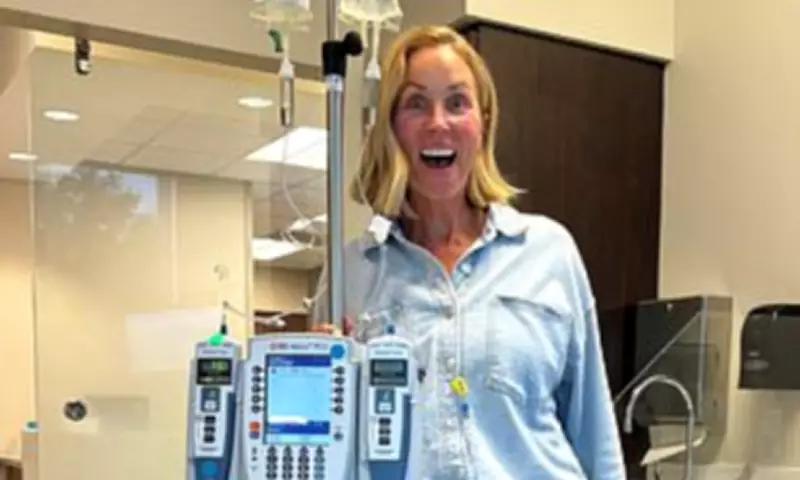
A mother who initially attributed her night sweats, unexplained weight loss, and persistent fatigue to menopause has issued a stark warning to others after discovering these symptoms were actually signs of a deadly cancer. Jessica Farrington, aged 46, began experiencing what she believed were typical menopausal symptoms, which commonly affect women between 45 and 55 years old.
The Initial Symptoms and Assumptions
Jessica described experiencing severe night sweats that left her pyjamas and sheets completely drenched. "I chalked it up to possibly perimenopause or menopause because of my age," she explained. The stay-at-home mother from Texas, USA, continued living with these symptoms for several months until she developed another concerning sign: itchy skin.
At first, she attributed the itching to environmental factors. "We had just moved from Montana to Texas, so I thought it could be the water," she said. After changing laundry detergents and installing a shower filter without relief, she again assumed this was another menopausal symptom, which affects more than 64 percent of women due to declining estrogen levels.

The Turning Point
The situation took a serious turn when Jessica discovered a small, pea-sized lump in her armpit. "It scared the heck out of me and I immediately knew something wasn't right," she recalled. Despite this alarming discovery, she delayed seeking medical attention, hoping the lump would disappear on its own. Instead, it continued to grow larger over time.
In December 2024, nearly a year after her symptoms began, Jessica finally consulted a doctor. Medical professionals ordered comprehensive tests including blood work to check hormone levels, a mammogram, and an ultrasound of the suspicious lump due to concerns about potential breast cancer.
The Diagnosis Journey
Surprisingly, all initial test results returned within normal ranges, and her hormone levels showed no signs of peri-menopause or menopause. However, doctors remained concerned about the ultrasound images of her armpit lymph nodes and scheduled a follow-up examination for three months later.
When the ultrasound was repeated in March 2025, it revealed significant changes that warranted further investigation. A subsequent biopsy delivered the devastating diagnosis: follicular lymphoma, a cancer of the lymphatic system that affects white blood cells called lymphocytes.
Understanding the Diagnosis
Follicular lymphoma represents a type of slow-growing non-Hodgkin lymphoma, with approximately 2,300 people diagnosed annually in the United Kingdom. This form of blood cancer primarily affects the lymphatic system and typically presents with painless swellings in areas like the neck, armpits, or groin.
"When I first found out, it felt surreal more than anything," Jessica confessed. "Like I was watching someone else's life happen in front of me." Additional testing revealed the cancer had spread extensively, with swollen glands detected in her neck, both armpits, around her aorta, abdomen, and groin. The disease had become systemic, involving her blood and bone marrow, resulting in a stage four diagnosis.
Treatment and Recovery
Jessica embarked on what she described as a "brutal" treatment regimen involving both chemotherapy and immunotherapy. This required treatment on two consecutive days every six weeks for a total of six months. "For about a week after each one, I was so physically and emotionally sick that my world shrank down to my bed," she shared. "There were moments I lay there and honestly didn't know how much more I could take."
Currently, Jessica is in remission and undergoing maintenance therapy consisting of immunotherapy every two months for two years. While follicular lymphoma is not currently curable, this treatment helps manage symptoms and maintain her current health status.
Important Health Advice
Reflecting on her experience, Jessica offers crucial advice to other women: "Always listen to your body. Be so intimately aware of your baseline that if something is off or you have that feeling that something isn't right, get seen by a medical professional."

She emphasizes that "no question or concern is too small, and always advocate for yourself" when dealing with healthcare providers. Nearly two years after her symptoms first appeared, Jessica concludes with a powerful message about resilience: "I can say that we never know when our time will come, so I choose to keep living no matter what. That's all any of us can do anyway. Keep living!"
Understanding Follicular Lymphoma
Follicular lymphoma represents the most common type of low-grade non-Hodgkin lymphoma, accounting for approximately 20 percent of all NHL cases in the UK. While it mainly affects adults over 60, cases can occur in younger individuals like Jessica. The primary diagnostic method involves a lymph node biopsy, where doctors remove part or all of a swollen lymph node for examination.
Common symptoms beyond those Jessica experienced include painless swellings in the neck, armpit, or groin areas. Early detection and proper diagnosis remain crucial for effective management of this condition, highlighting the importance of not dismissing persistent symptoms regardless of their apparent cause.