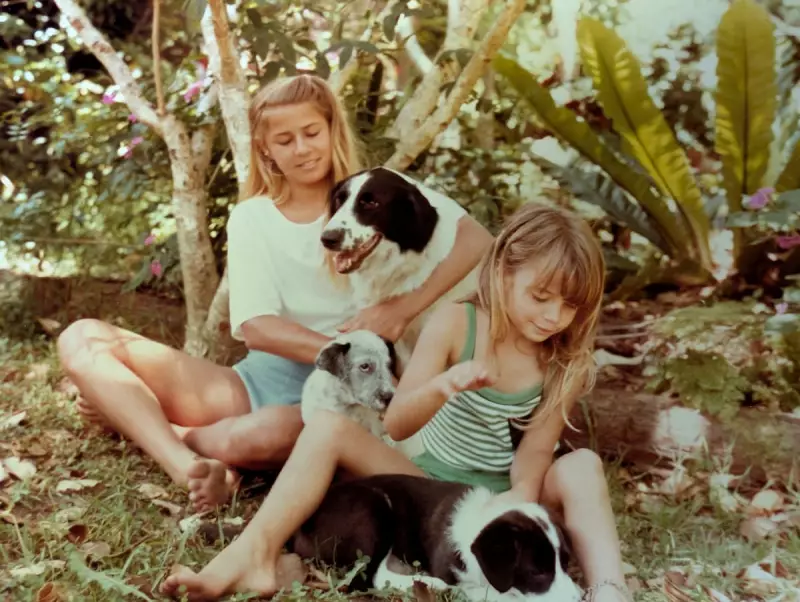
In the dense, subtropical forest of northern New South Wales, a family's story of profound loss and remarkable resilience is woven into the very fabric of their home. For author Jessie Cole, the house her parents built in the late 1970s is both a sanctuary and a repository of memory, a place where the intricate web of kinship has been tested and fortified by unimaginable tragedy.
A Foundation Built on Fresh Beginnings and Great Loss
Jessie Cole's parents moved to their plot of land in the late 1970s, erecting a house and planting a garden destined to become a forest. With no nearby grandparents, they created a chosen family, a fresh slate in a community of new beginnings. For a decade, life flourished. Then, when Jessie was a child, her adolescent sister took her own life. Six years later, her father died by suicide. The family's world derailed, tumbling headlong into darkness.
The physical house remained, a steadfast holder through the emotional wreckage. Yet, every room holds a ghost of the past. Jessie daily occupies the lounge where she learned of her sister's death, passes the garage where her mother found her father, and uses the bathroom sink where he once tried to end his life. "The blood is gone, but I still remember," she writes. "Right here, this happened, and – also – time moves on."

Tending the Forest and the Folly: Metaphors for Healing
The surrounding forest, like the family, is in constant flux. Incremental growth is punctuated by cataclysm—floods, fires, fallen trees. The response is always the same: clear debris, prop up saplings, plant new seeds. This act of tending became a core principle for healing. The family's Japanese-style pavilion, built nearly 50 years ago and dubbed "our folly," recently faced collapse when its central wooden pin rotted away. The metaphor felt stark: everything is collapsing.
Yet, when the original builder returned, he found the structure sound. The intricate pieces of the ceiling were wedged so tightly they held each other in space. Repairing the central pin and restoring the folly became a physical act of faith—a belief that what is loved must be maintained.
The Legacy of Troubled Waters and the Unspoken Truth
Jessie was 18 when her father died. By 22, she had given birth to two sons, gestating and birthing them into her grief. She has often wondered about the legacy of such a traumatic start for her children. In a poignant conversation with her now-adult eldest son, she broached the subject, suggesting his inclination to support others might stem from their difficult beginning.
His response was revelatory: "Mum, I don't think there's a single person out there who doesn't need support." In that moment, the unspoken, intuited home truth of their family crystallised: "We need each other." This is the legacy, not of tragedy alone, but of the interdependence that arose from it.
Jessie Cole's reflection is a powerful manifesto for connection. "Interdependence is. You cannot opt out, so lean in," she advises. "Tend the things you love. Everything turns on affection." She suggests starting small for those surrounded by broken things—a pot plant on a windowsill, learned and cared for.
Her final message is one of profound hope: Intricate kinship webs can be built from rubble. We can hold each other in space. From plant, earth, wood, water, and animal, a connected life can be forged. You do not have to live as though you are alone.
Jessie Cole is the author of four books, including the memoir 'Desire, A Reckoning'. In the UK and Ireland, Samaritans can be contacted on freephone 116 123.