
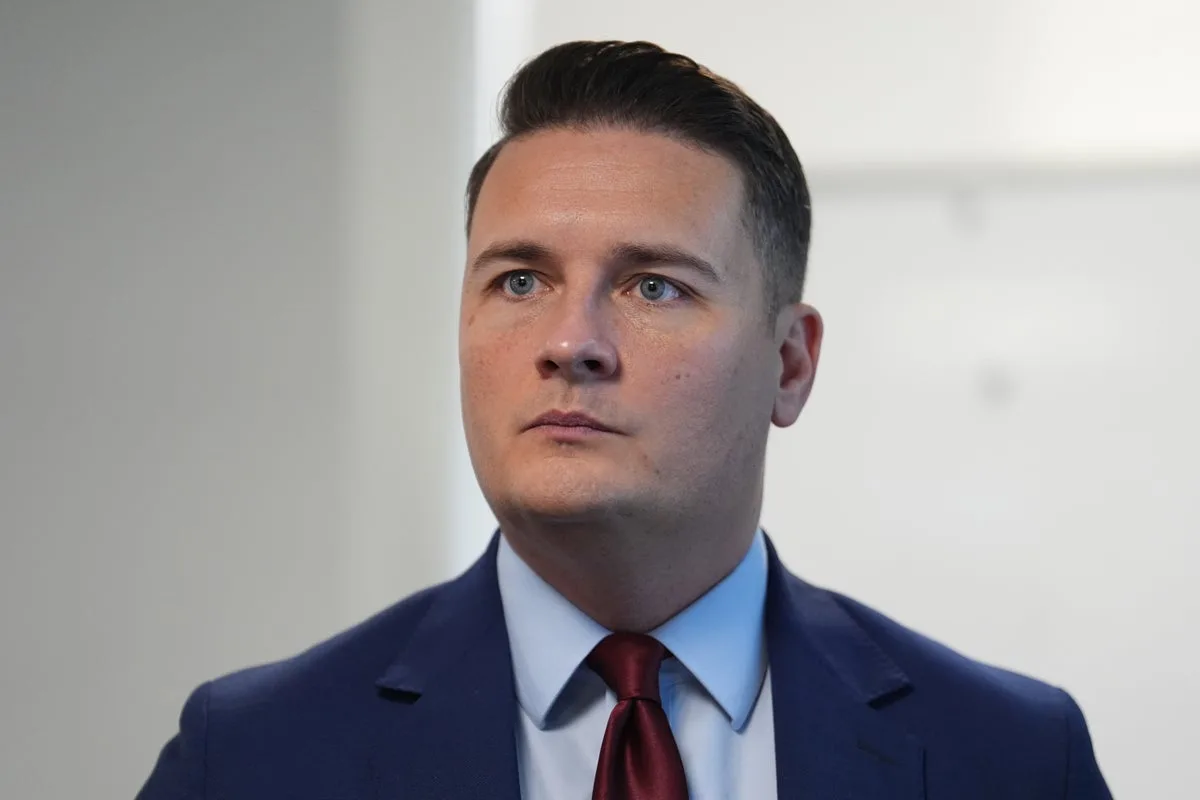
Victims of a cancer-linked pregnancy drug are set to meet Health Secretary Wes Streeting on Monday as they push for a public inquiry into what they describe as a 'silent scandal'. The campaign group DES Justice UK (DJUK) is also calling for an NHS screening programme to identify those at risk from exposure to diethylstilbestrol, commonly known as DES.
DES, a synthetic form of oestrogen, was prescribed to pregnant women from 1940 to the 1970s to prevent miscarriage and other complications. It was later linked to various cancers, including clear cell adenocarcinoma of the cervix and vagina, as well as breast, pancreatic, and cervical cancers. Despite US regulators advising against its use in pregnant women in 1971, it continued to be prescribed in Europe until 1978.
DJUK, which has over 500 members representing women who took the drug and their descendants, reports that around 300,000 women were prescribed DES in the UK. Many have suffered infertility, reproductive abnormalities, and increased cancer risk. Susie Martin, 55, from Manchester, whose mother took DES, has undergone 20 to 30 operations. She said: 'The impact of this terrible drug cannot be underestimated as it has ruined and devastated so many lives... This has been the silent scandal for too long.'
Clare Fletcher, a partner at Broudie Jackson Canter representing DJUK, said: 'This is one of the biggest pharmaceutical scandals this country has ever seen... The only way to get the truth is with a statutory public inquiry.' Compensation schemes exist for DES victims in the US and Netherlands, but the UK has none.
In November, Streeting told ITV News that the 'state got it wrong' and apologised to victims. A Department of Health and Social Care spokesperson said: 'The Secretary of State has been looking seriously at this legacy issue and carefully considering what more the government can do to better support women and their families.' The NHS has alerted cancer alliances to the impacts of DES and existing screening guidance.




