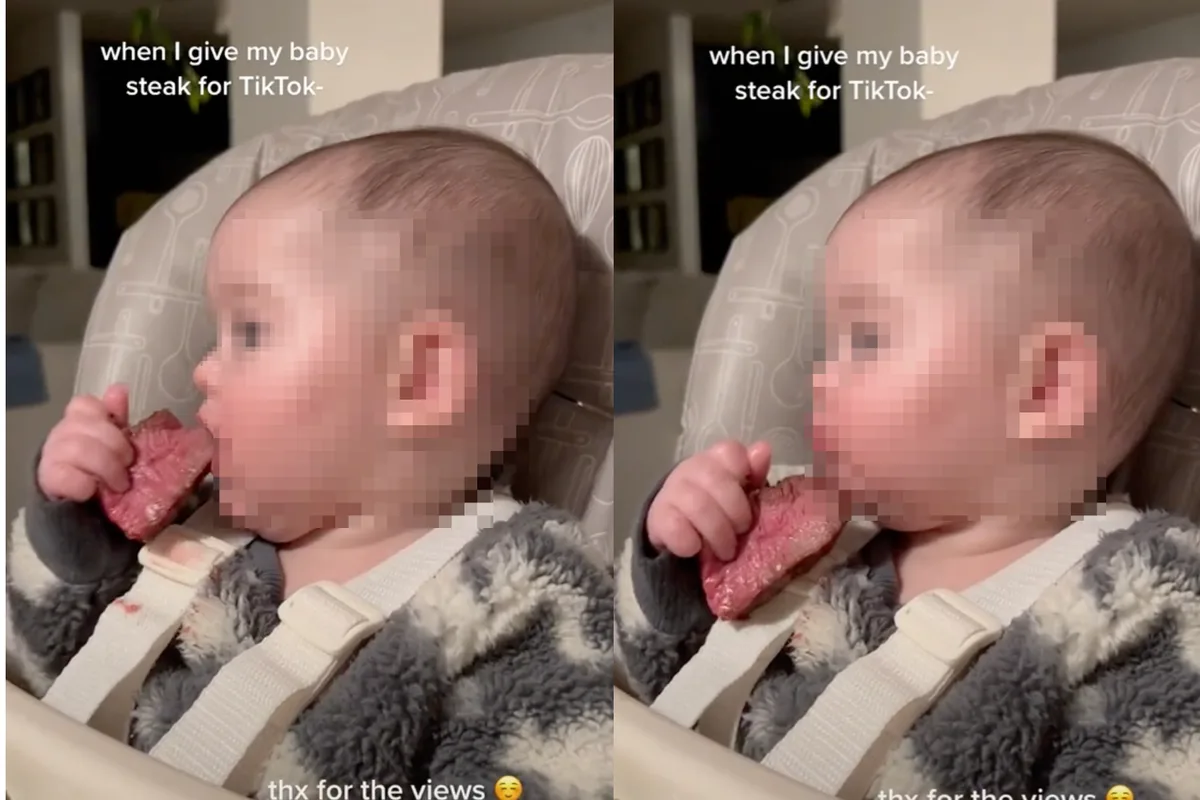
Every parent understands the immense challenge of soothing a teething baby, often resorting to various methods to alleviate their child's discomfort. Traditionally, most mothers and fathers provide infants with plastic or silicone teethers designed specifically to relieve gum pain. However, one California mother has ignited a fierce parenting debate by advocating for an unconventional alternative: substantial cuts of meat.
Viral Video Sparks Controversy
Bridget Levine, a 37-year-old resident of San Diego, California, captured widespread attention in December after sharing a video of her daughter, Summer, gnawing on a large slab of steak. In the accompanying caption, Levine detailed numerous advantages of using meat over conventional teethers, including enhanced jaw strength development, iron supplementation, and prolonged engagement compared to standard products.
While many viewers commended her innovative approach, others expressed significant skepticism and concern regarding safety and appropriateness. The clip rapidly circulated across social media platforms, drawing both praise and harsh criticism from parenting communities worldwide.
Mother Responds to Online Backlash
In an exclusive discussion with the Daily Mail, Levine addressed the substantial online backlash directly. "Yes, there has been some backlash online," she acknowledged. "Anytime you share something that challenges what people are used to seeing, especially when it involves babies, it can spark strong reactions."
Levine emphasized maintaining composure and focusing on educational dialogue rather than defensive arguments. "My response has been to stay calm and focus on education rather than defensiveness," she explained. "A lot of the concern comes from seeing a short clip without context. I try not to engage with negativity or name calling. My focus is on sharing information, encouraging thoughtful conversations and supporting parents in making confident choices for their own families."
Intentional Parenting Philosophy
When her daughter, now 17 months old, began teething, Levine deliberately avoided traditional teethers due to her meticulous approach to materials. "I've always been very intentional about what materials she's exposed to," Levine stated. "Many teethers are made from plastic or silicone and are chewed on for long periods of time. I prefer real food and natural options whenever possible, especially during such an important developmental stage."
The concept of utilizing steak originated from her research into historical infant feeding practices across diverse cultures. "Long before modern baby products existed, babies were often given large pieces of food to gnaw on," she revealed, highlighting the traditional roots of her method.
Developmental and Nutritional Benefits
Levine outlined multiple developmental advantages associated with allowing babies to chew on meat. "It supports oral motor development and the coordination needed for future eating and speech," she elaborated. "It also introduces babies to real textures early on. From a nutritional standpoint, even sucking and gnawing allows babies to extract small amounts of iron, zinc and amino acids, which are especially important once iron stores begin to decline in infancy."
Safety as Paramount Priority
Addressing critical safety concerns, Levine affirmed that protection remains her foremost consideration. "Safety is always the priority for me," she insisted. "I make sure the meat is well cooked, tough and offered in a large piece that cannot easily break apart to protect Summer from choking. I supervise closely the entire time. I would not recommend small or shreddable pieces, and this is not something meant to be done unsupervised. Like any feeding approach, it needs to be age appropriate and intentional."
Effective Soothing and Engagement
According to Levine, her daughter responds positively to the steak teether, which effectively soothes her gums similarly to commercial alternatives. "It actually holds her attention much longer than traditional teethers had," she added, noting the extended engagement period as a significant benefit.
Advocating for Parental Empowerment
In conclusion, Levine encouraged parents to recognize the absence of a universal parenting formula. "I hope others remember that there's not a one size fits all approach to parenting," she remarked. "Parents should feel empowered to explore options that feel aligned with them. Real food has been used for generations, and for some families it may feel more intuitive than modern alternatives."
This controversial parenting technique continues to provoke discussion among experts and caregivers, raising questions about traditional versus innovative child-rearing practices in contemporary society.




