
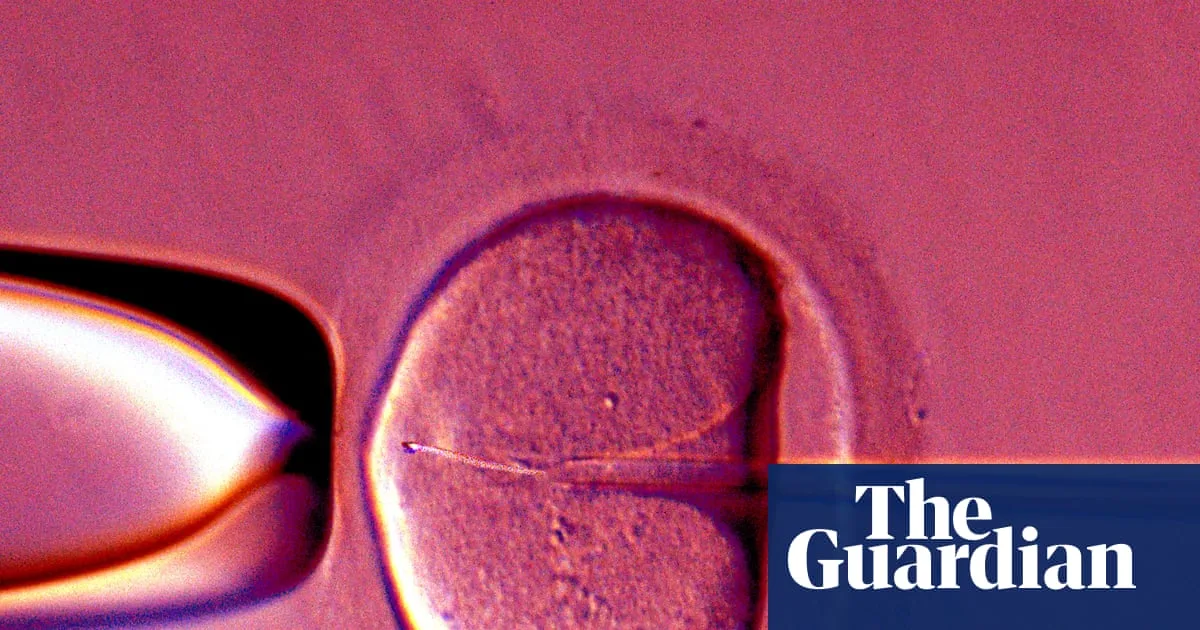
Scientists have reported a breakthrough in which human eggs were 'rejuvenated' by supplementing them with a key protein, potentially revolutionising IVF success rates for older women. The research suggests that an age-related defect causing genetic errors in embryos can be reversed, reducing the likelihood of such defects by nearly half.
The study, led by Prof Melina Schuh of the Max Planck Institute for Multidisciplinary Sciences in Göttingen, focused on the protein Shugoshin 1, which acts as a glue for chromosome pairs during egg cell division. As women age, levels of this protein decline, leading to chromosome misalignment and errors in embryos. Microinjections of Shugoshin 1 into donated human eggs reduced the defect rate from 53% to 29%.
Dr Agata Zielinska, co-founder of Ovo Labs, which aims to commercialise the technique, noted that current options for older women often require multiple IVF cycles. 'What we envision is that many more women would be able to conceive within a single IVF cycle,' she said. The findings are to be presented at the British Fertility Conference in Edinburgh and published as a preprint, pending peer review.
UK figures show that IVF birth rates drop from 35% per embryo transfer for women under 35 to just 5% for those aged 43–44. The new approach targets the root cause of this decline, though it would not extend fertility beyond menopause. Further trials are needed to confirm the results.




