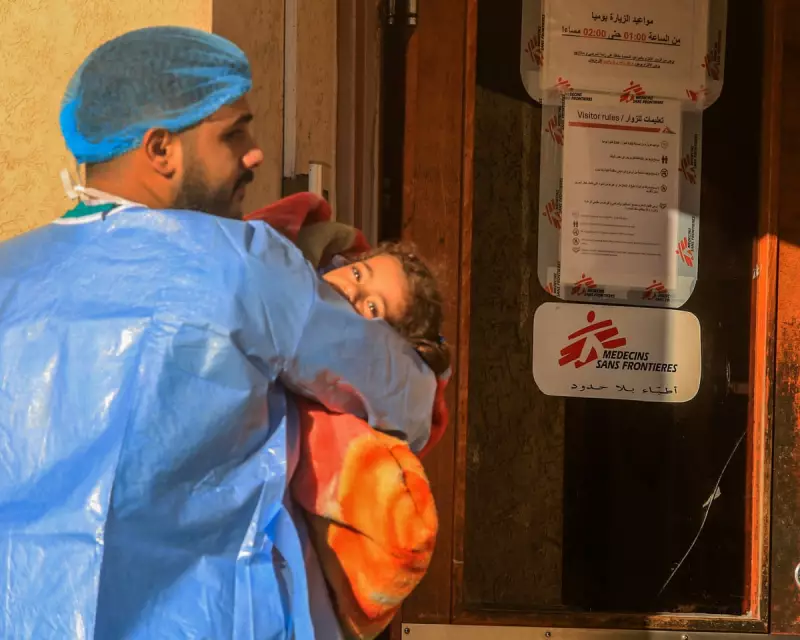
The healthcare system for mothers and babies in Gaza has been systematically dismantled, leaving a generation vulnerable to a mounting mortality crisis. A combination of severe fuel shortages, blocked medical supplies, mass displacement, and relentless bombardment has created catastrophic conditions where basic survival is a daily struggle.
Infants Succumb to Freezing Conditions
The human cost of this collapse is measured in the most tragic of terms. A 27-day-old baby girl, Aisha Ayesh al-Agha, died on Saturday from severe cold, according to the Palestinian health ministry. Medical sources confirmed to Anadolu news agency that by the time she was brought to Nasser hospital in Khan Younis, it was too late to save her.
Her death brings the number of children in Gaza confirmed to have died from hypothermia since the start of the current winter season to eight. In a further grim update, the health ministry reported on Tuesday that another one-year-old baby had died of hypothermia overnight.

A System in Collapse: Soaring Maternal and Neonatal Mortality
The degradation of specialist care has had a profound impact on pregnancy and birth outcomes. Two recent reports by Physicians for Human Rights, in collaboration with the University of Chicago Law School's Global Human Rights Clinic and Physicians for Human Rights-Israel, document the shocking scale of the crisis.
The reports reveal that between January and June 2025, the war led to:
- 2,600 miscarriages
- 220 pregnancy-related deaths
- 1,460 premature births
- Over 1,700 underweight newborns
- More than 2,500 infants requiring neonatal intensive care
Furthermore, recorded births in the first months of 2025 fell to 17,000, representing a staggering 41% drop compared to the same period in 2022.
Mothers are now forced into impossible choices, routinely sacrificing their own health and safety to secure the most basic necessities for their children. With hospitals and clinics non-functional, relocation to overcrowded and flimsy tent encampments has become the only option for many.
Ceasefire Brings No Safety for Gaza's Children
Despite a ceasefire coming into force in October, the danger for Gaza's civilian population, particularly children, has far from ended. James Elder, a Unicef spokesperson, stated that more than 100 children have been killed in the territory since the ceasefire began.
While the intensity of airstrikes and gunfire has reduced, such incidents have not ceased entirely. The precarious situation has been severely exacerbated by recent winter storms, which have brought flooding and destruction to displacement camps already operating far beyond capacity.
On Tuesday, strong winds caused walls to collapse onto tents housing displaced Palestinians, killing at least four people. According to the Gaza health ministry, at least 464 Palestinians have been killed and nearly 1,280 injured in Israeli attacks since the October ceasefire.
The convergence of man-made conflict and natural disaster has created a perfect storm of suffering, where the most fundamental structures for protecting life—shelter, warmth, and medical care—have been stripped away, with the youngest and most vulnerable paying the highest price.