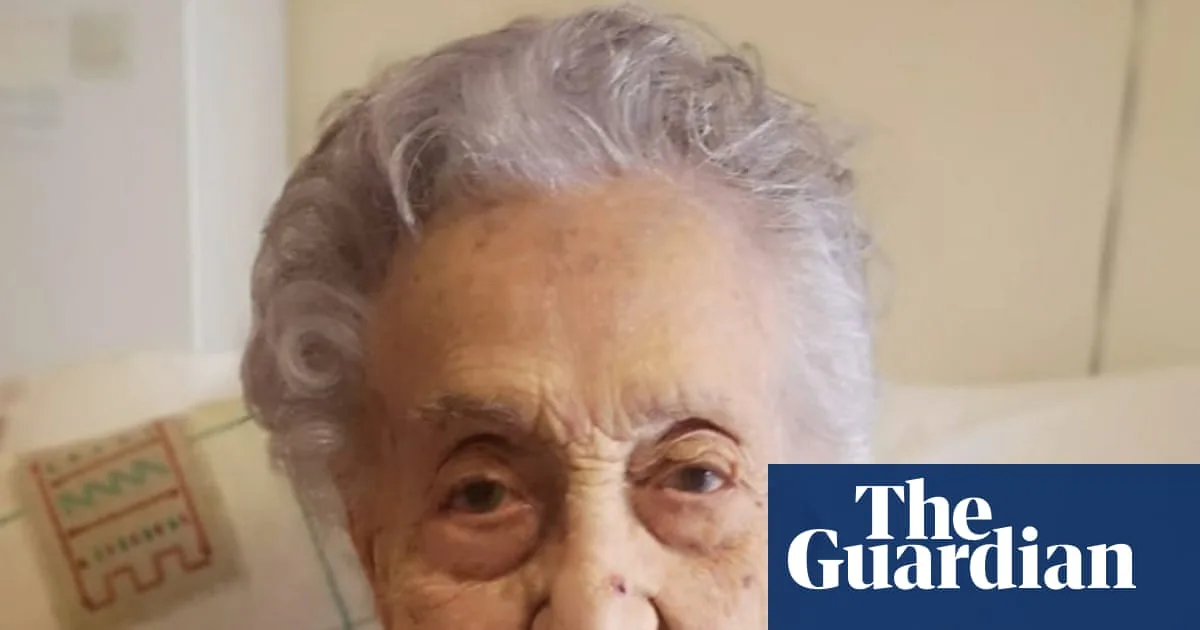
A 116-year-old British woman is now potentially the world's oldest person following the death of Maria Branyas Morera, who passed away last year at the age of 117. The news comes as scientists reveal the results of extensive tests on Branyas, offering new insights into the biology of extreme longevity.
Doctors in Spain conducted a comprehensive suite of tests on Branyas, who was the world's oldest person before her death. They discovered that while her body showed clear signs of extreme old age, a number of biological factors protected her from the diseases that normally plague the final years of life. 'The common rule is that as we age we become sicker, but she was an exception and we wanted to understand why,' said Dr Manel Esteller at the Josep Carreras Leukaemia Research Institute in Barcelona.
The tests, which included blood, saliva, urine and stool samples, revealed that Branyas had exceptionally short telomeres, a sign of old age, but these may have protected her from cancer by limiting cell division. She also had gene variants that protected her heart and brain cells from disease and dementia, low levels of inflammation, and efficient cholesterol and fat metabolism.

Branyas's epigenetic clock showed she was biologically 10 to 15 years younger than her chronological age, and her gut microbiome was also very young for her age. Her long life was not solely due to genetics; she was not overweight, ate a lot of yoghurt, did not smoke or drink, and had a good social life with friends and family nearby.
Dr Esteller hopes the wealth of information will help scientists develop new treatments to keep people healthy in old age. 'We can develop drugs to reproduce the effects of good genes,' he said. 'Maria's parents gave her very good genes, but we cannot choose our parents.'
Prof João Pedro de Magalhães at the University of Birmingham commented: 'These outliers in longevity could provide insights into how to age more gracefully. If we could figure out which specific genes are associated with extreme human longevity and healthy old age it could provide clues about mechanisms for ageing as well as drugable targets to develop interventions that allow everyone to live longer, healthier lives.'