

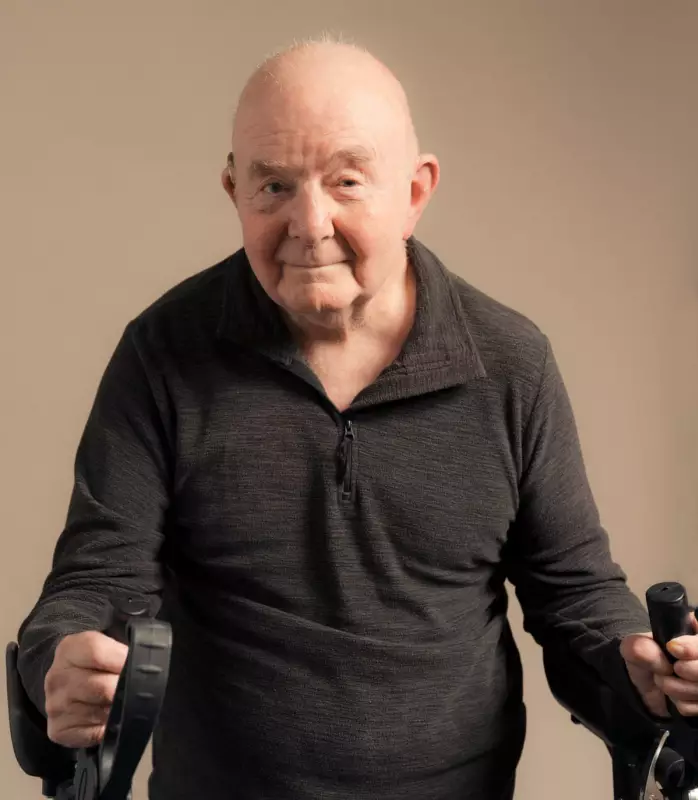
An 82-year-old pensioner from Wales has defied medical expectations by learning to walk again after a devastating cycling accident left him with a broken neck and severe spinal cord compression.
A Life on Two Wheels, Suddenly Halted
Before the accident, Harold Price was a picture of active retirement. The former engineer from Griffithstown cycled an impressive 95 miles a week on his road bike and enjoyed riding his collection of restored motorbikes. In June 2021, aged 78, he was on a motorbike outing with a friend when the incident occurred. Riding at a modest 10 miles per hour on a narrow road, his friend pulled out in front of him. "I had nowhere to go," Price recalls. The impact snapped his head back violently into his helmet, and he lost consciousness.
The crash resulted in a fracture of his fifth cervical vertebra, which compressed his spinal cord. The injury left him barely able to use his legs. After months in hospital, the prognosis was grim: medical professionals told him he would never walk again. "That was a bit of a downer, obviously," Price states with characteristic understatement. Despite the diagnosis, his resolve remained. "My mind told me I could get up and walk out. But when I tried, I collapsed," he admits, highlighting the chasm between willpower and physical capability.

The Turning Point at Morrello Clinic
Back at home, a friend's makeshift wheeled lifting frame offered some aid, but falls were frequent. A breakthrough came in 2022 during home adaptation work, when an engineer mentioned the Morrello Clinic in Newport, a specialist physiotherapy centre. This chance recommendation led Price to physiotherapist Sam Miggins.
After a thorough assessment of the strength and movement in his legs, Miggins turned to Price and made a simple, powerful promise: "I'll get you to walk." "You can imagine how I felt," Price says. "After months of being told I couldn't!"
His rehabilitation programme, attended twice weekly, is intensive and multifaceted. It includes training on an active-passive exercise bike—which uses a motor to assist leg movement while still demanding effort from the user—resistance training, stretching to improve hip and trunk mobility, and supported walking practice.
The Long Road Back to Mobility
Progress has been painstakingly slow, testing Price's determination. "I go to bed at night and sometimes I think I don't want to wake up," he confesses. "Then in the morning I think, oh well, I'll walk again. I've got to get better than this."
After six months of building strength, he graduated to using an upright walker. The first time was "marvellous," he says, despite the pain. Now, he and Miggins walk 400 metres up and down the road outside the clinic with the aid of a Zimmer frame, joking with other patients that they're "walking to the pub." These sessions leave him physically exhausted but mentally rejuvenated.
The results are tangible. At home, Price can now walk short distances with his wife using an upright frame. They no longer require care workers to help him dress or get into bed. At the clinic, he has progressed to walking with a quad stick for stability and just one person for support. The severe leg spasms that once plagued him have also ceased.
During a yearly hospital review of his medication, a doctor acknowledged his incredible progress. "The doctor said, 'Well, Mr Price, you proved us wrong,'" Price recounts. "I said, 'It's because of Sam' and the doctor said, 'It's not down to Sam, it's down to you.'" Harold Price's journey stands as a powerful testament to human resilience and the transformative potential of specialist rehabilitation.






