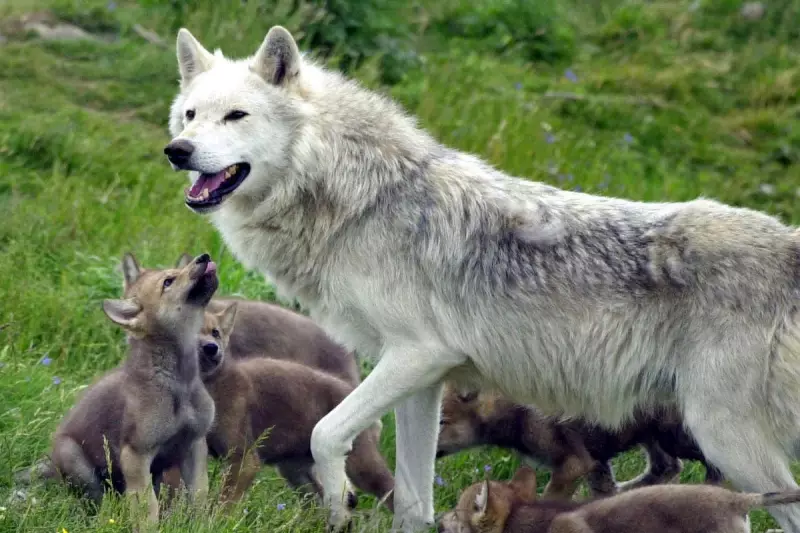
Young people across the UK and Ireland are expressing significant caution about plans to bring back large predators like wolves and lynx to the wild, according to groundbreaking new research.
Survey Reveals Low Support Among Younger Generations
The study, conducted by the ARK social-policy hub at Queen's and Ulster universities, is the first of its kind to specifically probe the attitudes of children and teenagers towards the controversial idea of reintroducing apex predators. It involved thousands of young participants from Northern Ireland.
More than 2,000 sixteen-year-olds were interviewed for the Young Life and Times survey, while over 4,000 children aged 10 and 11 took part in the Kids' Life and Times survey. The results indicate that support among the young is generally lower than that recorded in previous adult surveys carried out in Great Britain.

Those earlier adult surveys showed support levels varying between 36% and 72%. In stark contrast, the ARK research found that just under one third (32%) of 10 and 11-year-olds, and just over a third (35%) of 16-year-olds, agreed or strongly agreed with reintroducing lynx.
Support for bringing back wolves was even lower, with only 30% of the younger children and 31% of the 16-year-olds in favour.
Key Demographics and Perceptions of Risk
The most common single response across both age groups and for both species was to neither agree nor disagree with the proposals, highlighting a prevailing sense of uncertainty and caution.
The research identified clear demographic trends. Girls and young people living in rural areas were significantly less supportive of reintroducing any large carnivores. Interestingly, 'don't know' responses were higher for lynx than for wolves, which researchers suggest may point to greater public familiarity with wolves as a species.
Wolves also attracted more negative associations overall. This is likely linked to a heightened perception of risk to human safety and livestock, compared to the more elusive lynx.
Research Informs Heated Conservation Debate
This survey arrives amidst growing calls to reintroduce large predators to parts of the UK and Ireland, centuries after they were hunted to extinction. The debate often pits conservationists against livestock farmers, who raise serious concerns about the threat posed by animals at the top of the food chain.
The issue was thrust back into the spotlight earlier in 2025 following the illegal release of four Eurasian lynx into the Scottish Highlands.
Lead researcher Dr Jonny Hanson from Queen's University School of Social Sciences, Education and Social Work emphasised the importance of the findings. "The potential reintroductions of lynx and wolves to the UK and Ireland are very socially complex and highly contested," he said.
He argued that this new data provides crucial insight into the nuanced views of younger citizens and that such robust social science should be integral to future reintroduction proposals, not an afterthought. The long-term feasibility of such projects, Dr Hanson concluded, will depend on understanding these human dimensions for both young people and adults.