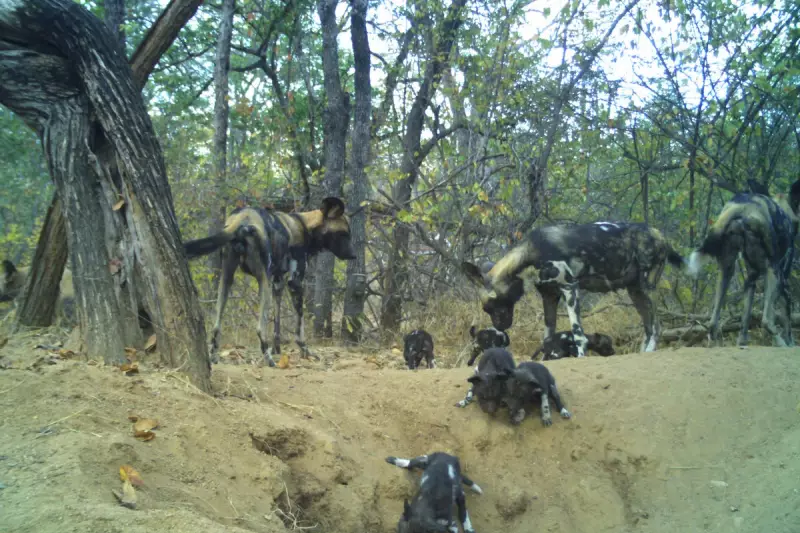
The tragic death of six endangered African wild dog pups in a single road collision in Zimbabwe last month has been directly linked to incomplete wildlife fencing, after budget cuts from the United States Agency for International Development (USAID) halted a vital protection project.
A Heartbreaking and Preventable Loss
The incident occurred near the Savé Valley Conservancy on a main commuter road leading to Harare, Zimbabwe's capital. The African Wildlife Conservation Fund (AWCF) team discovered the six pups' carcasses just metres apart, indicating they were all struck by one speeding vehicle. Dr. Rosemary Groom, Chief Executive Officer of AWCF, described the event as "heartbreaking and preventable."
"These pups represented the future of a stronghold population of wild dogs in Zimbabwe," Dr. Groom told The Independent exclusively. "For a driver to strike six individuals in a single event is unimaginable. It's devastating not only for this pack, but for the species as a whole."

Funding Cuts Leave Wildlife Exposed
The fatal collision took place on a stretch of road where a protective fence was supposed to be erected. The fencing was part of a proposed USAID-funded initiative, but budget cuts enacted earlier this year caused the plans to be abruptly stopped. According to AWCF, the incomplete fence would have cost an estimated $30,000 (£22,500).
This road has become a deadly hotspot for wildlife. In addition to the wild dogs, an African lion cub, buffalo, brown hyena, spotted hyena, and an aardwolf have all been killed there. Conservationists believe these deaths would likely have been avoided if the fencing had been completed and maintained.
The fencing project is one of hundreds of wildlife protection schemes affected by sweeping budget reductions at USAID and the US Fish and Wildlife Service. AWCF itself had a substantial USAID grant of $399,947 terminated mid-way through 2025, threatening not only fence-building but also training events and local employment opportunities.
A Daunting Future for Conservation
Jess Watermeyer, AWCF Director of Operations, expressed the team's profound distress. "To lose so many pups to a single, senseless road incident is beyond comprehension, especially when we had the solution ready to prevent it," she said. The team has monitored and protected this specific wild dog population for over two decades.
Watermeyer added that funding cuts from other international donors, including the UK, have severely constrained the financial landscape for conservation groups across southern Africa, making future planning extremely difficult.
African wild dogs are among the continent's most endangered mammals. Current global estimates suggest only around 660 breeding packs remain, scattered across 39 fragmented populations. In Zimbabwe, there are thought to be fewer than 700 individuals left. They face myriad threats:
- Habitat fragmentation
- Poaching
- Conflict with people and livestock
- Vehicle collisions
In response to this crisis, AWCF is now fundraising to build more protective fencing, strengthen human-wildlife coexistence programmes, and increase the number of scout groups available to monitor vulnerable wild dog packs.