Victoria's Bushfires Push Endangered Species to the Brink as Wildlife Teams Assess Damage
As tinderbox conditions persist across Victoria, hampering wildlife assessment and rescue efforts, bushfires have scorched over 435,000 hectares of land. The blazes have incinerated habitat critical to numerous bird and animal species, including the endangered eastern bristlebird and dingoes, with some plant species now feared extinct. The state's environment department has deployed wildlife teams across multiple firegrounds to search for and evaluate affected animals, but a comprehensive picture of the devastation has yet to emerge.
Eastern Bristlebird Habitat Devastated
Professor Don Driscoll, a terrestrial ecologist at Deakin University, expressed particular concern for Victoria's population of endangered eastern bristlebirds. These shy songbirds, adorned with cinnamon-brown feathers, have seen approximately 60% of their habitat at Howe Flat near Mallacoota consumed by flames. With the state's population numbering fewer than 200 birds, any survivors are now dangerously exposed.
"That's a particular concern because these ground-inhabiting birds are hanging around in dense vegetation, and they rely on that for protection from predators," Driscoll stated. He noted that, unlike during the Black Summer fires six years ago when authorities mounted a rescue mission for 14 birds, no such emergency operation has been initiated this time.

Department Response and Recovery Efforts
The Victorian environment department acknowledged that active fires have prevented specialist staff from entering areas to conduct assessments. James Todd, the department's chief biodiversity officer, confirmed that once declared safe, accurate figures of affected birds will be established, with efforts focused on threat reduction, such as controlling foxes and cats.
"While this is a concerning situation for the eastern bristlebird population, we've had promising recovery results in the recent past, including establishment of a recently translocated population at Wilsons Promontory to help manage extinction risks from these types of bushfire events," Todd explained.
Widespread Wildlife Catastrophe
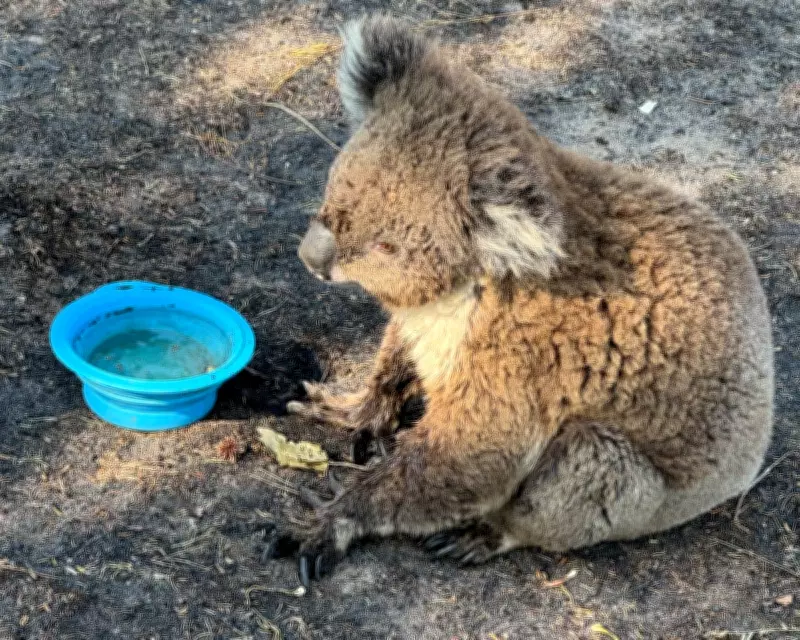
Wildlife Victoria reported a likely substantive loss of animals due to the ferocity and scale of the fires. Chief executive Lisa Palma emphasised the catastrophic impact on native wildlife, which often cannot escape and are highly vulnerable to death, dehydration, disorientation, burns, injury, and habitat loss.
The charity received a record number of calls at the peak—more than 1,100 in a single day—with reports mainly concerning kangaroos, koalas, and wallabies. Assistance has been provided where possible, but many firegrounds remain unsafe for rescuers and volunteers.
Mammals and Other Species at High Risk
Professor Driscoll, lead author of a Nature paper on the biodiversity impacts of the 2019-20 fires, highlighted that all animals are affected, with mammals particularly vulnerable. "They can't fly away like many birds can. They're too big to hide in small crevices like some of the frogs, reptiles and insects could," he said. Animals sheltering in tree hollows, such as greater gliders and yellow-bellied gliders, face especially high risks.
Professor Euan Ritchie, another ecologist at Deakin University, warned that survivors could still perish in the aftermath due to increased exposure to predators, reduced food, and loss of hollow-bearing trees. He noted that Victoria, as the most-cleared state in Australia, faces compounded threats.
Specific Habitat Losses
Fires in the state's north-west have burned through 60,000 hectares of Wyperfeld National Park, a crucial habitat for wilkerr (dingo) and critical nesting trees for endangered flame-crested cockatoos. At least one dingo is thought to have died from an adult population smaller than 80.
Parks Victoria, in collaboration with the Barengi Gadjin Land Council, has installed temporary water points in Wyperfeld to help wildlife and discourage animals from moving onto private property in search of water.

Plant Species Feared Extinct
Botanists hold grave concerns for several plant species. Professor David Cantrill, chief botanist at Royal Botanic Gardens Victoria, fears the endangered southern shepherd's purse may be extinct after fires near Harcourt burned Mount Alexander, home to the last remaining wild plants.
Another major fire near Mount Lawson encompassed a fenced flora reserve containing the only known population of critically endangered summer leek orchids, along with state-listed species like the endangered dusky bush-pea and grey rice-flower. Cantrill remains hopeful that some orchid tubers may have survived underground, with assessments planned for autumn.
Calls for Enhanced Protection and Strategy
Professor Driscoll attributed the increasing severity, extent, and frequency of fires to human-caused climate change. He urged faster action on climate and advocated for a "rapid attack" capability in Victoria—quickly identifying fire outbreaks and investing in sufficient resources to control them before escalation.
He suggested flagging areas like rainforests and wetter zones for special protection, similar to the Wollemi pine rescue in New South Wales during Black Summer. Dr Tom Fairman, research fellow at the University of Melbourne's FLARE Wildlife Research, called for an overarching strategy to protect priority ecosystems as bushfires become more frequent and severe.
"We shouldn't be surprised when a fire happens and some of these ecosystems start collapsing," Fairman concluded, highlighting the urgent need for comprehensive conservation measures in the face of escalating fire threats.