
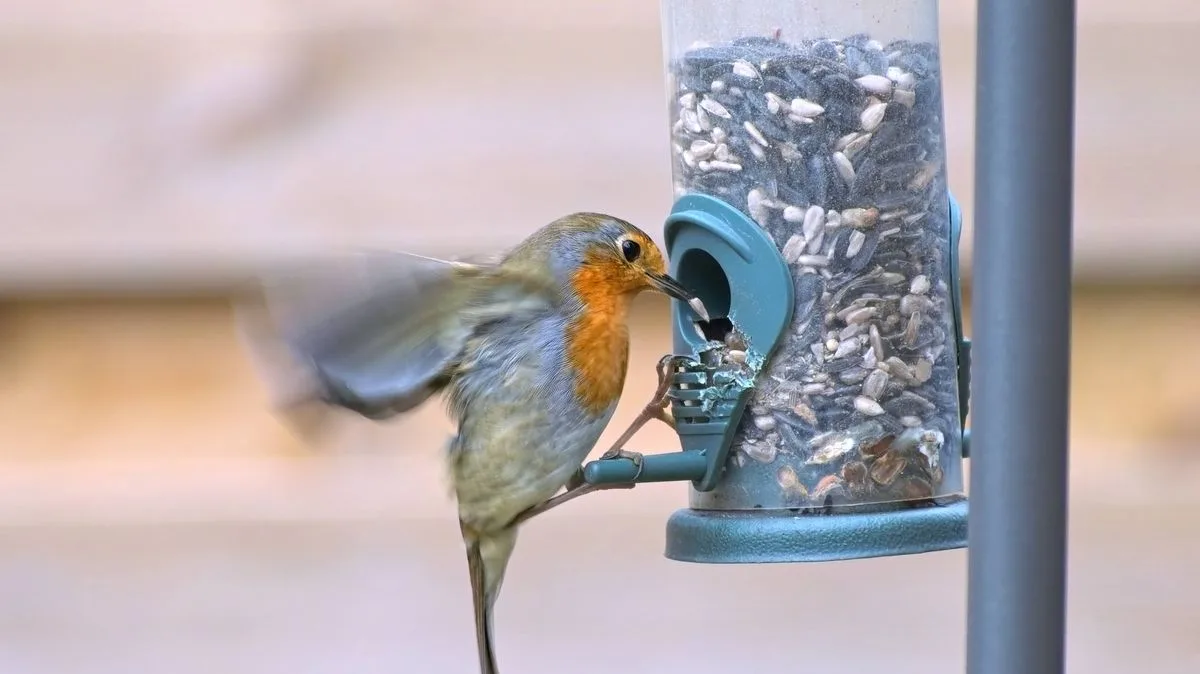
Robins are a delightful sight in gardens, especially during winter, but they can be easily spooked by other birds. Ring-necked parakeets, increasingly common in UK gardens, often dominate feeders and push out robins and smaller species.
Richard Green, a bird feeding expert from Kennedy Wild Bird Food and Pet Supplies, warned that once parakeets discover a food source, they take over fast. He explained that they arrive in small numbers at first, then build into flocks that push out smaller birds and damage feeders with their powerful beaks.
There are humane methods to discourage parakeets. Changing the food is a quick solution: switching to niger seed, millet or suet products makes parakeets lose interest quickly, as they prefer peanuts and sunflower seeds. Barriers such as domes and baffles also help by making it harder for larger birds to land and feed.
Caged feeders are only partially effective, as parakeets can reach through the bars with their long necks. Weight-activated feeders are the most dependable choice, automatically shutting when anything heavier than a small songbird lands on them. These feeders prevent parakeets, starlings, squirrels and rats from emptying the food.
Parakeets are classed as an invasive non-native species, competing with birds like woodpeckers and nuthatches for nesting holes and reducing feeding opportunities for smaller birds. Specialists recommend using a combination of caged hanging feeders, large squirrel busters and ground guards to allow more welcome garden birds to feed in peace.




