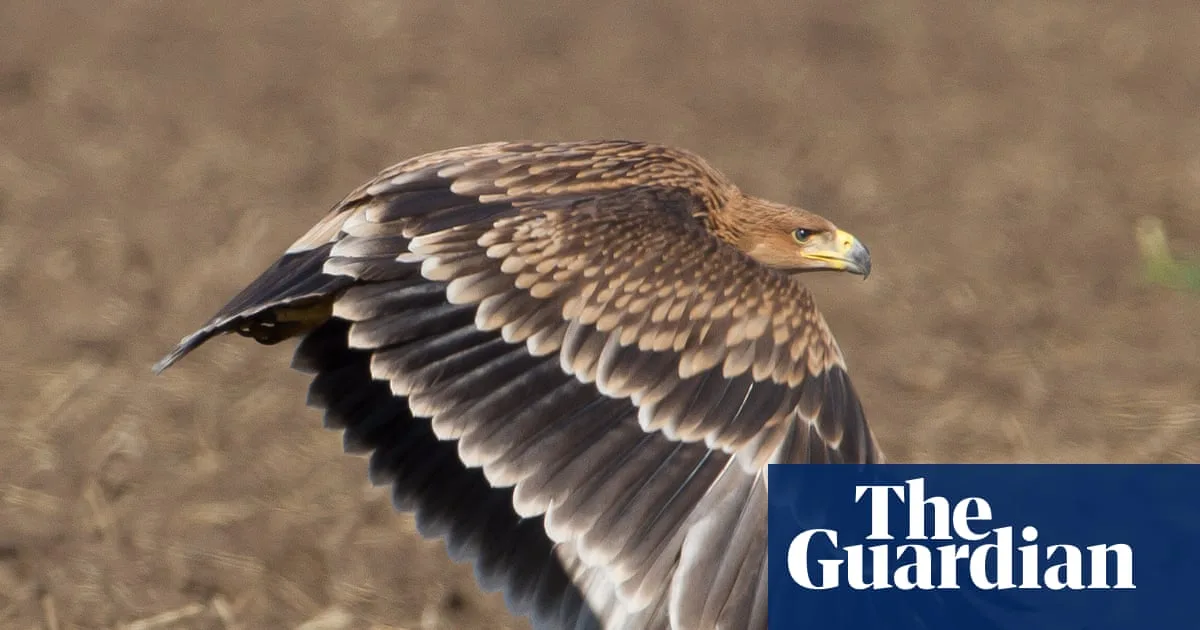
Serbia's Imperial Eagles Stage Remarkable Recovery from Brink of Extinction
Once widespread across Serbia, the eastern imperial eagle faced a dire threat to its survival, pushed almost to extinction by a combination of poisoning, habitat destruction, and being shot for sport or to protect livestock. Less than a decade ago, the Balkan nation had dwindled to just one breeding pair of this majestic raptor species. However, in an improbable turn of events, these birds are now making a steady return, thanks to the relentless work of conservationists.
A Landscape Transformed by Intensive Agriculture
In northern Serbia's Vojvodina region, vast fields stretch to the horizon, crisscrossed by straight farm tracks. As agriculture intensified over the years, oaks and poplars were systematically cut down to straighten fields and maximise crop yields. This has rendered Vojvodina one of Europe's least forested areas, with tree cover in some municipalities dropping below 1%. "You can drive here for an hour and a half and not see a single tree taller than five metres," explains Milan Ružić, executive director of the Bird Protection and Study Society of Serbia (BPSSS). "Even if an eagle wants to return, the question is: to which tree?"
The lack of suitable nesting trees is just one factor in the eagle's decades-long struggle. Historically, persecution played a significant role. "The region has a history of unrest and war," Ružić notes. "Every household had a rifle. People shot birds of prey for fun or to protect livestock. Raptors were the enemy." After the Second World War, state-run poisoning campaigns targeting large carnivores like wolves and bears inadvertently devastated eagle populations, as they were often the first to consume toxic baits left in the open.
Loss of Food Sources and Habitat Changes
Agricultural intensification also led to the loss of the eagle's primary food source: ground squirrels, or sousliks, which thrive in grazed pastures with short grass. When cattle moved into stables and grazing disappeared, so did these prey animals. "The eagles lost their nesting trees, food and safety all at once," says Ružić. By the late 1980s, only two small imperial eagle populations remained in Serbia, in the Deliblato Sands and Fruška Gora areas. The Deliblato population vanished in the 1990s, while Fruška Gora held on until 2015.
Ružić suggests that geopolitical events may have contributed to the final decline in Fruška Gora. After Russia's annexation of Crimea in 2014, EU sanctions halted fruit exports to Russia, and Serbia stepped in to fill the gap. "Fruit production exploded in Fruška Gora. Pastures were turned into orchards and hundreds of new power lines appeared," he explains. "For a fragile eagle population, such change can be fatal."
Conservation Efforts and Cross-Border Support
While Serbia was losing its eagles, Hungary was experiencing a conservation success story. Decades of protection efforts boosted Hungary's imperial eagle population from 20 pairs in the 1980s to 550 today. As Hungarian territories became saturated, young eagles began dispersing south, first arriving in Serbia in 2011. "Hungary became a source population for the region," says Ružić. Around the time the species disappeared from Fruška Gora, a new pair established itself in northern Serbia.
Spurred by the EU-funded PannonEagle Life project, BPSSS launched intensive efforts to protect Serbia's last breeding pair. Volunteers guarded nests throughout the breeding season, camping nearby to prevent disturbances. When a storm damaged a nest before fledging, conservationists temporarily removed the chicks to rebuild it, ensuring their survival. Today, BPSSS monitors territories, rehabilitates injured eagles, and engages with local communities to foster support.
Building Community Awareness and National Pride
"In village cafes, we would point out there were fewer imperial eagles left in the entire country than people drinking beer in the room," Ružić recalls. "People suddenly cared." The fact that the imperial eagle is widely believed to be depicted on Serbia's national coat of arms added weight to this message. "When you tell people there is an eagle nesting nearby, it becomes a brand: 'our village has the eagle'. Immediately, people are less likely to shoot or poison."
The results are increasingly visible. In 2017, Serbia had only one breeding pair; last year, BPSSS recorded 19 breeding pairs, with 10 successfully raising young. Each year, the search for nests covers more ground, and new territories appear, with the population expanding southwards along river corridors at an estimated rate of 15-20km per year.
Ongoing Challenges and Future Prospects
Despite this progress, recovery remains fragile. Trees are still scarce, and imperial eagles are slow to adapt to artificial nesting platforms. "They don't trust them," Ružić says. "White-tailed eagles will nest on anything – you could put a fridge in a tree and they would use it. Imperial eagles are different. They need time."
Poisoning persists as a significant threat, despite Serbia's participation in the EU-funded BalkanDetox Life project aimed at eradicating wildlife poisoning. "It's a mentality problem," Ružić notes. "It often starts with a neighbour's barking dog or a fox taking chickens. Poisoning a piece of meat is a cheap, easy solution." Since 2000, BPSSS has recorded about 300 poisoning incidents.
Power lines and wind farms pose additional dangers, and conservationists sometimes face opposition from investors and farmers. Geopolitical factors, such as Serbia's pro-Russia stance, have also complicated research, making it harder to import satellite tags for tracking. However, the eagles are holding their ground. Many birds in Serbia are still young, and it can take up to five years for a newly established pair to begin breeding. "They're still learning," Ružić says, but if pairs survive, productivity increases with age.
"The trend has turned," Ružić concludes optimistically. "Unless something dramatic happens, they will keep coming back." This remarkable recovery story highlights the power of dedicated conservation work and cross-border cooperation in bringing a species back from the brink.




