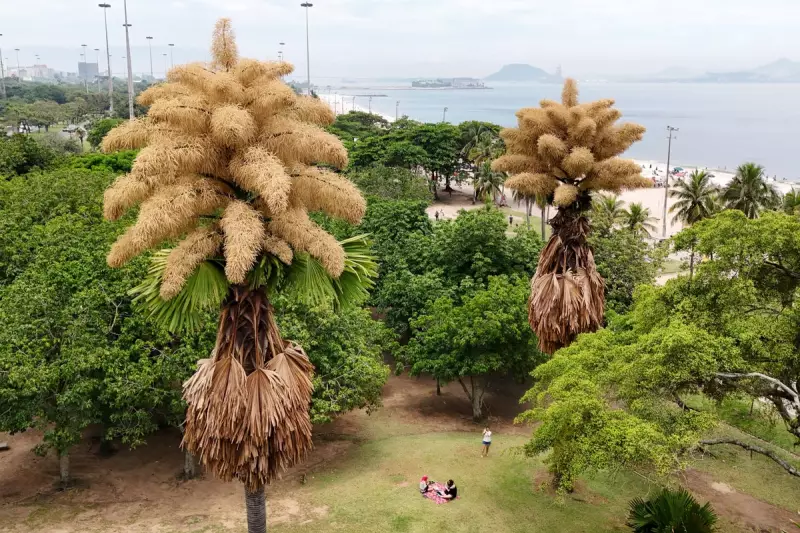
A remarkable botanical event is captivating visitors in Rio de Janeiro, as rare talipot palms flower for the first and only time in their lives, decades after being planted.
A Once-in-a-Lifetime Spectacle
In Flamengo Park and the city's Botanical Garden, towering talipot palms have sent up colossal central plumes laden with millions of creamy-white blossoms. This dramatic display marks the culmination of their life cycle, which spans between 40 and 80 years. The palms, native to southern India and Sri Lanka, were introduced to Brazil in the 1960s by the famed landscape architect Roberto Burle Marx.
The sight has stopped passersby in their tracks, with people craning their necks to admire the flowers that rise high above the trees' fan-shaped leaves. Vinicius Vanni, a civil engineer, expressed his awe and a desire to secure seedlings for future generations. "I probably won't see them flower, but they'll be there for future generations," he remarked from the park, which offers views of Sugarloaf Mountain.

The Science Behind the Synchronised Bloom
Biologist Aline Saavedra from Rio de Janeiro State University explains that the simultaneous flowering in different locations is no coincidence. The palms were brought from southern Asia together, share the same metabolism, and have been exposed to the same Brazilian daylight rhythms for over half a century.
These botanical giants are immense in scale. At the end of their life, they can reach up to 30 metres (98 feet) and produce a staggering 25 million flowers, using energy stored over decades. If pollinated, these flowers will yield fruit that can become new seedlings.
A Poetic Legacy and Environmental Reflection
Saavedra notes that while current environmental laws strictly regulate moving species between continents, these palms are not invasive due to their extremely slow growth. She believes the public fascination with this event is positive, fostering a sense of belonging and a desire to preserve rather than destroy nature.
"This palm species gives us a reflection on temporality, because it has roughly the same lifespan as a human being," Saavedra observed. She added that Marx's original intention was likely to convey this poignant, poetic perspective through his landscaping.
The spectacular, final act of these palms serves as a powerful natural metaphor, reminding onlookers of the passage of time and the enduring impact of thoughtful environmental stewardship.