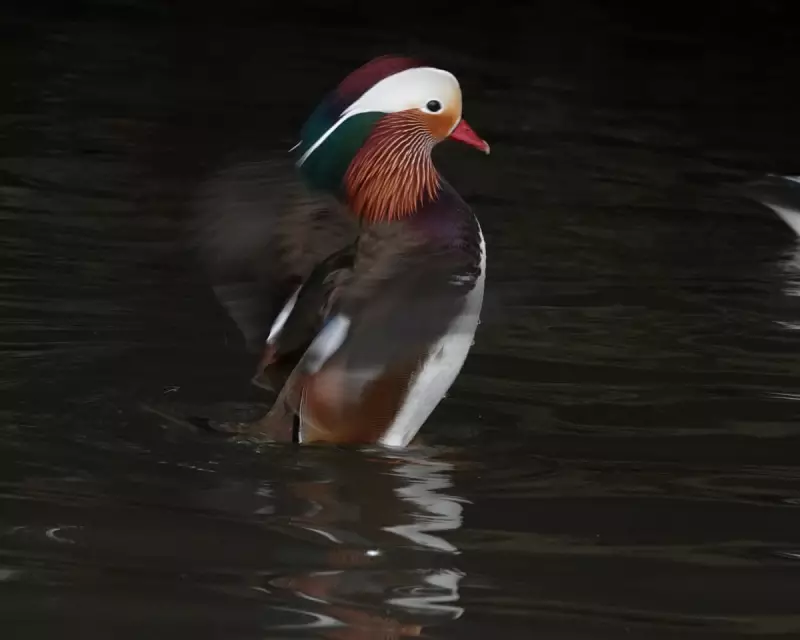
A dazzling flash of colour has pierced the grey winter skies of British wetlands, as a spectacular male mandarin duck has been sighted, sending a ripple of excitement through the birdwatching community. This non-native species, renowned for its breathtaking and almost theatrical plumage, offers a rare visual treat during the colder months.
A Feathered Masterpiece in Monochrome Seasons
The mandarin duck, scientifically known as Aix galericulata, is widely considered one of the planet's most visually stunning birds. The male is an artist's palette brought to life: a vibrant crest of purple and green, striking orange 'sail' feathers on its flanks, and intricate patterns of cream and blue. This stands in stark contrast to the more subdued, greyish-brown appearance of the female. The sighting serves as a vivid reminder of nature's capacity for extravagant beauty, particularly when set against the bare branches and muted tones of a UK winter landscape.
While native to East Asia, mandarin ducks have established small, self-sustaining feral populations in the UK, primarily in England. These populations are often centred around lakes and ponds in parks and protected areas. Their presence here is a historical accident, stemming from escapees from private collections, but they have now become a familiar, if always thrilling, part of the local fauna in certain spots.

Where and How to Spot the Mandarin Duck
For enthusiasts hoping to catch a glimpse of this avian jewel, patience and knowledge of their habitat are key. These ducks favour sheltered ponds, lakes in wooded areas, and sometimes even flooded gravel pits. They are perching ducks and often nest in tree cavities. Prime viewing times are during the winter months and particularly at dawn or dusk when they are most active.
Several locations in the UK have become renowned for reliable mandarin sightings. Key sites include:
- Regent's Park and other London parklands.
- Protected wetlands and nature reserves in the Home Counties.
- Wooded estates with ornamental lakes.
Birdwatchers are advised to move quietly, use binoculars or a spotting scope, and avoid disturbing the birds or their environment.
Conservation and the Role of Non-Native Species
The presence of the mandarin duck in the UK raises interesting questions about conservation and non-native species. Unlike some introduced animals which can become invasive and problematic, mandarin ducks in Britain are generally not considered a threat to native ecosystems. They occupy a niche that does not heavily compete with native duck species like the mallard.
Their successful establishment is partly due to the provision of suitable nesting boxes and a lack of natural predators. Conservationists monitor their numbers, but the focus remains on protecting their habitat—an effort that benefits a wide range of native wildlife as well. The duck's popularity can also act as a gateway, inspiring public interest in wetland conservation and the protection of all species that share these crucial habitats.
Ultimately, the appearance of the mandarin duck is more than just a chance to see a beautiful bird. It is a moment of connection with the wider natural world, a splash of unexpected joy in winter, and a conversation starter about how we manage and appreciate the wildlife around us, both native and introduced. Its magnificent plumage is not just for show; it's a beacon drawing attention to the delicate ecosystems we must strive to preserve.