In a discovery that could reshape our understanding of big cat history, researchers have uncovered a trove of remarkably preserved cheetah remains in caves in northern Saudi Arabia.
A Remarkable Find in the Desert Caves
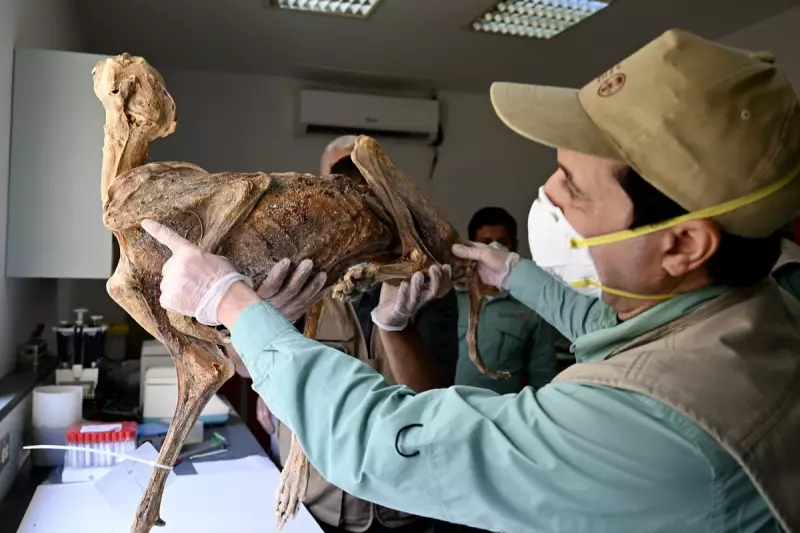
The find, detailed in a study published on Thursday, 15 January 2026, in the journal Communications Earth and Environment, includes seven complete mummies and the bones of 54 other cheetahs. The site is located near the city of Arar. These ancient predators are estimated to have lived between 130 and over 1,800 years ago.
Unlike the famous intentionally mummified remains of ancient Egypt, these cheetahs underwent natural mummification. The process, which prevents decay, can occur in arid environments like desert sands. The specimens discovered show signs of this natural preservation, with cloudy eyes and shrivelled limbs, appearing as dried husks.

"It's something that I've never seen before," remarked Joan Madurell-Malapeira from the University of Florence in Italy, who was not part of the discovery team. While the exact mummification process remains a mystery, scientists believe the caves' consistently dry conditions and stable temperatures likely played a crucial role.
Unanswered Questions and Genetic Insights
Another puzzle for the researchers is why so many cheetahs were concentrated in the caves. One leading theory suggests the location may have served as a denning site, where mothers gave birth and raised their cubs.
Such a high degree of preservation is exceptionally rare for large mammals. Not only do the conditions need to be perfect, but the carcasses must also escape the attention of scavengers like birds and hyenas. Similar finds are uncommon, though scientists have previously uncovered rare mummified remains of other big cats, such as a saber-toothed cat cub in Russia.
In a significant breakthrough, the team managed to extract and analyse genetic material from these naturally mummified cheetahs—a first for big cats preserved in this way. The genetic data revealed that the ancient cheetahs were most similar to modern populations in Asia and northwest Africa.
Implications for Conservation and Reintroduction
This genetic information is more than just historical trivia; it has profound implications for modern conservation. Cheetahs once roamed widely across Africa and parts of Asia but now inhabit just 9% of their historic range. They have not been sighted on the Arabian Peninsula for decades, likely due to habitat loss, unregulated hunting, and dwindling prey.
The new findings from the Saudi caves provide a vital genetic baseline. This data could prove invaluable for future efforts to reintroduce cheetahs to regions they have vanished from, helping scientists understand which modern populations are most closely related to the animals that once thrived there. The mummified cats, silent for centuries, may now hold the key to restoring their kind to lost landscapes.