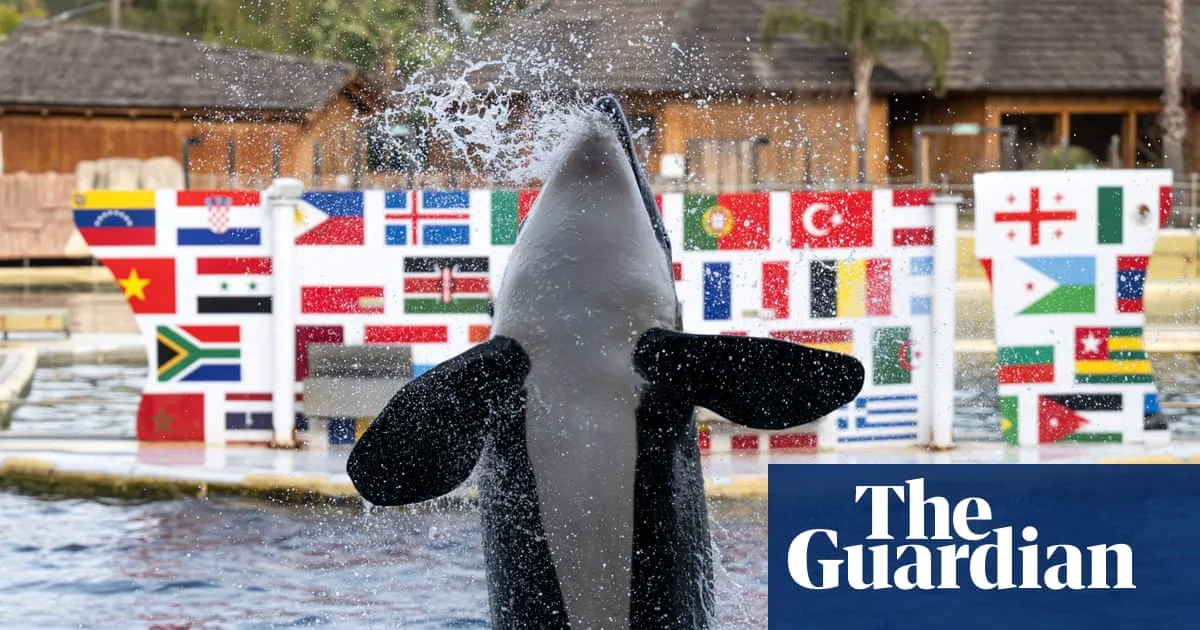
Time is running out for the last two captive killer whales in France, who are living in deteriorating conditions at a shuttered marine park on the French Riviera. Their future hinges on a complex and urgent relocation plan.
A Crumbling Home for France's Final Captive Orcas
Wikie, aged 23, and her 11-year-old son Keijo are the sole remaining orcas at the permanently closed Marineland Antibes in southern France. The park shut its doors in January 2025, leaving the pair behind in their now-decaying enclosure. Born in captivity, they cannot be released into the wild.
Aerial footage from the activist group Tidebreakers reveals a bleak scene: green algae and sludge accumulate around the edges of their pool, while a nearby tank sits half-filled with murky brown water. The park's only other inhabitants are 12 bottlenose dolphins, stranded in a smaller tank, whose fate is also uncertain.
A skeleton staff fulfils basic legal care requirements by feeding the animals but provides little mental stimulation, which is crucial for the highly intelligent and social creatures. The orcas are seen swimming listlessly in their confined space, with their enclosure visibly falling into disrepair.
The Sanctuary Solution and Mounting Obstacles
In December 2025, the French government announced a pivotal decision: Wikie and Keijo should be transferred to a proposed seaside sanctuary in Nova Scotia, Canada, run by The Whale Sanctuary Project (WSP). The government labelled this plan as "the most credible, the most ethical and the only one" meeting animal welfare and safety standards, with a potential move as early as summer 2026.
However, this move requires approval from Marineland, which still holds legal guardianship. The facility itself has stated there is an "extreme urgency" to transfer the whales for their welfare. Other proposed destinations, including Loro Parque in Tenerife and a Japanese marine park, have been vetoed or dismissed for failing to meet minimum space and condition requirements.
Campaigners warn that the clock is ticking. Marketa Schusterova of Tidebreakers expressed grave concern that the orcas' health could fail due to the poor water quality and hazardous tank conditions before any sanctuary transfer can occur. "We are very worried that the situation is so critical... they're going to be euthanised before they get a chance to actually see a sanctuary," she stated.
A Tragic History and a Fragile Hope
The pair have already suffered profound loss. Wikie's son Moana died unexpectedly in 2023 aged 12, and another son, Inouk, perished in 2024 after swallowing a metal fragment that fell into his tank. Their story echoes that of Keiko, the orca star of 'Free Willy', who was rehabilitated and released but died of pneumonia a year later.
While the WSP sanctuary plan offers a 1,000-acre bay secured with netting, critics like Tidebreakers argue the project is far from ready. They advocate for temporary, purpose-built holding facilities as an immediate stopgap. The ideal outcome—a spacious, natural environment for the remainder of the orcas' lives, which could span 70-80 years in the wild—remains a fragile hope, dependent on swift and coordinated action.
The fate of Wikie and Keijo now hangs in the balance between bureaucratic processes, the pace of sanctuary construction, and the relentless decline of their current, wholly inadequate home.




