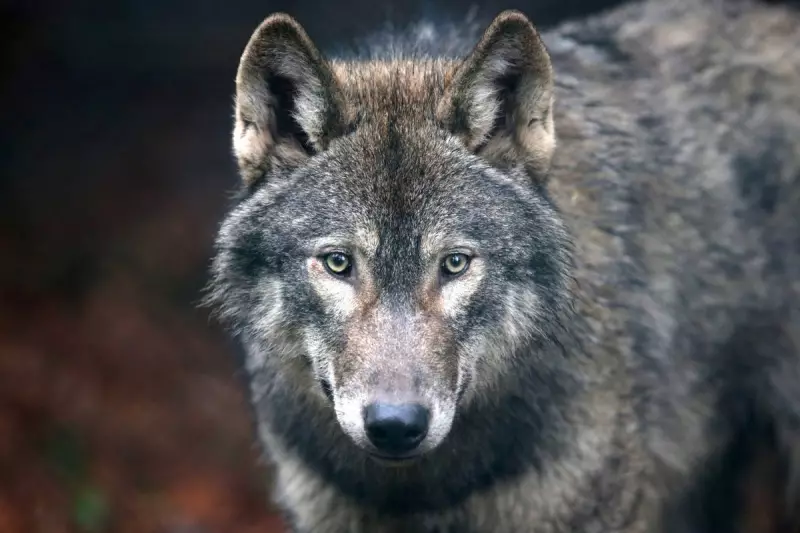
Europe is witnessing a remarkable ecological comeback, with wolves naturally recolonising parts of their historic range. Yet in Britain and Ireland, where the species has been extinct for centuries, plans for reintroduction face a surprising and potent obstacle: the enduring power of Hollywood horror and fairytale folklore.
The Silver Screen Monster
According to Cormac Cleary, a Postdoctoral Researcher at Dublin City University's Institute for Climate and Society, the cultural narrative surrounding wolves is heavily skewed by entertainment. For most people in the UK and Ireland, wolves exist not as a living species but as cunning villains from childhood stories like Little Red Riding Hood or as monsters in modern cinema.
This fictional framing carries more weight than scientific facts, shaping public perception in regions where no wild wolves roam. Cleary points to recent high-profile films that reinforce these damaging tropes. In Guillermo Del Toro's 2025 adaptation of Frankenstein, wolves are inserted as relentless antagonists that attack a farmstead and break into a house—scenes absent from Mary Shelley's original novel. Del Toro uses them as a metaphor for inevitable brutality, falsely depicting conflict with humans as unavoidable.

Marketing Fear and Falsehoods
The trend extends beyond blockbusters. Robert Eggers's Nosferatu features a pack of wolves pursuing a character, echoing ancient demonic portrayals. The film's promotional campaign further blurred lines, with actor Nicholas Hoult claiming he was "nearly attacked" by "real wolves" during filming. In reality, the animals were Czech shepherd dogs.
Independent horror films like Out Come The Wolves explicitly link wolf attacks to reintroduction, with a sceptical character stating, "there haven't been wolves in this area for years!" The message is clear: returning wolves bring returning danger. These narratives directly contradict ecological reality, where wolf attacks on humans are exceptionally rare, and the concept of wolves terrorising homes is a fabrication.
The Ecological Reality Versus Public Perception
The scientific case for rewilding wolves is robust. As apex predators, they regulate deer populations, reduce overgrazing, and can trigger a cascade of biodiversity benefits—a phenomenon famously observed after grey wolves were reintroduced to Yellowstone National Park in the US. Rivers stabilised, trees recovered, and beaver populations grew.
A similar recovery is unfolding in mainland Europe as wolves spread naturally. However, reintroduction to the British Isles would require physical translocation, making public support crucial. Current opinion polls reveal a significant hurdle: approval rates stand at just 52% in Ireland and 36% in the UK.
This lukewarm reception is attributed to a cumulative cultural effect, spanning ancient folklore, Victorian gothic novels, and contemporary cinema. While farmers' concerns over livestock are valid and require management, the deep-seated fear of wolves as inherently evil and proximate to humans is largely a construct of storytelling.
Ultimately, horror films seek to entertain by amplifying existing fears. But their ongoing reliance on the wolf as a symbol of mindless violence may be actively harming conservation efforts. For ecosystems to thrive, the narrative must shift. Europe's natural landscapes need wolves, and as Cleary concludes, wolves desperately need better PR.