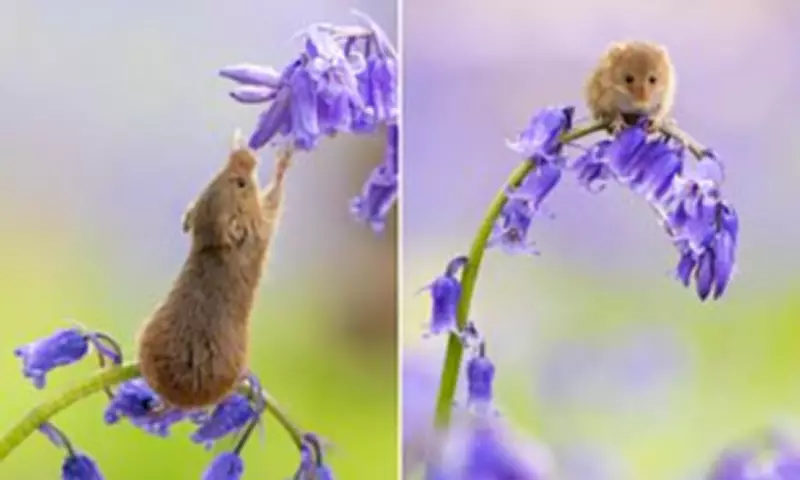
A captivating scene has emerged this spring, featuring Britain's tiniest rodent delicately exploring an early bloom of bluebells. The minuscule harvest mouse, measuring just one inch in length and weighing no more than a two-pence coin, was photographed using its prehensile tail to balance on a drooping flower stalk. With its chestnut fur glistening, the creature reached out with its tiny paws, attempting to sniff the fragrant wildflowers in a display of natural curiosity.
The Delicate Balance of a Threatened Species
The harvest mouse possesses remarkable adaptations for its arboreal lifestyle. Its tail functions as a fifth limb, allowing it to grasp grass stems and navigate vegetation with surprising agility. These diminutive mammals typically inhabit grasslands, reedbeds, and hedgerows, where they construct intricate nests woven from reeds and grasses. Unfortunately, this charming species now faces significant challenges to its survival.
Classified on the Red List for Britain's mammals, harvest mice are at risk of becoming threatened with extinction in the coming years. While exact population numbers remain unknown, conservationists confirm their numbers have declined substantially due to changing agricultural practices that have destroyed their natural habitats. The loss of traditional grasslands and hedgerows has left these tiny creatures increasingly vulnerable.

Unseasonal Blooms Signal Climate Disruption
Britain's bluebells have bloomed unusually early this season, driven by a combination of ample rainfall and exceptionally mild conditions. Temperature records have been shattered, with Kew Gardens in London recording 26.6°C on April 8th - the hottest day since 1946 during this period. Across southern England, residents report bluebells appearing in gardens up to two weeks earlier than typical seasonal patterns would predict.
Scientific Warnings of Ecological Mismatch
Research from the University of Cambridge reveals concerning trends: many plant species are now flowering up to a month earlier than historical averages. This acceleration of natural cycles creates what scientists term "ecological mismatch" - when interdependent species fall out of synchronization. Animals that time their migration, hibernation, or breeding to coincide with specific blooms may find themselves arriving too late for crucial food sources.
Climate data shows spring temperatures across all four UK nations are rising faster than in other seasons, with average increases of 1.8°C since 1970. This warming trend, combined with reduced frost frequency, creates ideal growing conditions for early-blooming plants like bluebells but disrupts the delicate balance of entire ecosystems. Farmers and gardeners face new challenges as traditional planting calendars become increasingly unreliable.
The image of the harvest mouse enjoying its premature floral feast serves as both a charming wildlife moment and a poignant reminder of the environmental changes unfolding across the British landscape. As climate patterns continue to shift, conservation efforts for vulnerable species like the harvest mouse become increasingly urgent, requiring both habitat protection and broader climate action to preserve Britain's unique biodiversity.