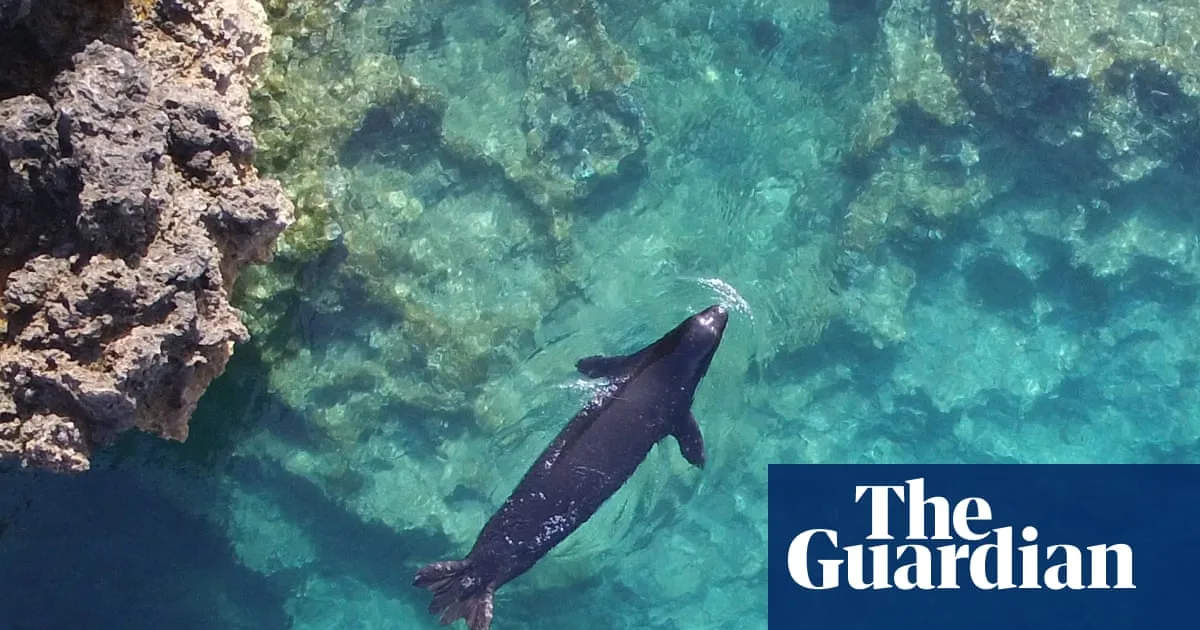
In the shadowy depths of a sea cave within Greece's Northern Sporades archipelago, a colossal figure stirs. On a nearby research vessel, binoculars are shared, confirming the sighting: a magnificent Mediterranean monk seal, one of the planet's rarest and largest marine mammals, reaching up to 2.8 metres in length.
A Fragile Recovery Under Threat
This sighting occurred near the strictly protected island of Piperi, part of the National Marine Park of Alonissos and Northern Sporades. This zone, Greece's largest marine protected area (MPA), is a critical breeding ground for the species. Access is restricted to researchers with special permission, a measure designed to safeguard the seals' habitat.
Decades of conservation work have yielded results. The global population of Monachus monachus, once critically low, now stands at under 1,000 individuals. This progress led the International Union for Conservation of Nature (IUCN) to reclassify the species from 'endangered' to 'vulnerable' in 2023. Greece is home to an estimated 500 monk seals, representing half of the world's total, a significant increase from the 250 recorded in the 1990s.
Yet, this fragile success story is facing a modern and rapidly escalating challenge. Conservationists warn that Greece's booming marine leisure industry, particularly unregulated tourism, is now a major threat, disturbing these sensitive animals and jeopardising their hard-won recovery.
Tourism Versus Conservation
While historic threats like hunting have diminished, seals now contend with entanglement in fishing gear, pollution, and habitat disruption. The newest danger comes from boats and day-trippers. Monk seals, which historically rested on open beaches, were forced into sea caves by human pressure. Now, even these remote refuges are being invaded.
"A week after giving birth, monk seal mothers go fishing, leaving their pup alone for hours," explains Panos Dendrinos, president of the Hellenic Society for Protection of the Monk Seal (MOm). "If someone goes inside, the pup is liable to panic and abandon the cave; its mother is unlikely to find it."
The situation at Formicula, a key seal islet in the Ionian Sea, illustrates the problem. Marine biologist Joan Gonzalvo from the Tethys Research Institute recalls a time, just six to eight years ago, when researchers would see multiple seals socialising daily. As tourist numbers swelled seeking "seal experiences," the sightings plummeted. He recorded over 50 boats around the tiny shoreline on a single day in August 2024. "Nowadays, we are lucky if we see only one or two individual seals," he states.
Protected Areas: A Lifeline Needing Teeth
In response, new protective measures are being implemented. This summer, the 'Seal Greece' national education campaign launched, and a strict 200-metre no-entry zone was established around Formicula. In October, Prime Minister Kyriakos Mitsotakis confirmed the creation of two new large-scale MPAs.
These designations could be a lifeline, but only with proper management and enforcement. NGOs have long criticised Greece's "paper parks"—protected areas on maps that lack adequate policing. A recent study by nine environmental groups highlighted that only 12 out of 174 marine Natura 2000 sites in Greece have a protective regime in place.
On Piperi, where wardens patrol, there are positive signs. "We often see the seals resting on this beach," says freelance warden Angelos Argiriou. "The fact that they feel safe enough to haul out here in the open is a really good sign that the protection measures are working."
Dendrinos echoes the need for robust support: "The Natural Environment and Climate Change Agency needs more boats, more people." He notes that current wardens must report infractions to port police, a process he describes as "time consuming and ineffective."
For conservationists like Joan Gonzalvo, the test case of Formicula is critical. "If we are not capable of protecting this important habitat... for one of the most charismatic and endangered marine mammals on the planet," he warns, "there is very little hope for anything else we want to protect in our oceans." The future of Greece's monk seals now hinges on turning protected lines on a map into a reality enforced on the water.